
advertise with us
Home Blog Page 7

Mgbeke Tapes: How Akpabio’s alleged private conversations raise national security concerns

0

By Vitus Ozoke

There is gossip. There is political gossip. And then there is gossip by the President of the Senate of the Federal Republic of Nigeria. Those are not the same thing. When ordinary people gossip, friendships may collapse, marriages may suffer, reputations may be damaged, and WhatsApp groups may catch fire.

But when the holder of one of Nigeria’s highest constitutional offices gets on the telephone with a private individual, discusses political allies and adversaries, and repeatedly seeks assurances that what he is saying will remain confidential, the matter transcends entertainment. It raises a much more consequential question: What information can anyone safely entrust to Nigeria’s Senate President? That is the uncomfortable question raised by the circulating telephone recording released by Sandra Chidinma Duru, popularly known as Professor Mgbeke.

Duru released a roughly nine-minute recording that she says captures a private conversation with Senate President Godswill Akpabio. She described it as a preview and suggested that additional recordings will follow.

The questions the tape raises extend far beyond Professor Mgbeke, Senator Natasha Akpoti-Uduaghan, or Nigerian political gossip. They extend from Abuja to the international institutions where Nigeria’s Senate President represents the country. And ultimately, they concern something without which high office becomes extraordinarily difficult to exercise: trust.

Perhaps the most remarkable feature of the conversation is the apparent expectation of confidentiality. Consider the contradiction. A person allegedly communicates information he apparently does not want repeated. That means he understands that the information is sensitive. He understands that its disclosure may have consequences. Yet he discloses it anyway and relies on the recipient’s discretion to keep it confidential.

That is not information security. That is outsourcing information security. No serious senior public official should have a security protocol consisting essentially of: “Please don’t tell anybody I told you.” Nigeria is a sovereign state, not a secondary-school dormitory. And the higher the office, the greater the obligation of discretion.

The implications do not stop at Nigeria’s borders. Godswill Akpabio does not interact only with Nigerian senators. He represents Nigeria internationally. He is presently a member of the Executive Committee of the Inter-Parliamentary Union, the global organisation of national parliaments. His current mandate on that committee runs until October 2027. He has represented Nigeria at IPU gatherings alongside parliamentary leaders from around the world.

Nigeria’s own National Assembly describes its inter-parliamentary engagement as serving, among other purposes, international cooperation, diplomacy, regional integration, and Nigeria’s reputation and influence abroad. That makes discretion more than a personal virtue. It becomes professional currency.

Parliamentary diplomacy, like conventional diplomacy, depends heavily upon relationships. Not every useful conversation between leaders occurs before television cameras. Officials sometimes exchange preliminary ideas, concerns, and political assessments because they expect those conversations to be handled responsibly.

So, the relevant question becomes larger: What happens when people who must deal professionally with Nigeria’s Senate President begin wondering whether a private conversation will remain private? Not merely Nigerian politicians, but foreign parliamentary leaders, diplomats, regional officials, and international counterparts. People negotiating sensitive legislative, security, and diplomatic matters.

None of this establishes that Akpabio has disclosed classified information to Professor Mgbeke. No public evidence currently establishes that. The issue is different. The question is whether indiscretion in one sphere can undermine confidence in discretion elsewhere.

Now conduct a simple thought experiment. Imagine that the person allegedly developing this degree of conversational access to one of Nigeria’s most powerful officeholders were not Professor Mgbeke. Imagine she were an intelligence operative. Imagine she represented a foreign government. Imagine her assignment were not social-media exposure but intelligence collection. What would she need? Access, rapport, patience, a telephone, and a person willing to talk and be called “Daddy”.

That hypothetical is precisely why security institutions worry about human vulnerabilities. States spend enormous sums protecting documents, communications systems, buildings, and databases, yet the person holding the information can remain the weakest point in the architecture. Encryption cannot protect information somebody voluntarily speaks. A firewall cannot stop a loose conversation. And no password protects what leaves a person’s mouth.

This may be the more immediate problem. Imagine being one of Akpabio’s Senate colleagues this morning. Imagine being a governor, a minister, a presidential adviser, a party leader, a businessman, a traditional ruler, a diplomat, or simply someone who has had a sensitive private conversation with him. And now Professor Mgbeke says, “There is more.” That sentence may be more consequential than anything contained in the first recording because suspense creates its own power.

Nobody outside Duru herself presently knows what additional recordings Ms Duru possesses, how many there are, whom they concern, what they contain, or whether the material will substantiate her broader allegations.

Perhaps there are many. Perhaps there are few. Perhaps subsequent material will prove explosive. Perhaps it will prove mundane. That uncertainty is precisely the point. Every person who believes he or she may have been discussed now has reason to wonder: Am I on the next tape? Every person who has entrusted Akpabio with something private may wonder: Did he discuss me too?

That is the extraordinary leverage created by the promise of additional disclosure. Professor Mgbeke does not need to publish a hundred recordings today for that uncertainty to exist. The anticipation itself does the work. The genius is in the suspense. That may ultimately prove to be the most consequential aspect of Duru’s strategy. She has not simply said, “Here is my evidence.” She has effectively said: Here is a little. More may be coming.

Politically, that is a very different proposition. A complete data dump ends the suspense. Everyone discovers what exists. A staggered release preserves uncertainty. And uncertainty makes everybody who thinks he might appear in unreleased material watch the next disclosure very carefully.

The irony is extraordinary. One private individual, through the promise of additional recordings whose scope remains unknown, has temporarily acquired an unusual degree of attention from Nigeria’s political establishment. Not because she holds constitutional office. Not because she commands the military. Not because she controls the Central Bank. But because she claims to possess information. Information is power. And information about powerful people can become power over powerful people. That is why senior officials are supposed to understand the value of discretion before—not after—the recording button is pressed.

The story becomes stranger still when placed beside Duru’s previous allegations. In 2025, Duru publicly alleged that Senator Natasha Akpoti-Uduaghan offered her ₦200 million to manufacture allegations against Akpabio. Akpoti-Uduaghan denied the allegation. Now Duru alleges something dramatically different: that Akpabio himself engaged her to campaign against Akpoti-Uduaghan.

There is an extraordinary irony here. The woman who once publicly positioned herself as defending Akpabio against an alleged plot by Natasha would ultimately have become the custodian of recordings potentially far more damaging to Akpabio than anything his political adversaries could simply have alleged. Politics occasionally writes plots that fiction would reject as implausible.

A serious institutional problem also exists. Leadership requires information, and a Senate President cannot function solely on what is said during televised plenary sessions. Senators must be able to discuss delicate legislative negotiations with him; government and security officials must sometimes communicate sensitive concerns; political actors must be able to explore compromises before publicly committing themselves; and foreign counterparts must sometimes hold preliminary conversations away from microphones and cameras. Trust, therefore, is not ornamental to the Senate Presidency. It is part of the machinery that makes the office work.

Once those who work with the Senate President begin censoring themselves for fear that their private conversations may be shared elsewhere, the quality of information reaching him deteriorates. Candour gives way to caution. Colleagues grow guarded. Foreign counterparts measure their words. The officeholder may retain the title, the ceremonial convoy, and the gavel, but something far more difficult to recover begins to disappear: confidence.

A wonderfully expressive Yoruba word captures another dimension of the problem: agbaya—often used to describe an older person acting beneath the dignity expected of his age or status. It carries more force than a simple English translation can convey. It evokes someone who should know better, acting in a manner inconsistent with the maturity his position demands.

This is not a junior political aide discovering Abuja. This is the President of the Nigerian Senate: a former governor, former minister, former Senate Minority Leader, and politician who has operated at the highest levels of the Nigerian government for decades. At that level of public life, discretion should not be an acquired skill. It should be instinct.

Nigerians should, nevertheless, be precise about the national-security argument. The publicly available material does not establish that Akpabio disclosed classified national-security information to Duru. The concern lies elsewhere. National security is partly about systems, encryption, and secure communications, but it is also about judgment, boundaries, and human vulnerability. It is about recognising when someone is cultivating access, understanding that seemingly innocuous information can become valuable when combined with other information, and, above all, knowing when not to talk.

That is why the Mgbeke recording warrants examination beyond its entertainment value. If independently authenticated, it would raise a serious institutional question about whether the conduct it captures meets the level of information discipline expected of someone holding one of Nigeria’s most sensitive political offices and representing the country internationally.

Authentication should therefore be the dividing line. If the recordings are fabricated, manipulated, or materially misleading, Akpabio deserves vindication. If they are authentic and establish the alleged pattern of indiscretion, the question becomes considerably more serious: Has the confidence required for him to perform effectively as Senate President been materially impaired?

That question extends far beyond Abuja. Akpabio’s work brings him into contact not only with senators, governors, ministers, and security officials, but also with foreign parliamentary leaders, diplomats, and other international interlocutors. Parliamentary diplomacy depends on conversations that are not always intended for public consumption. If those dealing with Nigeria’s Senate President begin to wonder where their private conversations might go afterward, the damage is not merely personal or political. It touches the effectiveness of the office itself.

A Senate President can survive criticism. He can survive embarrassment. He can survive political enemies. What is far harder to survive is losing the confidence of the very people who must tell him what he needs to know. That is where the controversy over the Mgbeke tapes becomes more consequential than the gossip in any particular recording. The issue is no longer simply, “What did Akpabio say to Professor Mgbeke?” It becomes: “Who, after hearing authenticated recordings demonstrating such indiscretion, would feel comfortable telling the President of the Nigerian Senate something that must remain confidential?”

Professor Mgbeke may have recorded a conversation, but the consequences could extend much further. She has suggested that additional recordings exist. Whether those recordings ultimately corroborate her broader account, undermine it, or reveal context materially different from what Nigerians presently understand remains to be seen. The recordings should therefore be authenticated, Duru’s claims scrutinised, and Akpabio given the opportunity to respond fully.

But the institutional question cannot be buried beneath partisan shouting or social-media entertainment. Akpabio himself has publicly discussed “parliamentary diplomacy” and the importance of dialogue among legislatures to address security threats, peace, governance, and international cooperation. Such diplomacy requires something more fundamental than conferences, communiqués, and handshakes.

The relevant questions are straightforward: Are the recordings authentic and complete? What additional recordings exist? What information was disclosed? Were any official confidences compromised? And, perhaps most importantly, what effect has the controversy had on the confidence of those who must exchange sensitive information with Nigeria’s Senate President? These questions must be answered with evidence. The gravest consequence of indiscretion at this level is not embarrassment; it is the erosion of the trust the office depends on.

A political career may survive gossip. An officeholder may survive humiliation. But the Senate Presidency faces a fundamentally different problem when those who must speak candidly with its occupant begin every private conversation with an unspoken question: “If I tell him this, who will hear it next?”

Dr. Vitus Ozoke is a lawyer, human rights activist, and public affairs analyst based in the United States. He writes on politics, governance, and the moral costs of leadership failure in Africa.
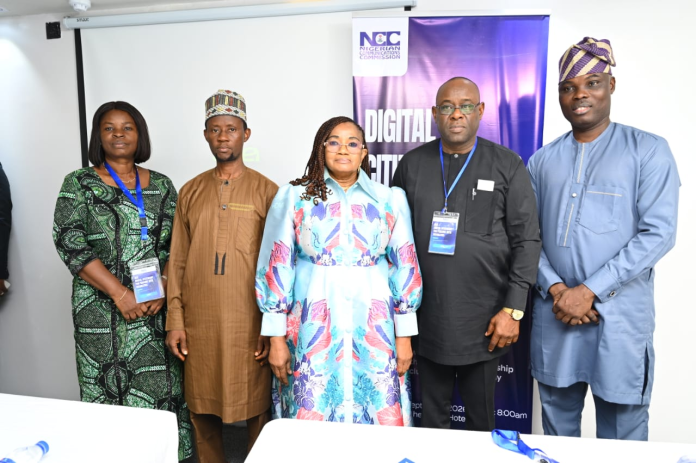
NCC trains over 100 PWDs in Lagos

0

The Nigerian Communications Commission, NCC has trained over 100 Persons with Disabilities (PWDs) in Lagos State on digital citizenship, cybersecurity, data protection and assistive technologies, as part of its drive to ensure that disability does not exclude Nigerians from opportunities in the digital economy.


In a statement by the NCC spokesperson, Nnenna Ukoha, the participants received the training during a two-day Digital Citizenship Training for Persons with Disabilities held on September 9 and 10, 2026, in Lagos, under the theme, “Empowering Persons with Disabilities Through Digital Citizenship for an Inclusive Digital Economy.”


The programme exposed participants to digital foundations, the internet and digital communication, cybersecurity basics, data protection, assistive technologies and responsible participation in the digital space.


For many of the participants, however, the training went beyond learning how to operate digital tools. It changed how they understood their safety, independence and place in an increasingly digital society.


Participants spoke about learning to protect their personal data, identify giveaways and other online scams, and avoid disclosing sensitive information to unknown persons online. Others discovered accessibility features, including speech-to-text tools, that could make everyday use of their mobile devices easier and more independent.


The programme also addressed the social realities faced by Persons with Disabilities, including discrimination, helping participants understand that some negative attitudes towards disability stem from ignorance and should not define their confidence, abilities or participation in society.


The Executive Vice Chairman and Chief Executive Officer (EVC/CEO) of the NCC, Dr Aminu Maida, said the initiative reflects the Commission’s commitment to creating a digital Nigeria in which Persons with Disabilities have the skills and confidence to participate fully in the digital economy.


Maida, who was represented by the Director of the Digital Economy Department, Helen Obi, said digital inclusion must go beyond providing internet connectivity.


“Digital citizenship goes beyond operating a smartphone or computer; it encompasses the knowledge, skills and responsible behaviours required to participate safely and meaningfully online, protect personal information, recognise scams and misinformation, safeguard one’s digital identity, and understand digital rights and responsibilities,” Maida said.


He noted that technology could be particularly transformative for Persons with Disabilities by removing barriers to education and employment, supporting entrepreneurship and remote work, improving access to information and public services, and promoting greater independence through assistive technologies.


According to him, the Commission’s objective is ultimately to build a Nigeria where disability does not determine whether an individual can obtain an education, access public services, secure employment, start a business or contribute productively to society.


“You are not merely beneficiaries; you are important participants and contributors to Nigeria’s digital economy. Your talents, ideas, businesses and aspirations have value, and technology can help take them further,” Maida told the participants.


The Lagos programme forms part of a broader NCC initiative to provide digital skills training for Persons with Disabilities across the country’s geopolitical zones.


Maida said the initiative builds on the Commission’s existing interventions to expand digital access and inclusion, including its E-Accessibility Project, which provides ICT tools and assistive technologies to institutions supporting Persons with Disabilities.


He also highlighted the NCC’s support for research into assistive technology, including an assistive walking-stick prototype for blind and visually impaired persons, as well as the fourth NCC Hackathon, themed “Technology Without Barriers,” which encouraged innovators to develop solutions promoting accessibility and inclusion.


For the Commission, these interventions are guided by a simple principle: digital technology should create opportunities, not new barriers.


Maida said connectivity alone would not deliver meaningful inclusion unless Nigerians also possessed the knowledge and confidence to use technology safely, responsibly and productively.


“The NCC remains committed to promoting connectivity, digital skills, accessibility, online safety and meaningful participation, with the goal of building a digital Nigeria where Persons with Disabilities can learn, work, do business, communicate and access services with dignity and confidence,” he said.


He called for stronger collaboration among government institutions, regulators, technology companies, service providers, development partners, civil society and Organisations of Persons with Disabilities to ensure accessibility is incorporated from the outset in the design and deployment of digital products and services.


The EVC also acknowledged the Lagos State Government, National Commission for Persons with Disabilities, Lagos State Office for Disability Affairs and other stakeholders supporting the programme.


For the more than 100 participants trained in Lagos, the intervention translated the often-broad concept of digital inclusion into practical everyday skills: knowing how to protect their personal information, recognising a potential scam, communicating through assistive technology and navigating the digital world with greater confidence and independence.

2027: Victory for Peter Obi as Appeal overturns FHC Judgement NDC deregistration

0

Victory for Peter Obi ahead of 2027 presidential election as Court of Appeal overturns judgment ordering NDC deregistration

The Court of Appeal in Abuja has overturned a Federal High Court judgment ordering the deregistration of the Nigeria Democratic Congress (NDC).

Following the appellate court’s judgment, the NDC announced that it would participate in the 2027 general elections.

The party’s National Leader, Henry Seriake Dickson, disclosed this in a statement reacting to the appellate court’s judgment.

Dickson said the Court of Appeal set aside the judgment delivered by Justice Isah Dashen of the Federal High Court in Lokoja, which had purportedly ordered the deregistration of the NDC.

According to him, the appellate court ruled in favour of the party’s appeal challenging the Federal High Court judgment.

He said: “Today, the Court of Appeal, sitting in Abuja, has set aside the judgment of the Federal High Court, Lokoja, delivered by Justice Isah Dashen a few months ago, which purported to order the deregistration of our party, the Nigeria Democratic Congress (NDC).

“In a judgment delivered by the presiding Justice, Justice Mohammed Danjuma, and read by Justice Hassan, the Court ruled in favour of allowing our appeal, which challenged the faulty ruling of the Federal High Court, Lokoja, and accordingly set aside Justice Dashen’s judgment.

“We want to use this opportunity once again to commend the Nigerian judiciary, and in particular, Hon. Justice Danjuma and Hon. Justice Hassan, for upholding the integrity of the Nigerian judiciary and, by their decisions, expanding the sphere of multiparty democratic participation in Nigeria.

“We have said repeatedly that the NDC was set up to expand the frontier of multiparty democracy in Nigeria. Justice Dashen’s judgment a few months ago was an unexpected assault on our constitutional right to participate and an attempt to narrow the democratic space.

“Happily, today, by the decision of the Court of Appeal, the Nigerian democratic space has been protected, and the NDC’s right to participate in all political activities as a registered political party has been upheld.

“I congratulate all members and candidates of our great party, the NDC, and thank Nigerians for their prayers and support.

“When the unexpected judgment of the Lokoja Federal High Court was delivered, we were bombarded with several calls for sympathy, support and prayers. Today, our collective prayers have been answered.

“The NDC continues to exist. Our registration remains valid and subsisting, and we and all our candidates will participate in all elections in 2027 and beyond, by the grace of God.

“Everyone should now focus on the campaigns, prepare for the elections, and focus on the task ahead to face the APC and defeat them at the polls.

“A resort to arm-twisting, inducing or intimidating the judiciary will not work. We remain confident in the strength of our message, the commitment of our members, the viability of our candidates, and the support of Nigerians.

“With this conviction, we look forward to the forthcoming elections and are confident that the NDC will emerge victorious at the polls, by the grace of God.

“The fight for Nigeria’s multiparty democracy continues, and by the grace of God, we will emerge victorious.”

Soludo pardons jailed native doctor Akwa Okuko

0
{"data":{"pictureId":"e7dde4edf4ba457c81562b3e71dde80c","appversion":"4.5.0","stickerId":"","filterId":"","infoStickerId":"","imageEffectId":"","playId":"","activityName":"","os":"android","product":"lv","exportType":"image_export","editType":"image_edit","alias":""},"source_type":"vicut","tiktok_developers_3p_anchor_params":"{"source_type":"vicut","client_key":"aw889s25wozf8s7e","picture_template_id":"","capability_name":"retouch_edit_tool"}"}

Anambra State Governor, Prof. Chukwuma Soludo, has granted a pardon to popular native doctor Chidozie Nwangwu, popularly known as Akwa Okuko Tiwara Aki.

Nwangwu, who was among eight native doctors arrested last year over alleged involvement in the promotion of money rituals, quick wealth and the use of human parts for ritual purposes, had earlier entered into a plea bargain with the Anambra State Government.


Following the plea bargain, he was sentenced to 11 months in prison and incarcerated at the Nigeria Correctional Service facility in Amawbia, Anambra State.


As part of the conditions attached to his plea bargain, Nwangwu was required to renounce his fetish practices and commit himself to supporting youth reformation efforts in the state.


He accepted the conditions and had been serving his sentence until Friday, when Governor Soludo exercised his prerogative of mercy and granted him a pardon.


The governor also appointed Nwangwu as Ambassador for Youth Reformation in Anambra State.


The development was disclosed by the governor’s Special Adviser on Youth Reformation, Dr Nelson Omenugha, following Soludo’s visit to the correctional facility.


Omenugha expressed appreciation to the governor for granting Nwangwu a second chance and giving him a new responsibility in the state’s youth reformation programme.


He said: “Thank you, Mr Governor, Prof. Charles Chukwuma Soludo, CFR, for graciously extending your hand of mercy to Chidozie Nwangwu (Akwa Okuko Tiwara Aki) and giving him a new responsibility as Ambassador for Youth Reformation.


“This is the heart of Youth Reformation: not just punishment, but correction, restoration, a new purpose and A New Onye Anambra.”

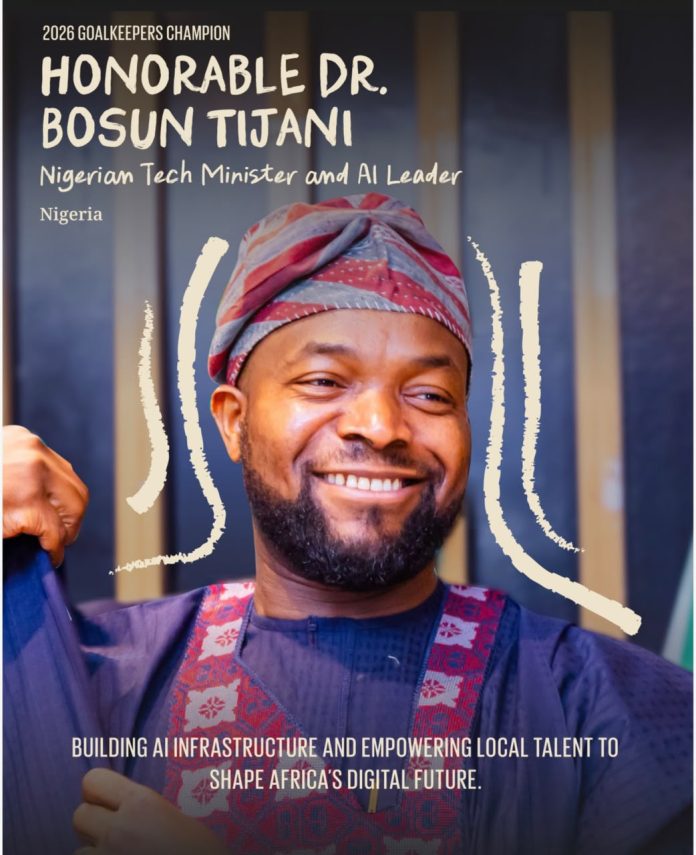
Nigeria’s Minister Tijani named 2026 Gates Foundation Goalkeepers Champion

0

The Honourable Minister of Communications, Innovation and Digital Economy, Dr. ’Bosun Tijani, has been recognised as one of the 2026 Goalkeepers Champions by the Gates Foundation, joining a distinguished group of global leaders, innovators and changemakers whose work is helping to shape a more equitable future through technology and innovation.

In a statement by his spokesperson, Isime Esene, on Friday, the recognition celebrates Dr. Tijani’s contributions to Nigeria’s digital transformation and his leadership in advancing an inclusive Artificial Intelligence (AI) ecosystem across Africa.

The official announcement by the Gates Foundation describes the 2026 Goalkeepers Champions as leaders, innovators, advocates and changemakers whose work and influence are helping to shape a future where Artificial Intelligence expands opportunities rather than deepens inequality.


The Foundation highlighted the Minister’s role in driving rapid digital transformation and advancing efforts to ensure that Africa builds domestic AI capabilities rather than relying solely on technologies designed elsewhere.


The recognition ceremony is scheduled to take place on September 21, 2026, in New York, on the sidelines of the 81st Session of the United Nations General Assembly (UNGA81).


Since assuming office, Dr. Tijani has championed initiatives focused on expanding digital infrastructure, developing Nigeria’s technology talent pipeline, strengthening digital skills, and positioning AI as a tool for inclusive economic growth and national development.


Under his leadership, the Ministry developed the National Artificial Intelligence Strategy (NAIS) to provide a coordinated national framework for AI development and established the AI Research Fund to support home-grown research and innovation.


He has also driven the development of N-ATLAS, an indigenous Large Language Model built to reflect Nigerian languages and local contexts, as well as the creation of the National AI Trust to advance the safe, ethical and responsible deployment of the technology.


Through these efforts, Dr. Tijani has emerged as a leading advocate for responsible AI across Africa, championing a future in which the continent shapes, rather than merely adopts, the technologies defining its development.


These initiatives have strengthened Nigeria’s global standing in AI, with the country recording a marked improvement in its position on the Oxford Insights Government AI Readiness Index.


In recognition of his contributions to the field, the Honourable Minister was named among the TIME 100 Most Influential People in AI in 2025, further affirming Nigeria’s growing influence in the global AI landscape.


Dr. ’Bosun Tijani joins other distinguished 2026 Goalkeepers Champions from across the world whose work spans technology, education, agriculture, policy and culture.

Lebara: Nigeria gets new telecom operator to rival MTN, Glo, Airtel

0

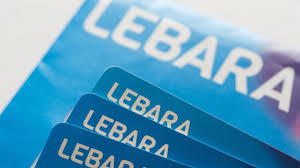
Telecommunications operator Lebara Nigeria has begun commercial operations in Nigeria, becoming the newest player in the country’s crowded mobile market, alongside giants such as MTN, Glo and Airtel.

Lebara does not own the networks and distribution infrastructure that connect most Nigerians.


Details showed that, unlike those operators, Lebara will sell mobile services over Airtel Nigeria’s network while focusing its investment on digital products, customer experience and services.


The launch makes Lebara the second MVNO to begin commercial service under Nigeria’s 2022 regulatory framework, after Vitel Wireless launched in October 2025. It is also Lebara Group’s first entry into Africa.


Lebara holds a Tier 5 MVNO licence issued by the Nigerian Communications Commission in 2023 and has partnered with Airtel Nigeria as its host network.


The company confirmed the partnership at a soft launch in Lagos on February 25, co-hosted with the United Kingdom’s Department for Business and Trade.


The company said it has begun activating customers who reserved personalised mobile numbers under its 0724 prefix during a pre-launch registration period.


Customers can claim those numbers through the My LebaraNG app or at Slot stores, the electronics retailer.


In her remarks, the Chief Operating Officer of Lebara said, “We are not entering the market believing that the answer is simply to compete on price.”


“Our ambition is to compete across value, customer experience and digital convenience, while remaining competitively priced,” she added.

BREAKING: Nollywood Veteran, Olu Jacobs is dead

0

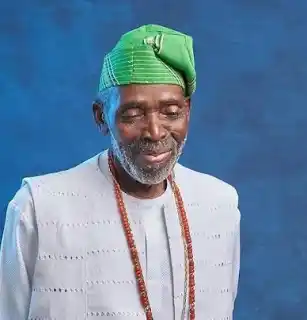
Veteran Nigerian actor and film executive, Oludotun Baiyewu Jacobs, popularly known as Olu Jacobs, has died at the age of 84.

According to TVC, the actor’s son, Olusoji Jacobs, announced his death in a post on Instagram on Wednesday, September 16, 2026, saying the family was grateful for his life and asking the public to respect their privacy.


“It is with gratitude to God for a life well lived and fought that we announce the passing of our dear husband, father, grandfather and uncle. The Lion of Lufodo.


“We call on all bloggers and social media influencers to respect our family’s privacy at this time,” he said.

BREAKING: NNPCL increases petrol price by N85 per litre as crude oil hits $107

0

The Nigerian National Petroleum Company Limited (NNPCL) has increased the pump price of Premium Motor Spirit (PMS), popularly known as petrol, across its retail outlets in Abuja and its environs.

A market survey by Nigerian Newssphere on Monday showed that several NNPCL filling stations in the Federal Capital Territory increased their petrol prices to between N1,395 and N1,430 per litre.


The latest adjustment represents an increase of between N50 and N80 per litre at the affected outlets, depending on the location and previous pump price.


DAILY POST reports that the new prices have been implemented at NNPCL outlets around Airport Junction, Gwarinpa, Kubwa Expressway, Wuse Zone 4 and other parts of Abuja and its environs.


The development comes shortly after MRS filling stations increased their petrol pump price to N1,395 per litre.


MRS had adjusted its price following an increase in the gantry price of petrol by Dangote Refinery to N1,265 per litre.


The latest petrol price hike comes amid a sharp rise in global crude oil prices, with Brent crude trading at about $107 per barrel and West Texas Intermediate (WTI) at around $103 per barrel.


The increase in crude oil prices followed escalating tensions in the Middle East, including the recent exchange of strikes between Iran and the United States.


Nigerian Newssphere reports that Iran also targeted Saudi Arabia’s East-West oil pipeline amid the escalating regional conflict.

The rise in international crude prices has increased pressure on domestic petrol prices, particularly as Nigeria’s downstream petroleum market responds to changes in crude oil and refined product costs.

Peter Obi’s wife sparks controversy over N237m Hermès handbag

0

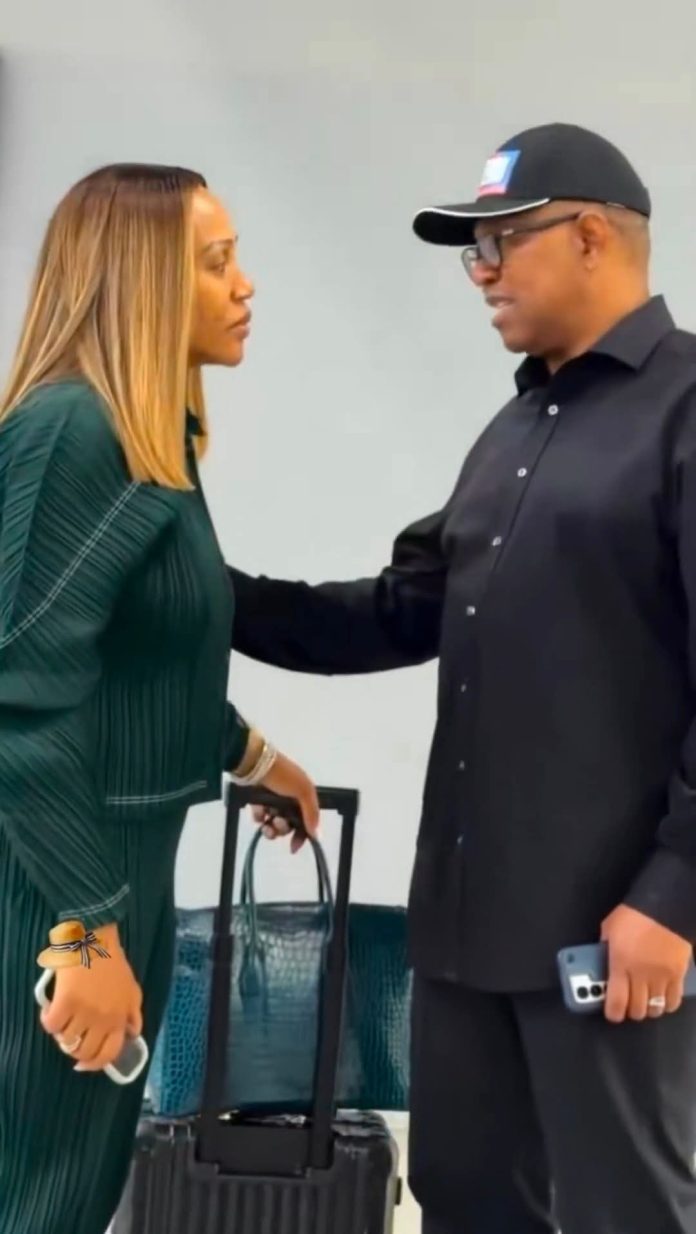
A luxury handbag reportedly carried by Margaret Obi, wife of the 2027 presidential candidate of the Nigerian Democratic Congress, NDC, Peter Obi, has sparked controversy on social media.

Nigerian Newssphere reports that Margaret was seen carrying the handbag at an event in a viral video shared online.

Social media users identified the bag as a Hermès Kelly 35 in Malachite and claimed it is listed on the Hermès website for £131,938.81, which they estimated to be about N237 million.

The reported value of the handbag has generated mixed reactions, with some Nigerians criticising Margaret for carrying such an expensive item, while others argued that she has the right to purchase whatever she can afford.

Lere Olayinka, media aide to the Minister of the Federal Capital Territory, Nyesom Wike, joined the debate, accusing Peter Obi of presenting himself as a prudent person despite the reported luxury associated with his family.

In a post on his X handle, Olayinka said Obi should stop portraying himself as someone who lives modestly.

According to him, “The issue is, her husband should stop lying and presenting himself as a prudent person.

“You want the people to donate N1,000 to fund your campaign, but your wife is using one bag that will take the contribution of N1,000 by 250,000 Nigerians to buy? That’s a fraud.

“For those of you who will say, it is her money or her husband’s money. Yes, you are right. But if as a private citizen, the wife of a supposed prudent man can buy a single bag worth over N250m, you can do a guess as to the cost of bags she will buy with public funds.”

Meanwhile, popular media personality Daddy Freeze also weighed in on the controversy, saying he had no problem with Margaret carrying a luxury handbag.

However, Daddy Freeze questioned Peter Obi’s repeated claims about owning only one pair of shoes and one wristwatch, arguing that the lifestyle associated with him does not appear to match the image of extreme modesty he projects.

“I have no problem with Peter Obi’s wife carrying a luxury bag; her husband is a billionaire. He was rich before he came into government.


“The only problem I have with him is he says he only has one shoe and one watch, but when you put yourself in a certain light, and things around you don’t seem to add to that light, there is a problem,” he said in a viral video.


On his part, popular human rights lawyer Deji Adeyanju said the “criticism is unnecessary”, stating that “the husband is very rich”.


“There’s really nothing wrong in the woman carrying this bag but they have deceived so many people about not giving shishi that many Nigerians are disgusted by their lifestyle.


“The husband usually flies private jet and at other times, he will go to the end of Air peace economy class to act in the movie. Be yourself Mr. Obi and stop the drama and acting”, he said in an X post.

Nigeria has lost experienced statesman —SDP’s Adebayo mourns Bamanga Tukur

0

The Presidential Candidate of the Social Democratic Party, SDP, Prince Adewole Adebayo, has expressed sadness over the death of former national chairman of the Peoples Democratic Party, PDP, Alhaji Bamanga Tukur.

Adebayo, in a condolence message on Saturday, described Tukur as a distinguished Nigerian statesman, administrator, businessman and elder whose contributions to Nigeria and Africa would remain part of the country’s history.

He said the late Tukur dedicated many years of his life to the service of Nigeria and Africa, contributing to public administration, business development, leadership and national politics.

“Personally, I have had the privilege of working with this true and illustrious Nigerian statesman through my investments in his beloved state of Adamawa, particularly in the promotion of indigenous shipping and the implementation of the mandate of the New Partnership for Africa’s Development (NEPAD) under his leadership,” Adebayo said.

The SDP presidential candidate extended his condolences to Tukur’s family, the government and people of Adamawa State, as well as his friends, associates and Nigerians mourning his death.

According to him, Nigeria has lost “an experienced leader and statesman of remarkable accomplishment.”

Adebayo prayed that Tukur’s legacy would continue to inspire present and future generations to dedicate themselves to the service of humanity and the development of Nigeria.

He also prayed that Almighty God would grant the deceased’s family and loved ones the strength and comfort to bear the loss and grant Tukur eternal rest.

Nigerian Newssphere reports that Tukur died after a brief illness.