advertise with us
Home Blog Page 11

Alleged Tinubu drug records: US cover-up makes US complicit- Alex Barbir warns Trump

0

American missionary Alex Barbir has called on US President Donald Trump to release records relating to a decades-old American investigation involving Nigeria’s President Bola Tinubu.

Barbir warned that continued withholding of the documents could make US officials complicit in the deaths of Nigerians if the records contain information relevant to allegations against the Nigerian president.


The missionary made the remarks while urging Trump to make public outstanding records from a 1990s US investigation into a Chicago-area heroin distribution network and a subsequent civil forfeiture case involving funds allegedly linked to Tinubu.


“Tinubu is a heroin trafficker who forfeited thousands of dollars to the US government. Concealing his files from the public makes officials complicit in the killing of Nigerians,” Barbir said.


His comments followed ongoing Freedom of Information Act (FOIA) litigation seeking additional records from the Federal Bureau of Investigation (FBI), Drug Enforcement Administration (DEA) and other US government agencies concerning the investigation.


DAILY POST reports that the dispute over the records has renewed public interest in the details of the case and the documents that remain in the custody of US authorities.


A US lobbying firm has also circulated historical US Department of Justice (DOJ) documents relating to the matter to members of the Trump administration and Congress.


Barbir urged the US government to release the outstanding records, arguing that Nigerians have a right to access information relating to allegations arising from a former US investigation involving their country’s political leadership.


The allegations against Tinubu have been disputed, and the existence of records or a forfeiture proceeding does not, by itself, establish criminal liability.

BREAKING: NNPCL increases petrol price to N1,270 despite Dangote free delivery

0

The Nigerian National Petroleum Company Limited, NNPCL has increased its Premium Motor Spirit, PMS pump price despite the Dangote Refinery’s free petrol delivery initiative and declining crude oil prices.

A market survey by Nigerian Newssphere on Tuesday, showed that NNPCL retail outlets in Abuja and its environs had raised their petrol price to N1,270 per litre from N1,250.

The latest adjustment represents a N20 per litre increase by the state-owned oil company.

NNPCL’s price hike comes despite the Dangote Refinery expanding its free petrol delivery initiative to 10 destinations across Nigeria, including Abuja, where its petrol is supplied at N1,185 per litre.

Earlier, MRS filling stations also increased their petrol price by N20 to N1,230 per litre.

Following the latest price movement, NNPCL petrol is now between N15 and N40 per litre more expensive than prices at MRS, Geregu, Ranoil, Emedab, Mobil and other filling stations in Abuja and its environs.

However, some filling stations, including Empire and AA Rano, sell petrol at between N1,275 and N1,299 per litre, above the NNPCL price.

Consequently, petrol prices in Abuja and its environs currently range between N1,230 and N1,299 per litre.

Nigerian Newssphere  reports that Brent crude and West Texas Intermediate (WTI) had dropped significantly to $88.80 and $81.86 per barrel, respectively, at the time of filing this report.

Veteran Nigerian poet Alabi Ogundepo is dead

0

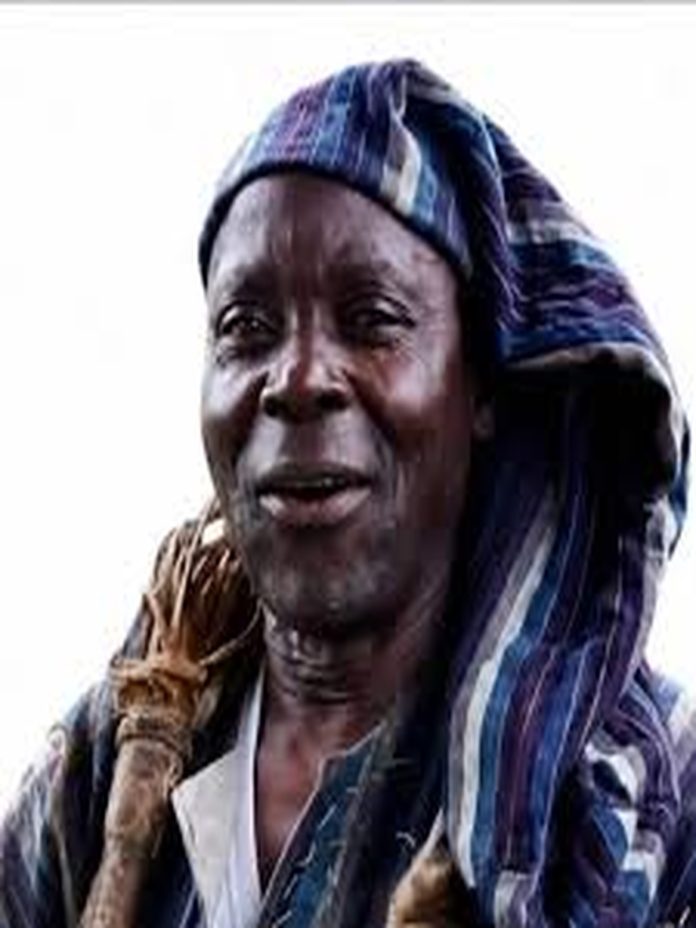
Veteran Nigerian poet and renowned Ìjàlà chanter, Chief Alabi Ogundepo, has died at the age of 84.

Nigerian Newssphere gathered that Ogundepo, a native of Saki in Oyo State, died on Monday, August 24, 2026.

The news of his death was announced by his family in the early hours of Tuesday in a statement signed by his daughter, Dupe Ogundepo-Falana.

The family described the deceased as an icon whose contributions to Nigerian literary works and Yoruba cultural heritage would continue to inspire generations.

Ogundepo was widely recognised for his mastery of Ìjàlà, the traditional Yoruba hunters’ poetry, and his contribution to the preservation and promotion of Yoruba language, culture and history.

Born in Saki, Oyo State, the veteran poet was also a writer, cultural enthusiast and respected community figure. His poetry and creative works reflected his deep appreciation of Yoruba culture, tradition, language and history.

The family expressed appreciation to individuals, institutions, traditional leaders, literary communities, friends and well-wishers who had reached out with condolences and support following his death.

The statement read: “Funeral arrangements and other details will be announced by the family in due course. The family kindly requests privacy and prayers as we come to terms with this irreparable loss.”

Chief Alabi Ogundepo’s death marks the loss of one of the enduring voices of Yoruba oral poetry and cultural preservation.

Rivers: ‘Prof Chike only God knows’ – ADC uncovers plot by Wike to rig 2027 election 

0

The Rivers State chapter of the African Democratic Congress, ADC has alleged a plot by individuals linked to the Rainbow Coalition to manipulate the forthcoming elections in the state.

The party specifically accused the Vice-Chancellor of the University of Port Harcourt (UniPort), Professor Princewill Chike, of being a member of the Rainbow Coalition, a cross-party socio-political movement associated with the Minister of the Federal Capital Territory (FCT), Nyesom Wike.

In a video clip sighted by Nigerian Newssphere, the ADC Publicity Secretary in Rivers State, Chizy Enyi, alleged that Chike had publicly identified with the coalition and could nominate returning officers for the forthcoming election.


Enyi claimed that the vice-chancellor was recommended by Wike for the position and was subsequently imposed on the university.


He said, “In order to show the public that he is truly Wike’s product, at the entrance of the university, what you will see is the signpost of the VC with the caption, ‘Academia Rainbow Coalition of the Renewed Hope,’ with his picture on it.


“Those he will nominate as INEC returning officers for the election must be members of the coalition.


“It’s not even election time yet, but see what he is doing. During the election, all those that will be recommended are definitely going to come from the coalition.


“Professor Chike, only God knows what you have come to do in Port Harcourt. Let us see those you will recommend; let us see whether they will rig the election.”


The ADC spokesperson’s allegations come amid heightened political activities in Rivers State ahead of the forthcoming elections.


The party, however, did not provide independent evidence in the video to substantiate its allegations against the university vice-chancellor or establish that any proposed returning officers had been selected

Fuel price: Subsidy to Return or Not? Dilemma of Nigeria’s petrol policy ahead of 2027 election

0

By Moses Olili

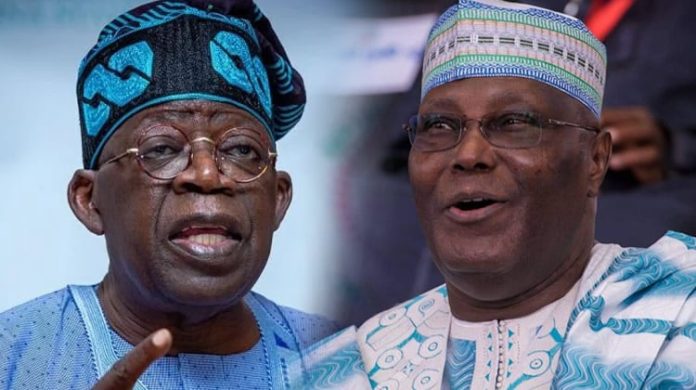
Echoing the frustrations that have become almost commonplace among Nigerians, former Vice President Atiku Abubakar has reopened an old but deeply consequential question: Was the removal of the fuel subsidy worth the price Nigerians have been made to pay?

His recent call for a new approach to fuel subsidy comes at a time when the groaning over the cost of living has hardly subsided. For millions of Nigerians, the consequences of subsidy removal are not expressed in the language of fiscal consolidation, foreign reserves or macroeconomic stability. They are felt in the rising cost of transportation, food, electricity, rent and virtually every other necessity.

The debate, therefore, is bigger than Atiku Abubakar, President Bola Ahmed Tinubu or the politics of 2027.

It is about the fundamental question of whether an economic reform can be considered successful when the economy is becoming more stable while a significant proportion of its citizens continue to struggle to afford the basics of life.

When President Tinubu announced the removal of the petrol subsidy in May 2023, the decision was presented as an unavoidable break from a system that had become too expensive and increasingly unsustainable. More than three years later, there is evidence that the reform has delivered important macroeconomic gains. But there is also compelling evidence that the adjustment has imposed a severe burden on households.

Both realities can exist at the same time.

And that is where Nigeria’s subsidy debate should begin.

Why the Presidency Says the Subsidy Had to Go

For decades, petrol subsidy was regarded as one of the ways Nigerians could benefit from the country’s oil wealth. The government kept the pump price below the market cost and absorbed the difference.

But over time, the arrangement became increasingly expensive and difficult to sustain.

The strongest argument for its removal is that it was a poorly targeted form of social intervention. A wealthy Nigerian who owns several vehicles and consumes large quantities of petrol could receive a greater absolute benefit from subsidised fuel than a poor Nigerian who does not own a vehicle.

The government was, in effect, subsidising a commodity rather than directly supporting the people who needed assistance most.

The International Monetary Fund has consistently argued that fuel subsidies are an inefficient means of protecting vulnerable households and that resources could be better directed towards targeted social protection and productive investment.

There was also the question of Nigeria’s finances.

At a time when government revenues were under pressure, continuing to spend enormous sums keeping petrol artificially cheap meant less fiscal space for infrastructure, healthcare, education and other public priorities.

From the Presidency’s perspective, therefore, subsidy removal was not simply a decision to increase the price of petrol. It was an attempt to halt a system that had become fiscally unsustainable and redirect public resources towards more productive uses.

In that sense, the economic argument for removing the subsidy was compelling.

But an economically compelling argument does not automatically make a policy socially painless.

The Nigerian Reality

For the average Nigerian, petrol is not simply another commodity whose price can be left to market forces.

It is an input into almost everything.

When the price of petrol rises, transport fares rise. When transport becomes more expensive, the cost of moving food and other goods rises. Businesses that rely on generators and vehicles face higher operating costs. Those costs are eventually passed on to consumers.


A Nigerian who does not own a car therefore still pays the price of higher petrol costs.

The commuter pays through increased fares.

The farmer pays through higher transportation and production costs.

The trader pays through logistics.

The manufacturer pays through energy and distribution.

And the household pays at the market.

This is why the endless groaning of Nigerians cannot simply be dismissed as resistance to reform.

For many households, the reform has translated into a substantial decline in purchasing power.

The IMF’s 2026 assessment estimates that poverty had reached 63 per cent at the national poverty line and that about 27 million Nigerians experienced food insecurity in late 2025. It also warned that higher food and transport costs continue to weigh on households.

The central contradiction is therefore difficult to ignore: Nigeria’s macroeconomic indicators may be improving, but millions of Nigerians are yet to experience that improvement in their daily lives.

The Gains Should Not Be Ignored

Yet, it would be intellectually dishonest to portray subsidy removal as an unmitigated failure.

The reforms have produced measurable economic gains.

The IMF says Nigeria’s reforms have improved macroeconomic stability, reduced fiscal vulnerabilities and strengthened the country’s external position. International reserves increased substantially between 2024 and 2025, while the Fund projects continued economic growth.

Nigeria has also moved closer to becoming a country capable of refining more of its own crude oil. The emergence of large-scale domestic refining offers the possibility of reducing dependence on imported petrol and conserving foreign exchange.

These developments matter.

The argument, therefore, should not be that subsidy removal achieved nothing.

It is that the economic gains must ultimately translate into improvements in people’s lives.

That is the real test.

Where Is the Dividend?

This may be the most uncomfortable question the government must answer.

If subsidy removal was necessary because the country could no longer afford the old system, Nigerians are entitled to ask what has happened to the resources that became available afterwards.

How much has been saved?

How much has gone into infrastructure?

How much has been spent on social protection?

How much has been absorbed by debt servicing?

How much has gone to states and local governments?

And, most importantly, what has the average Nigerian received in return?

The IMF’s latest assessment makes this question even more important. It says estimated savings from fuel subsidy removal—potentially up to 2 per cent of GDP—did not appear to accrue to the budget in 2025.

That does not necessarily mean the reform failed.

It does mean that transparency over the subsidy savings is essential.

Nigerians should not be expected to endure the pain of reform without being able to see its dividend.

Should Subsidy Return?

This brings the debate back to Atiku Abubakar.

His proposal should not simply be dismissed as an attempt to return Nigeria to the old subsidy regime. The model he has recently proposed is presented as a more targeted intervention tied to domestic refining and subject to controls and auditing.


That deserves scrutiny on its merits.


Would it reduce petrol prices?


How much would it cost?


Who would benefit?


Who would pay for it?


How would the government prevent it from becoming another avenue for rent-seeking?


And would it actually be more beneficial to Nigerians than using the same resources for targeted social protection?


These are legitimate questions.


But those defending subsidy removal must answer equally difficult questions.


What is the alternative for Nigerians who cannot cope with market prices?


How quickly can targeted social protection reach them?


When will cheaper public transportation become widely available?


When will electricity become reliable enough for businesses and households to reduce their dependence on petrol and diesel?


And when will real wages begin to catch up with the cost of living?


The debate becomes meaningful only when both sides answer these questions honestly.


## The Better Question


Perhaps Nigeria should stop asking whether petrol itself should be subsidised and start asking whether vulnerable Nigerians should be protected.


There is an important difference.


Instead of subsidising petrol for everyone, the government could direct more resources towards targeted cash transfers, affordable mass transportation, agricultural support, cheaper alternative energy and infrastructure that reduces the cost of moving people and goods.


The IMF has similarly called for stronger social protection and increased cash transfers to vulnerable Nigerians.


Such an approach would address the actual problem: the inability of millions of Nigerians to cope with the rising cost of living.


The objective should not be to make petrol permanently cheap.


It should be to make Nigerians economically strong enough to afford energy without sacrificing food, education or healthcare.


## The Verdict Is Not Yet In


Three years after subsidy removal, it is too simplistic to declare the policy either a success or a failure.


The economic argument for removing the old subsidy regime remains strong. The system was expensive, poorly targeted and fiscally unsustainable.


But the suffering that followed its removal is equally real.


The reform has therefore created a difficult bargain.


Nigeria may be gaining macroeconomic stability while households are struggling with the cost of adjustment.


The responsibility of government is to ensure that the first eventually produces relief for the second.


Because Nigerians were not promised improved economic indicators when the subsidy was removed.


They were promised a better economy.


And a better economy is not one in which the government merely has more money.


It is one in which the citizen has more purchasing power, better services, more opportunities and a greater sense that tomorrow will be better than today.


That is the dividend Nigerians are waiting to see.


Until then, the groaning will continue—and so will the debate over whether the price of economic reform has simply been too high.


 

‘I beat you guys’- Davido to Wike over Osun election[Video]

0

‘I beat you guys’- Davido to Wike over Osun election[Video]

A video clip capturing the moment Afrobeat singer David Adeleke, popularly known as Davido, teased the Minister of the Federal Capital Territory (FCT), Nyesom Wike, over the outcome of the Osun State governorship election has gone viral.

In the 16-second clip, Davido was heard telling Wike that he had defeated the All Progressives Congress (APC) in the election.

“But I won, I beat you guys,” Davido told Wike when he accompanied his uncle, Governor Ademola Adeleke, to the minister’s residence in Abuja.


Responding to the singer’s remark, Wike jokingly said he would collect Adeleke’s certificate of return, triggering laughter among those present.

Nigerian Newssphere reports that Adeleke visited Wike shortly after a closed-door meeting with President Bola Tinubu at the State House in Abuja.


During his visit to Tinubu, the President advised Adeleke not to mock his opponents.


Recall that Adeleke defeated his closest opponent, Bola Oyebamiji of the All Progressives Congress, to emerge victorious in Saturday’s Osun State governorship election.

Watch the video below:

https://x.com/seyikanbai/status/2090588517860778313

EPL: SuperComputer predicts title winners, top six as 2026/2027 season begins

0

The Opta SuperComputer has released its predictions for the 2026/2027 Premier League season.

Arsenal are the defending champions after finishing seven points ahead of Manchester City last season, while Manchester United and Aston Villa completed the top four.

Following several simulations, Opta has given Arsenal a 38.0% chance of retaining the Premier League title.

Manchester City are their closest challengers, with a 20.5 percent chance of winning the league, followed by Liverpool with 9.2 percent.

Manchester United have been given a 6.2 percent chance, while Aston Villa and Chelsea have 4.8% and 4.1 percent, respectively, to complete the projected top six.

Arsenal will begin their title defence on Friday night when they host Coventry City at the Emirates Stadium.

Recall that Arsenal emerged winner of 2025/2026 EPL season.

Nnamdi Kanu was 110% correct about Nigeria — Dele Farotimi

0

Human rights lawyer and political activist, Dele Farotimi, has said that the detained leader of the Indigenous People of Biafra, IPOB, Nnamdi Kanu, was correct in everything he said about Nigeria.

Farotimi made the assertion in a video posted on X on Wednesday and seen by Nigerian Newssphere.

According to him, Kanu’s criticisms of Nigeria have been validated by recent events in the country.

He argued that the failure of the Nigerian government to tackle systemic issues, coupled with its tendency to imprison rational voices while allowing criminals to remain free, has worsened instability in the country.

“Nigeria has proven Nnamdi Kanu right at every point. I have no single argument against the facts that have been adduced by Nnamdi Kanu in his agitation against the Nigerian state, not one.

“And if you press a little further, I am today convinced that Nnamdi Kanu was 110% correct in his assessment of the Nigerian state.

“He was correct, but today he sits in a cell somewhere, and numerous murderers are walking around free. That is vindication. The man is correct. Nigeria encourages madness.

“If it will not listen to rational voices, it became inevitable that more extreme voices will be spoken in the language that Nigeria understands.

“I’ve had multiple occasions to address separatist agitators, both in Igboland, in Yorubaland and elsewhere,” he said.

Davido reacts as gunmen attack Adeleke’s convoy

0

Afrobeats superstar David Adeleke, popularly known as Davido, has reacted to the alleged attack on the convoy of Governor Ademola Adeleke.

It was reported that some hoodlums engaged in a gun battle with security personnel attached to Adeleke’s convoy at the palace of the Ataoja of Osogbo, Oba Jimoh Oyetunji, on Wednesday.


This was shortly after Adeleke received his certificate of return from the Independent National Electoral Commission (INEC) and visited the palace to celebrate his victory with the traditional ruler.


However, in a post on his verified X handle on Wednesday evening, Davido debunked the report.


He admitted that there was a fight outside the palace of the monarch they visited.


“Lies! It was a fight outside the palace that had nothing to do with us. The people love His Excellency,” he tweeted.


DAILY POST reports that Adeleke won the election after polling 511,067 votes to defeat his opponents, including Bola Oyebamiji of the All Progressives Congress (APC), who got 444,815 votes.


Najeem Salaam of the African Democratic Congress (ADC) polled 17,180 votes, coming third on the ballot.


DAILY POST report on Adeleke’s victory

Fuel subsidy removal: Tinubu govt finally gives breakdown of expenditures, savings

0
President Tinbu

The President Bola Ahmed Tinubu-led administration has provided a detailed breakdown of how the Federal Government deployed the N30.64 trillion in additional expenditures incurred between June 2023 and December 2025, following the removal of fuel subsidy and other economic reforms.


The Minister of Finance and Coordinating Minister of the Economy, Taiwo Oyedele, disclosed this at a press conference monitored by Nigerian Newssphere on Wednesday.


Oyedele said the Federal Government recorded approximately N20.4 trillion in incremental resources during the period under review, comprising savings from fuel subsidy removal, other incremental revenues and additional borrowing.


According to him, the N20.4 trillion included N15.8 trillion in savings from fuel subsidy removal that accrued to the Federation Account.


He explained that the subsidy removal savings were shared among the three tiers of government, with the Federal Government receiving N5.43 trillion, states N6.52 trillion and local governments N3.88 trillion.


The minister added that the reforms generated another N3.12 trillion in incremental revenues, while the government recorded N11.85 trillion in incremental borrowing.


However, Oyedele said the additional resources were outweighed by expenditures incurred by the government during the same period, which amounted to approximately N30.64 trillion.


He explained that the figures showed that the removal of fuel subsidy did not create a single pool of cash available to the Federal Government but rather reduced the fiscal burden and the amount of additional borrowing that would otherwise have been required.


“The Federal Government had approximately N20.4 trillion in incremental resources.


“Over the same period, additional expenditures amounted to approximately N30.64 trillion. Subsidy removal therefore did not create one large pool of cash available to the Federal Government. It reduced a major fiscal burden and the amount of additional borrowing that would otherwise have been required,” he stated.


Giving a breakdown of the N30.64 trillion additional expenditure, Oyedele said N9.39 trillion was spent on wage adjustments, N9.37 trillion on external debt servicing, N6.47 trillion on infrastructure and N3.14 trillion on electricity subsidies.


The figures provide a clearer picture of how the government says the financial gains from subsidy removal and other reforms were absorbed by higher spending requirements between June 2023 and December 2025.