advertise with us
Home Blog Page 10

IPOB gives Nigerian Govt Ultimatum to hear Nnamdi Kanu’s Appeal, threatens to boycott 2027 elections

0
Nnamdi Kanu

The Indigenous People of Biafra, IPOB has given the Federal Government a 14-day ultimatum to ensure that the appeal filed by its detained leader, Nnamdi Kanu, is listed and heard by the Court of Appeal.

IPOB issued the ultimatum in a video broadcast by its Head of the Directorate of State, Mazi Chris Nwaogu, on Monday.


The group demanded that the appellate court list and hear Kanu’s appeal within 14 days.


IPOB warned that it could boycott the 2027 general elections in the South-East and other areas it considers Biafraland if the Federal Government fails to facilitate the hearing of the appeal.


The group alleged that the Federal Government had failed to take necessary steps to move the appeal forward.


Specifically, IPOB accused the government of failing to file its respondent’s brief and take steps to have the matter listed before the Court of Appeal.


“The Federal Government has not filed a Respondent’s brief, they have not listed the appeal, they have not come to court.


“We are giving them 14 days to list Onyendu Mazi Nnamdi Kanu’s appeal. If they refuse, we will consider boycotting the coming elections across Biafraland and beyond,” IPOB said.


The group’s latest position comes amid continued legal proceedings over Kanu’s case and growing calls for the appeal to be heard.

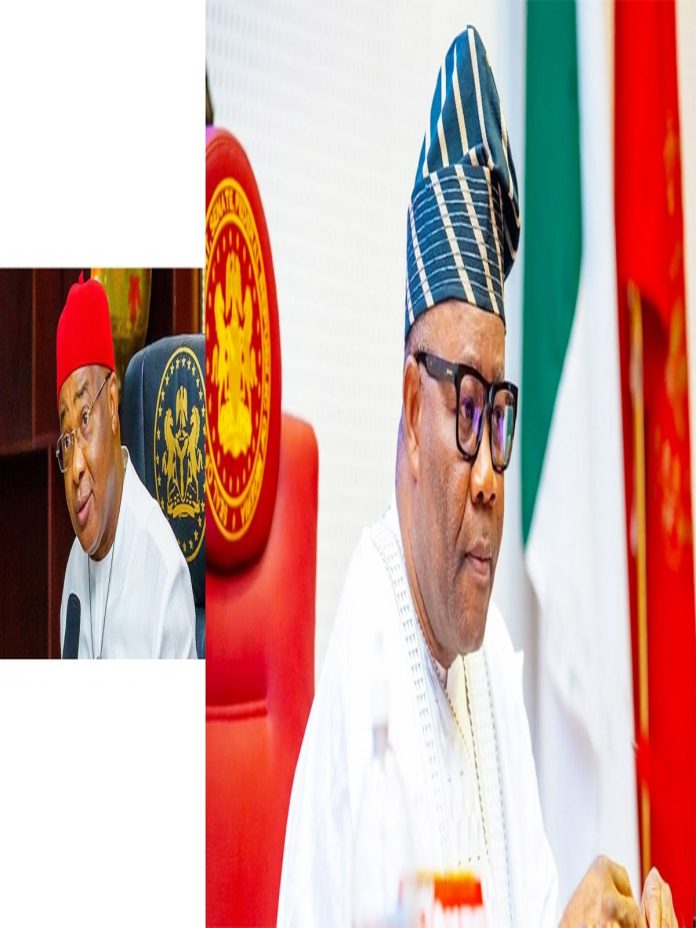
Uzodimma’s 2027 Senate Gamble: Why Akpabio’s Seat could force Imo Governor earlier exit 

0

By Moses Olili

Imo State Governor Hope Uzodimma’s bid to return to the Red Chamber before his tenure expires has raised fresh questions about political ambition, constitutional limits and succession.

More so, speculation that Uzodimma could, upon returning to the Senate, seek to replace the incumbent Senate President, Godswill Akpabio, has become increasingly troubling.

First, there is something unusual about a man seeking a new job while he still has months left in the one he was elected to do.

That, in simple terms, is the curious position Governor Uzodimma of Imo State finds himself in. Uzodimma is still the governor of Imo State, with his second and final term not due to expire until January 2028. Yet, before the people who elected him as governor have finished counting the months left on his mandate, he is already asking voters in Imo West to send him back to the Senate.

There is, of course, nothing inherently strange about a politician seeking another elective office. Politicians leave one office and contest another all the time. But Uzodimma’s case is different because of the timing. If he wins the Imo West senatorial election in 2027, the new Senate is expected to be inaugurated in June of that year—roughly seven months before his tenure as governor expires.

And suddenly, what looked like an ordinary political ambition becomes a rather extraordinary dilemma. Uzodimma cannot be in Owerri governing Imo State and, at the same time, sit in Abuja as a senator representing Imo West. One mandate would have to give way to the other.

So, what exactly is the governor betting on? Is this simply a carefully calculated plan to secure his political future after Government House, or does it point to a bigger ambition that requires him to leave office earlier than the electorate originally expected? More importantly, what happens to the mandate he still holds when the Senate comes calling?

Those questions have turned Uzodimma’s bid to return to the Red Chamber into far more than another election story. It is a political gamble wrapped in a constitutional puzzle—and one that could have consequences not only for the governor but also for the future political direction of Imo State.


A Political Gamble With a Constitutional Question


Uzodimma is no stranger to the Senate. He represented Imo West from 2011 to 2019 before becoming governor, meaning his latest ambition is essentially a return to familiar territory. What makes the move remarkable is not the office he is seeking, but the fact that he is seeking it while his current mandate is still running.


The Constitution does not expressly state that a sitting governor cannot contest a Senate election. Section 65 sets out the qualifications for membership of the National Assembly, while Section 66 provides specific grounds for disqualification. Section 183, meanwhile, restricts a serving governor from holding another executive office or paid employment.


The more difficult question, therefore, is what happens if Uzodimma wins. Can he simply move into the Senate while remaining governor, or would he have to relinquish Government House before taking his seat in Abuja? That is where the political calculation becomes considerably more complicated.


If the new Senate is inaugurated in June 2027 and Uzodimma has won Imo West, he would still have roughly seven months left on his gubernatorial mandate. Should he resign to take up the Senate seat, he would be voluntarily bringing his tenure to an end before the period for which Imo voters elected him had elapsed.


That possibility raises an uncomfortable question about political mandates. A governor is elected to serve for a defined constitutional period, not merely until another attractive political opportunity comes along. While Uzodimma is entitled to pursue his political future within the law, voters are equally entitled to ask whether leaving office early in pursuit of another position amounts to putting political ambition ahead of an unfinished mandate.


The Succession Question


The issue does not end with Uzodimma’s decision. If he eventually chooses the Senate, attention will inevitably turn to who takes over Government House.


The Constitution provides for the deputy governor to assume the governorship when the office becomes vacant in circumstances prescribed by law. But in practical political terms, the question is far more consequential than the constitutional succession mechanism suggests.


Whoever inherits the office, even for a few months, would control the machinery of government at a crucial political moment. Uzodimma’s political structure would have to adjust to his departure, while politicians with their eyes on the next gubernatorial contest could begin positioning themselves for influence.


This is why reports and speculation surrounding the future of Deputy Governor Chinyere Ekomaru have attracted attention. Her office has dismissed reports that she was being pressured to resign, insisting that she remains in office and continues to perform her duties. While the denial should not be interpreted as proof of a succession plan, the speculation itself demonstrates how politically sensitive an early departure by the governor could become.


Okorocha Adds Another Layer


Uzodimma’s Senate ambition is also facing a challenge from a familiar political rival. Former governor Rochas Okorocha, who previously represented Imo West in the Senate, has gone to court over the emergence of Uzodimma as the APC candidate for the district.


Okorocha is challenging the outcome of the party’s senatorial primary and INEC’s recognition of Uzodimma as the candidate. The case adds another layer of uncertainty to an already unusual political contest and means the governor’s path back to the Senate is not entirely in his hands.


For now, therefore, Uzodimma has several hurdles to clear. He must first overcome the legal challenge, then win the senatorial election and, if successful, confront the question of whether he is prepared to abandon the remaining months of his gubernatorial tenure.


What Is Really Behind the Move?


The attraction of the Senate is not difficult to understand. Uzodimma has spent years at the centre of Nigerian politics, and a return to the National Assembly would allow him to remain influential after leaving Government House. His position as Chairman of the Progressive Governors’ Forum has also given him a prominent role within the ruling APC.


A Senate seat could therefore be more than a retirement destination. It could provide a platform for continued influence in national politics and potentially open the door to greater responsibilities within the National Assembly or the party. Speculation about higher political ambitions may be premature, but Nigerian politics has never been short of politicians using one office as a springboard to the next.


That may explain why Uzodimma appears unwilling to wait until January 2028 before securing his next political platform. In politics, waiting can be a gamble of its own. Alliances change, political structures shift and opportunities disappear. By seeking the Senate now, the governor may simply be ensuring that he has somewhere to land when his time in Government House eventually ends.


But that strategy comes with a price: he may have to choose between the office he currently holds and the one he wants.


The Gamble Ahead


Ultimately, Uzodimma’s Senate bid is more than a story about a politician seeking a familiar office. It raises a broader question about how elected officials treat the mandates entrusted to them and where the boundary lies between legitimate political ambition and responsibility to the electorate.


The Constitution may not expressly prohibit a sitting governor from seeking a Senate seat, but the overlap in the two mandates creates a problem that political calculations cannot wish away. If Uzodimma wins, he cannot indefinitely govern Imo State from Owerri while simultaneously representing Imo West in Abuja.


At some point, a choice will have to be made.


For now, the governor is betting on the Senate, while Okorocha is challenging his path to the ticket in court. The APC and INEC are drawn into the unfolding dispute, while Imo voters watch a political drama that could ultimately determine not just who represents Imo West in the next Senate, but how the state is governed in the final months of Uzodimma’s tenure.


The real question, therefore, is no longer simply whether Uzodimma can return to the Senate.

It is whether he is prepared to leave Government House before his time is up to do so.

That is the gamble—and by 2027, the governor may have no choice but to show his hand.

BREAKING: NNPCL raises petrol price again to N1,345/Litre

0

The Nigerian National Petroleum Company Limited, NNPCL, has increased the pump price of Premium Motor Spirit, PMS, commonly known as petrol, for the second time in less than one week.

A market survey by Nigerian Newssphere on Monday showed that NNPCL filling stations in Gwarimpa, Wuse Zone 4, Wuse Zone 6 and other parts of Abuja had increased their petrol price to N1,345 per litre from N1,270.

The latest adjustment represents a N75 per litre increase by the state-owned oil company.

“Our petrol pump price was raised to N1,345 per litre today (Monday),” an NNPCL filling station attendant, who preferred anonymity, told Nigerian Newssphere.

Recall that reports that MRS, Ranoil, Empire Energy and other filling stations across Nigeria also increased their petrol prices by between N20 and N80 per litre over the weekend.

The latest petrol price hike comes amid an increase in the ex-depot price of petrol by the Dangote Petroleum Refinery.

Dangote Refinery increased its gantry petrol price by N65 to N1,265 per litre.

The development also comes as international crude oil prices surged, with Brent crude trading at $91.20 per barrel and West Texas Intermediate, WTI, at $86.32 per barrel.

Meanwhile, Dangote Refinery had threatened to restrict petrol sales to major marketers and importers that continue to bring petroleum products into Nigeria.

The threat came amid rising petrol imports, which accounted for 43.3 percent of total petrol supply in July, according to data from the Nigerian Midstream and Downstream Petroleum Regulatory Authority, NMDPRA.

Nigerian Newssphere had reported that Dangote Refinery was considering restricting petrol sales to major marketers that continue to import petrol into Nigeria amid concerns over product quality, market transparency and the integrity of products supplied under the Dangote brand.

Recall that on August 25, NNPCL increased its petrol pump price by N20 per litre, from N1,250 to N1,270.

The latest adjustment means motorists in parts of Abuja are now paying N95 more per litre for petrol than they did before the two recent NNPCL price increases

‘Your Rep member is on cocaine’- Bashir El-Rufai attacks lawmaker brother, Bello Mohammed 

0

Bashir El-Rufai, son of former Kaduna State Governor Nasir El-Rufai, has taken to social media to attack his elder brother, Mohammed Bello El-Rufai, a member of the House of Representatives.

The reason for the apparent family dispute was unclear as of the time of filing this report.

Bashir, in a post on his X handle on Saturday morning, accused the lawmaker of abusing cocaine and alcohol.

He wrote: “I have a useless excuse for a brother, with his bony ass face coated with an unknown white substance around his nostrils every night.

“That is your Member in the House, representing a whole populace, but prefers alcohol and cocaine. Yes, you.”


The post attracted reactions from some of his followers, with some advising Bashir against taking a family dispute to social media.

One of the commenters, @cryptogeekng, wrote: “If you are referring to your blood brother, you must be the one on colos. Settle out of court and social Media.”

Bashir, however, dismissed the comment and maintained that his brother was the one abusing drugs.

“He’s the one on colos actually, and a diet of cocaine and whiskey,” he replied.

The development comes amid ongoing legal troubles involving their father, Nasir El-Rufai, who has been detained over allegations of fraud and cybercrimes.


However, the allegations made by Bashir against his brother had not been independently verified as of the time of filing this report, and Mohammed Bello El-Rufai had not publicly responded to the claims.


Recall that barely eight months ago, Bashir and Bello also engaged in an online spat.

Why Abuja residents now fear rain than Wike: Hidden crisis in FCT’s flooding

0

By Moses Olili

Fear and panic now grip residents of the Federal Capital Territory whenever dark clouds gather and rain appears imminent. What should ordinarily be a welcome relief from Abuja’s heat has increasingly become a source of apprehension for residents who have learnt, sometimes painfully, that a heavy downpour can alter the character of the city within minutes.

People are no longer entirely at ease when the skies turn dark. They begin to wonder which roads may become impassable, which neighbourhoods could be affected and whether they will get home before the floodwater arrives. For some motorists, the calculation is even more immediate: whether to proceed with a journey or turn back before a familiar road becomes a dangerous stretch of rushing water.

It is a rare and troubling reality for a city that was deliberately conceived as a planned capital, with its districts, roads, green spaces, drainage corridors and other components of the urban environment designed to function within a defined framework.

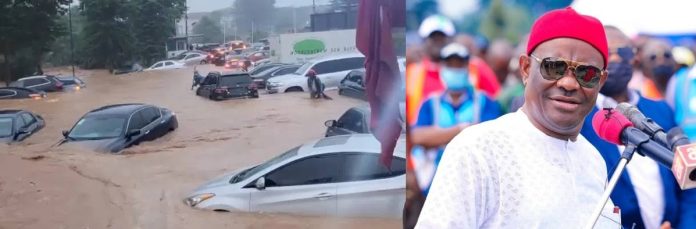
The events of August 15 brought this growing anxiety into sharp focus. Following a heavy downpour, several parts of Abuja were inundated, with flooding reported in Wuse 2, Gudu, Lokogoma, Katampe, Mabushi, Lugbe, Nyanya, Gwarinpa, Asokoro, Maitama, Utako, Wuye and around the bridge linking Gaduwa and Durumi. Motorists were stranded, vehicles were caught in floodwater, and some residential and commercial properties were affected.

For years, flooding in Abuja has often been associated with places such as Lokogoma, Trademore and other rapidly developing areas on the outskirts of the capital. The latest incident, however, brought the problem closer to the city’s established districts, including areas many residents associate with Abuja’s best-planned and most developed neighbourhoods. That alone should make the recent flooding more than another seasonal inconvenience to be forgotten when the roads eventually dry.

The more important question is not simply why Abuja flooded after a heavy rainfall. Cities flood, and even well-planned cities can be overwhelmed by extreme weather. The question that deserves greater attention is whether Abuja’s rapid expansion and changing pattern of development are making the city less capable of absorbing and directing the water it receives.

That question has become particularly relevant following the renewed controversy over the use of green areas, waterways and other spaces that were originally intended to serve environmental and public purposes.

A city designed with nature in mind

Abuja’s story is different from that of most Nigerian cities. It was conceived as a purpose-built federal capital, and its planners sought to incorporate the natural landscape into the structure of the city rather than simply build over it. The Master Plan was completed in 1979 and was intended to provide the framework for the city’s physical development, infrastructure and land use. The plan is now undergoing review because of changes in population, urban expansion and other realities that were not anticipated when it was first conceived.

This history matters because the green spaces, parks, drainage corridors and waterways scattered across Abuja were not necessarily spaces that had simply been left unused. Many formed part of the environmental logic of the city. They provided room for recreation, vegetation, drainage and, in some cases, the natural movement and absorption of stormwater.

As Abuja has expanded, however, pressure on land has increased. Residential estates, commercial buildings, roads, car lots and other developments have progressively transformed parts of the city’s landscape. Urban growth is inevitable, but the question is whether that growth has always respected the environmental limitations and planning principles upon which Abuja was originally built.

Recent research on the Federal Capital City has pointed to substantial changes in land use, including the expansion of built-up areas and a corresponding reduction in vegetation and other natural land cover. The research also identified increased surface runoff and significant areas vulnerable to the accumulation of stormwater. These findings provide an important context for understanding why intense rainfall can have increasingly disruptive consequences in a city that continues to expand.

The implication is not that every new building in Abuja causes flooding, nor that every flood can be traced to a particular development. Rather, the concern is that the cumulative effect of urbanisation, paved surfaces, drainage limitations and the loss or obstruction of natural pathways for water can make a city increasingly vulnerable when intense rainfall occurs.

The rain is only part of the problem

It would be simplistic to blame Abuja’s flooding entirely on construction or the activities of the FCT Administration. Rainfall intensity remains an important factor, and the Nigeria Meteorological Agency has continued to issue flash-flood risk information based on factors including forecast rainfall intensity, soil moisture, drainage capacity, terrain and other hydrological considerations. NiMet’s August 21–31 flash-flood outlook, published on August 24, specifically identified these factors in assessing areas potentially vulnerable to flash flooding.

That means Abuja must be prepared for heavy rainfall regardless of how effectively its planning regulations are enforced. A drainage system can be properly designed and still be overwhelmed by an exceptional downpour. But the existence of extreme rainfall does not remove the responsibility to ensure that the city has adequate drainage, functioning waterways and sufficient open areas to manage the volume of water reaching the ground.

Indeed, NiMet’s own assessment recognises drainage capacity as one of the factors that determine flood vulnerability. The issue, therefore, is not whether the rain should be blamed or absolved. It is whether the city has been adequately prepared for the rain it is already receiving.

When a natural waterway is obstructed, when drainage channels are narrowed, when refuse blocks the passage of water or when large areas of soil are replaced with concrete, the consequences of heavy rainfall can become considerably worse. Water that might otherwise have infiltrated the ground or followed a natural drainage route is forced to find another path, and that path may be a major road, a residential neighbourhood or a commercial property.

This is why the flooding debate needs to move beyond the familiar explanation that Abuja simply experienced a heavy downpour. The rain may be the immediate trigger, but the severity of its consequences is also influenced by what has happened to the city before the rain arrives.

The green areas controversy

The issue came to the forefront after the August 15 flooding, when FCT Minister Nyesom Wike ordered the demolition of structures obstructing designated waterways and drainage channels. The minister, after inspecting affected locations, directed that structures found to be blocking water channels be removed and said the exercise would extend beyond Maitama to other parts of the Federal Capital Territory.

The administration subsequently went further by directing that green areas, parks and gardens should no longer be used as car dealership lots. Wike also ordered an investigation into officials suspected of granting illegal approvals for the conversion of such spaces, with directors in departments including Parks and Recreation, Environmental Protection, Traffic Management and Urban Affairs reportedly summoned as part of the inquiry.

The directives are significant because they acknowledge that the use and alteration of land designated for environmental or recreational purposes cannot be treated as a purely commercial matter. The controversy, however, did not end with the orders.

A report published by News Express found that, one week after Wike’s directive, construction and other forms of development remained visible in areas identified as green spaces and waterways in parts of the capital. The report pointed to locations including Maitama Extension, Wuse, Durumi, Gaduwa and Gudu, raising questions about the extent to which enforcement can reverse years of development and land-use changes.

That development introduces perhaps the most important question in the entire debate: how did structures that allegedly obstruct waterways or occupy protected green areas get there in the first place?

If the developments are illegal, there should be accountability not only for those who built them but also for any official or institution that permitted them to proceed. If they were lawfully approved, the authorities need to explain how such approvals were consistent with the city’s planning and environmental requirements. Without answering these questions, demolition becomes little more than a reaction to the consequences of a problem that should have been prevented much earlier.

Abuja’s drainage system under pressure

There is another part of the problem that should not be overlooked: the condition and capacity of the drainage system itself.

Abuja has grown considerably since its original planning. Population has increased, residential districts have expanded, commercial activity has intensified, and areas that were once relatively open have become densely developed. A drainage system designed for a smaller and less intensively built city cannot simply be assumed to remain adequate indefinitely.

At the same time, the effectiveness of existing drains is affected by maintenance. Where channels are filled with sand, refuse or other debris, their ability to carry stormwater is reduced. In some places, residents themselves contribute to the problem through indiscriminate disposal of waste, while in others the issue may be inadequate maintenance or insufficient drainage infrastructure.

This is why the responsibility cannot be placed entirely on government or entirely on residents. Government has a duty to provide and maintain infrastructure capable of serving the population, while residents and businesses have a responsibility not to obstruct that infrastructure through irresponsible waste disposal. Developers, meanwhile, have an obligation to respect planning requirements and avoid construction that interferes with waterways or drainage corridors.

The failure of any one of these responsibilities can create problems. The failure of several at the same time can turn heavy rainfall into a disaster.

What the flooding says about development control

The controversy over Abuja’s green spaces ultimately leads back to the issue of development control.

Urban planning is effective only when there is a credible system for determining what can be built, where it can be built and under what conditions. Once that system becomes weak, inconsistent or vulnerable to influence, the physical consequences eventually become visible.

This is why the FCT Administration’s investigation into alleged illegal approvals is potentially more important than the immediate demolition exercise. If officials approved the use of spaces reserved for parks, gardens or other environmental purposes without proper authority, the public deserves to know how that happened and what measures will be taken to prevent a recurrence.

There is also a need for consistency. Enforcement should not begin only after flooding has generated public outrage. Developers and property owners should know beforehand that construction on a designated waterway or flood channel will not be tolerated, regardless of who owns the property or how much money has already been invested.

At the same time, enforcement must be based on clear planning records and technical assessments rather than arbitrary demolition. If the authorities are going to remove structures, they must be able to demonstrate that the structures are indeed in violation of applicable planning or environmental requirements. This is necessary not only for fairness but also for public confidence in the exercise.

The uncomfortable question of responsibility

The political temptation in a situation like this is to find one person to blame. Since Wike is the current FCT Minister, it is understandable that much of the public conversation has centred on him. Critics have accused the administration of allowing development on green areas and waterways, while supporters have pointed out that Abuja’s flooding problems long predate the current administration.

Both arguments contain elements that deserve consideration.

Abuja’s flooding problem did not begin in 2026, and it would be inaccurate to attribute every drainage or planning failure in the capital to the present administration. The city has experienced years of rapid urbanisation and land-use changes under successive administrations.

At the same time, the fact that a problem predates the current administration does not make the present administration irrelevant to its solution. The FCT Administration is responsible for planning and development control today, and it has the authority to enforce regulations, protect waterways, maintain infrastructure and investigate alleged violations.

The most useful question, therefore, is not whether Wike personally caused the flooding. It is whether the administration has a credible plan to address the conditions that make Abuja vulnerable and whether it is prepared to enforce that plan consistently.

That is a standard by which the administration should be judged.

The economic cost that does not always make the headlines

The consequences of flooding extend beyond the dramatic images of submerged vehicles that circulate on social media.

A flooded road means lost working hours, delayed deliveries and disrupted commercial activity. A damaged vehicle can represent a substantial financial loss to its owner, while a flooded shop or home can destroy property and goods accumulated over many years. Government, too, bears the cost of repairing roads and other infrastructure damaged by repeated flooding.

For businesses, the uncertainty can be just as damaging as the immediate physical losses. When employees cannot reach their workplaces, customers cannot travel and goods cannot move efficiently, economic activity suffers.

This is why flood prevention should not be viewed simply as an environmental responsibility. It is also an economic necessity. Money spent on proper drainage, maintenance, flood mapping, environmental protection and effective development control can prevent much greater losses later.

The same logic applies to green areas. If a natural drainage corridor is destroyed for short-term commercial development, the cost of replacing its environmental function may eventually be far greater than whatever economic benefit the development initially generated.

A city preparing for its future

The current review of Abuja’s Master Plan provides an opportunity to address some of these challenges comprehensively. The Federal Capital Development Authority has acknowledged that the city’s circumstances have changed significantly since the original plan was developed, with population growth, urban expansion and changing socioeconomic conditions creating new pressures. The review, which involves technical cooperation with Japan’s JICA, is expected to take two years.

The review should therefore not be treated simply as an exercise in redrawing maps. It should answer difficult questions about how Abuja will accommodate further population growth without destroying the environmental systems that make the city liveable.

Where should future development occur? Which waterways and floodplains must be protected absolutely? Which green areas should remain public? Are existing drainage systems adequate for the city’s current population and built environment? Which areas have become too vulnerable for further development? How should satellite settlements be incorporated into a wider flood-management strategy?

These questions are more important than simply deciding where the next road or housing estate should be built.

A master plan is useful only to the extent that it reflects reality and is enforced. Abuja does not merely need another plan that looks impressive on paper; it needs institutions capable of ensuring that the plan survives contact with powerful interests, commercial pressures and the constant demand for land.

The rain will return

Perhaps the most troubling development is the change in how residents now perceive rainfall. In a city where the heat can be intense for much of the year, rain has traditionally been welcomed as relief. Increasingly, however, a darkening sky can trigger calculations about traffic, roads, drainage and the possibility of being stranded.

That psychological shift should not be ignored.

Residents should not have to know which roads to avoid every time a storm approaches because they have learnt from experience where flooding is likely to occur. They should not have to decide whether to leave work early because they are uncertain whether a familiar route will remain passable. Nor should businesses have to factor the possibility of flood disruption into the ordinary routine of operating in the nation’s capital.

Abuja cannot prevent heavy rainfall, and it cannot eliminate every risk associated with extreme weather. What it can do is determine how much damage that rainfall causes. That requires protecting waterways and green areas, maintaining and expanding drainage infrastructure where necessary, enforcing development regulations, improving waste management and using available meteorological and hydrological information to prepare before extreme rainfall occurs.

Most importantly, it requires a change from reactive to preventive governance. Waiting until floodwater has entered homes, submerged vehicles and paralysed roads before taking action is costly and unsustainable. The objective should be to identify vulnerabilities when the roads are still dry and correct them before the next storm exposes them.

The recent flooding has therefore presented Abuja with an opportunity as much as a crisis. The controversy surrounding green areas, the demolition of structures obstructing waterways, the investigation into alleged illegal approvals and the ongoing review of the Master Plan have all converged at a moment when the capital can no longer afford to treat flooding as an occasional inconvenience.

For Abuja’s residents, the issue is becoming increasingly personal. Every approaching storm now carries an uncomfortable question: what part of the city will be affected this time?

That is not how a modern capital should make its residents feel.

The answer, however, will not be found in blaming the rain, nor in demolishing structures only after flooding has occurred. It lies in recognising that Abuja’s resilience depends on the relationship between its natural environment, its infrastructure and the way its land is developed. If waterways are protected, drainage systems maintained, green spaces preserved and planning regulations enforced before violations become entrenched, the city will be far better positioned to withstand the increasingly intense rainfall that climate and weather patterns may bring.

The rain will continue to fall. Abuja’s real challenge is to ensure that when it does, the city remains capable of receiving it without turning its roads into rivers and its residents into reluctant spectators of another avoidable crisis.

For a capital that was planned from the beginning around the relationship between people, infrastructure and the environment, that should not be an unreasonable expectation.


 

2027 Presidency: SDP vows 50% appointments for women, mobilises Nigerians to unseat Tinubu

0

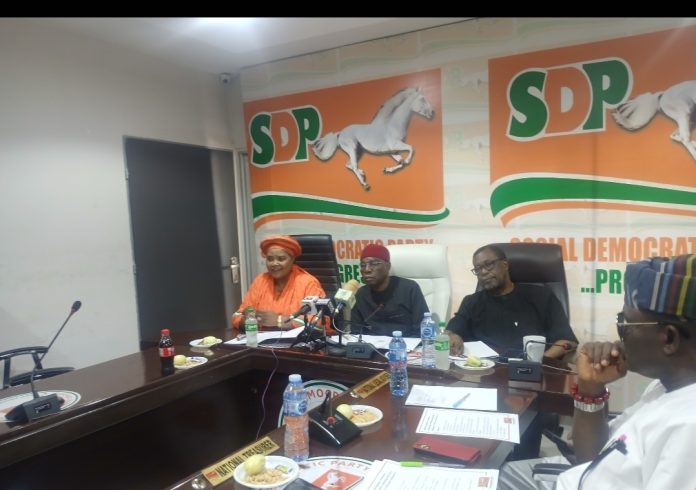
The Social Democratic Party, SDP, has promised to reserve 50 per cent of political appointments for Nigerian women if its presidential candidate, Prince Adewole Adebayo, emerges victorious in the January 16, 2027 presidential election.

The party’s National Chairman, Prof. Sadiq Gombe, and its Women Leader, Sa’adatu Abdullah, disclosed this at an event in Abuja on Friday.

Speaking at the event, Gombe, who was represented by the opposition party’s Deputy National Secretary, Senator Ugochukwu Uba, assured Nigerians that women would assume their rightful place if the SDP is elected.


According to him, the SDP’s constitution guarantees that women will not be left behind in the scheme of things in Nigeria, Africa’s most populous country.

“In appointments, in all organisations, it’s going to be 50-50.

“SDP! Progress! That’s the position of the SDP. We are going to give women their rightful place in all activities and in all deliberations. And once our manifesto comes out, you are going to see it.

“We assure you, women will not be left behind. This is a party that is ideological. I think we are the only ideological party in Nigeria today,” he said.

Earlier, the Women Leader, Abdullah, said the voices of women would not only be heard on the home front but also on the political front if the SDP is elected.


She vowed to mobilise women across Nigeria to vote out President Bola Ahmed Tinubu in 2027.


“Our voices are heard in every home across our communities. Our mission is clear: to organise, mobilise, participate and deliver results,” she stated.

Nigerian Newssphere reports that campaigns for the 2027 presidential election commenced on August 19, with Tinubu; Adebayo of the SDP; former Vice President Atiku Abubakar; and Peter Obi of the Nigeria Democratic Party among the major contenders on the list of 19 presidential candidates released by the Independent National Electoral Commission, INEC, ahead of the election.


NLC General Secretary Emmanuel Ugboaja is dead

0

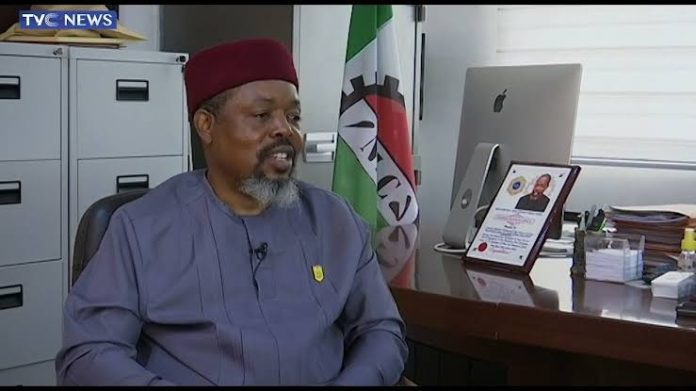
The General Secretary of the Nigeria Labour Congress, NLC, Emmanuel Ugboaja, has died.

According to Vanguard, NLC President Joe Ajaero disclosed Ugboaja’s death in a letter from the late labour leader’s family to members of the Congress National Executive Council, NEC.

Ugboaja was the fifth General Secretary of the NLC and a veteran trade unionist and lawyer.

He was appointed General Secretary of the labour centre in August 2019.

Born on May 15, 1966, Ugboaja obtained his law degree from the University of Calabar in 1987.

According to the NLC’s historical biography, he was the first Nigerian lawyer to work full-time for a trade union.

His death marks a significant loss to the Nigerian labour movement, where he played a prominent role in trade union activities for several years.

FTSE Russell Reclassification: Don’t lobby- Expert tells Nigeria, reveals way forward

0

Popular financial analyst and Professor of Accounting, Prof. Godwin Oyedokun, has reacted to plans by global index provider FTSE Russell to reclassify Nigeria as a Frontier Market, saying the country should focus on improving its investment environment rather than lobbying for a better market classification.

Oyedokun, in an interview with Nigerian Newssphere on Thursday, said the proposed reclassification should not be viewed as an economic disaster but as a wake-up call for Nigeria to address longstanding challenges affecting foreign investors.

His comments come amid reports that FTSE Russell is set to reclassify Nigeria in September after placing the country’s classification under “further review” following concerns about the transition of the Nigerian capital market from a T+2 to T+1 settlement cycle on June 1, 2026.

FTSE Russell’s June review had paused its earlier decision to reclassify Nigeria as a Frontier Market.

Reacting to the development, Oyedokun said Nigeria must prioritise foreign-exchange liquidity, capital repatriation, market accessibility, regulatory transparency and investor confidence.

“I would not describe the reported FTSE Russell development as an economic disaster.

“Nigeria was previously moved to Unclassified status, and the proposed move to Frontier Market status is actually a step forward from that position.


“The concern is that the review highlights persistent questions around foreign-exchange liquidity, repatriation of capital, market accessibility and the implementation of reforms such as T+1 settlement,” he told DAILY POST.


According to him, the real concern should not be whether Nigeria is classified as a Frontier or Emerging Market, but whether international investors can operate in the country without unnecessary uncertainty.


“For Nigeria, the issue is bigger than the label Frontier or Emerging Market. International investors want to be able to enter the Nigerian market easily, invest confidently and repatriate their funds without unnecessary uncertainty,” he said.


Oyedokun urged the Federal Government to see the FTSE Russell review as an opportunity to strengthen the country’s investment climate.


“Government should therefore treat the FTSE Russell review as a wake-up call, not a political controversy.


“Nigeria needs deeper market liquidity, transparent regulation, predictable policies, efficient settlement systems and stronger investor protection,” he added.


The accounting professor stressed that Nigeria should not lobby international index providers to secure a better classification.


“We should not lobby international index providers for a better classification; we should create an investment environment that makes a better classification inevitable.


“The real upgrade is not the FTSE label; it is restoring and sustaining investors’ confidence in Nigeria,” he said.


Recall that Nigeria was originally reclassified from “Unclassified” to “Frontier Market” status following FTSE Russell’s March 2026 interim review, with implementation scheduled to take effect from the opening of trading on September 21, 2026.


FTSE Russell had in September 2023 removed Nigeria from its Frontier Market status following persistent difficulties experienced by international investors in repatriating capital and executing foreign-exchange transactions.

Police invite VeryDarkMan 

0

The Nigeria Police Force (NPF) has invited social media critic Martins Vincent Otse, popularly known as VeryDarkMan (VDM), to substantiate allegations he made against police officers during the Nigerian Bar Association (NBA) conference in Port Harcourt.

Nigerian Newssphere reports that VDM was a panelist at the 66th Annual General Conference of the NBA on Tuesday, where he alleged that some police officers manning checkpoints along major highways provide kidnappers and bandits with information about travellers.

According to the activist, the alleged actions of the officers contribute to abductions for ransom across the country.

Reacting to the allegation, the Force Public Relations Officer, CSP Ani Iniedu, in a statement on Thursday, denied the claim.

The police said officers deployed to “checkpoints and other locations nationwide are there to prevent crime, detect criminal activity and protect citizens, not to facilitate kidnapping.”

The statement added that the same officers “routinely confront the very criminal elements alleged to be receiving such information.”

The NPF said it was inviting VDM to provide evidence supporting his allegations.

“Accordingly, the Nigeria Police Force hereby invites Mr. Martins Vincent Otse to produce, without delay, the evidence upon which he based these serious allegations, including any evidence that police personnel at checkpoints identify wealthy individuals and subsequently transmit information about them to kidnappers for the purpose of facilitating their abduction.

“Any such information will be treated with urgency and investigated thoroughly.

“We encourage any member of the public with credible evidence of officer misconduct to come forward through these channels rather than through public allegation alone, so that appropriate action can be taken,” the statement added.

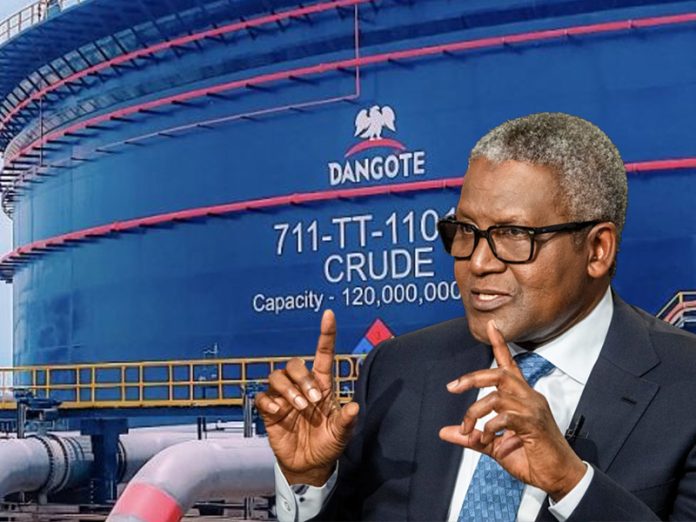
Dangote Refinery IPO: Iledare reveals major risk investors face ahead of $5bn offer

0

Professor Emeritus of Petroleum Economics and energy expert, Prof. Wumi Iledare, has identified Nigeria’s government structure as a major risk potential investors should watch ahead of Dangote Refinery’s planned $5 billion Initial Public Offering (IPO) in October 2026.

Iledare, in an exclusive interview with Nigerian Newssphere on Wednesday, said the prospects of investing in the refinery remain strong, but investors would closely assess the sustainability and accessibility of crude oil supplies as well as Nigeria’s broader governance and policy environment.

“What investors are looking at is the prospect. And the prospect is good.

“You cannot find any country in the world that is not sourcing one material for the other for the manufacturing of goods and services that they are producing.

“So, the only thing that the investor may be looking at is sustainability and accessibility to crude supplies.

“And so far so good, not having a higher competitive advantage if the majority of the goods that they are using come from Nigeria, well, that will not in any way, in my opinion, compromise the ability for Dangote Refinery to source out the goods if they have the ability to pay for it.”

However, Iledare warned that Nigeria’s government structure could be a source of concern for investors assessing the refinery’s IPO.

“The only thing that would be a little bit worrisome for investors is the government structure of Nigeria.

“Like if they pay for subsidy banks or subsidy non-banks or subsidy grants, those are the only thing investors should be looking at when it comes to buying IPOs,” he said.

He, however, noted that Dangote Refinery’s operation within a free trade zone could help mitigate some of the risks associated with Nigeria’s governance structure.

“But the potential for Dangote’s structure is not only gains on crude supplies from Nigeria.

“Luckily, Dangote is one firms operating in free trade zone.”

The refinery recently shifted its IPO timeline from September to October after securing a $1 billion underwriting commitment.

Nigerian Newssphere reports that Dangote Refinery, Africa’s largest single-train refinery, has become a major player in Nigeria’s downstream petroleum sector, supplying refined petroleum products to the domestic market and export destinations.

The planned IPO is expected to offer investors an opportunity to acquire equity in the refinery while helping the company raise substantial capital for its operations and expansion.