

Sunday, June 28, 2026
Home Blog Page 303

$19bn Dangote Refinery: Hopes, concerns as May 22 commissioning approaches

0

By Ariemu Ogaga

The May 22, 2023, commissioning date for the long-awaited $19 billion Dangote Refinery is a piece of good news for Nigerians. Outsiders may not immediately understand why. But anyone who has been following the travails of the Nigerian nation over refined petroleum products in the past 30 years will have an idea of the significance of this development.

For more than 25 years, Nigeria and its citizens have been bearing the albatross of fuel scarcity. The situation is a paradox that can only be explained by The Rime of the Ancient Mariner, the poignant poem that gave the world the phrase “water, water, everywhere, not a drop to drink,” usually employed to describe conditions of being unable to benefit from something that is in abundance.

Aside from being a major oil-producing country, Nigeria’s crude oil types are sought-after across the world. The irony is that the country itself is plagued by a perennial scarcity of petroleum products, from Premium Motor Spirit (PMS) to diesel to kerosine. The situation led to the entrenchment of the aberration of government-subsidised importation and the anomaly of prohibitive pump prices.

While the answer to the problem lies in getting a refinery working to handle domestic consumption, Nigeria has laboured in vain, and inexplicably so, for over 28 years to get its four refineries working. In the end, it is commonly believed that the refineries are jinxed.

This is why the Dangote Refinery is a landmark achievement and a panacea to the fuel scarcity conundrum.

As we count down the days to May 22, there are permutations in the public domain on how this milestone development will impact the dynamics of petroleum marketing in Nigeria. The pros give wings to optimism; the cons call for caution.

Breaking the refinery jinx

The history of Nigeria’s four government-owned refineries is a dismal narrative of neglect, unproductivity, waste, corruption and possibly sabotage.

The old Port Harcourt Refinery, with 60,000 barrels per day (bpd) capacity, was commissioned in 1965. The Warri Refining and Petrochemical Company Limited, built in 1978, has a 125,000 bpd capacity. The 1980-commissioned Kaduna Refining and Petrochemical Company had a 110,000 bpd capacity. And the New Port Harcourt Refinery, whose capacity was 150,000 bpd, was commissioned in 1989. Cumulatively, the four state-owned refineries had 450,000 bpd of capacity.

Nigerians, however, have forgotten the time when the refineries served useful purposes. All they hear every year are uninspiring stories of how the facilities are undergoing turnaround maintenance.

The country had built its hopes on getting the four refineries into their optimal states; year after year, however, the hopes were dashed until it was evident that Nigeria needed a fresh alternative.

The idea of private refineries is not new. A significant number of Africa’s largest private refineries are located in Africa’s major oil-reserve countries, such as South Africa, Egypt, and Libya.

For example, the SAPREF refinery, operated as a joint venture between BP and Shell, is the largest crude oil refinery in southern Africa, boasting a 180,000 bpd capacity.

Similarly, there is the El Nasr refinery, owned and operated by Nasr Oil, the second largest in Egypt, with a capacity of 132,000 bpd.

These are examples of private oil companies that succeeded.

Dangote is Nigeria’s first.

With the capacity to process 650,000 crude barrels per day, hope is rekindled that the Dangote Refinery is going to be a game changer.

The big question is: will it meet the demand of Nigeria’s daily consumption of 74 million litres?

Benefits of $19 Dangote Refinery

One big relief is that it will save the Nigerian state the agony of wasting national resources on many fronts.

The first front is the turnaround maintenance of moribund refineries, which consumes gargantuan money.

A March 6, 2022, report by the Socio-Economic Rights and Accountability Project (SERAP) said President Muhammadu Buhari’s government spent $396 million to maintain the country’s refineries between 2015 and 2020 alone.

The report added that N82.82 billion was reportedly spent in 2015, N78.95 billion in 2016, N604.127 billion in 2017, N426.66 billion in 2018, N218.18 billion in 2019, and N64.534 billion from January to June 2020. Despite this vast spending, the status quo did not change. Nigerians have continued to suffer from fuel scarcity.

On the second front, the country will save resources spent on fuel subsidies arising from the importation of PMS.

Mele Kyari, Group Chief Executive Officer (GCEO) of National Nigerian Petroleum Corporation Limited, said during the official launch of NNPCL in 2021 that Nigeria is spending an average of N400 billion monthly on subsidising imported fuel.  According to public data, fuel subsidy payments usually consume a chunk of Nigeria’s annual budget.

In January, the NNPCL said the country spent N4.39 trillion on fuel subsidies in 2022. According to the Minister of Finance, Budget, and National Planning, Nigeria would spend N3 trillion subsidising fuel from January to June 2023. The same amount would likely be expended on fuel subsidies in the next half of the year.

The National Bureau of Statistics’ Fourth Quarter Report of 2022 said Nigeria spent N1.79 trillion on the importation of petrol and diesel; this is coupled with the N4.39 trillion spent on fuel subsidies.

In the first quarter of 2023 alone, Nigeria spent N3 trillion on fuel subsidies; if the subsidy payment persists, it will spend N4 trillion in the next half of the year. The economics of fuel subsidies is destructive to the country’s long-term development and is also unsustainable.

With the advent of the Dangote Refinery, the government is in a position to end the regime of fuel subsidies.

The Minister of Finance, Budget, and National Planning, Zainab Ahmed, had hinted at fuel subsidy payment removal by June’s end. The process, however, was suspended. It is hoped the incoming administration will pursue it to a logical conclusion.

Experts familiar with the industry asserted that the billions of naira spent on fuel importation and subsidies would be saved when the Dangote refinery comes on board.

A week ago, Aliko Dangote, during an interview with the Economist magazine, disclosed that the Dangote Refinery could save Nigeria $10 billion in foreign exchange (FX) and generate another $10 billion in exports when the facility begins operation.

Speaking with Nigerian Newssphere during the weekend, oil and gas experts all agreed that the refinery, the biggest of its type in the world, would be a game-changer in Nigeria’s downstream petroleum industry.

On his part, Dr Diran Fawibe, Chairman, International Energy Services, is optimistic that the emergence of the Dangote Refinery will end fuel and diesel importation in Nigeria.

According to him: “The refinery coming on stream will have a tremendous impact on the petroleum industry and the Nigerian economy. You have a situation right now where Nigeria is spending 30 to 33 per cent of foreign exchange earnings or 35 per cent of foreign exchange earnings on importing petroleum products into the country. If Dangote refinery’s product goes on full stream, this will back out this importation; in other words, we shall no longer be importing petroleum products.”

Similarly, Nick Agule, a chartered accountant and business intelligence consultant with 21 years of unbroken oil and gas industry experience, opines that the Dangote refinery would save a lot of revenue that could have been spent on the transportation of petroleum products into the country.

He says: “We will save costs from the importation of petroleum products. Currently, Nigerian consumers or the government (through subsidies) are paying the cost of shipping crude to foreign refineries, the cost of refining at high costs with a minimum wage of over $1000 in foreign refineries, taxes paid by foreign refineries, and the cost of shipping the products back to Nigeria, including insurance, clearing, and demurrage. DR will not bear all these costs and not transfer them to Nigerian consumers, or the government’s huge expenditure on subsidies will be saved.”

He also adds: “The refinery would boost Nigeria’s job creation with thousands of Nigerians taken off the market directly and indirectly by the refinery, savings in forex as the pressure to source the dollar to import petroleum products will be eliminated, tax revenue for the government along the whole fuel value chain, and Nigeria will be insulated from petroleum product shocks, e.g., the war in Ukraine impacted negatively on our ability to source products on the international market. With local refining, we’ll be saved from such shocks.”

The opinion of Bala Zakka, an accountant, engineer, and tax expert who is a member of the Engineering Research and Public Policy Committee of the Institute of Chartered Accountants of Nigeria (ICAN), also aligned with that of Agule and Fawibe on the economic benefits of the Dangote refinery. If properly harnessed, the refinery would lead to the end of persistent fuel scarcity in Nigeria, he notes.

Experts also agreed that the refinery’s capacity of 650,000 barrels per day would cover Nigeria’s current daily consumption of 60 to 74 million litres of PMS.

On this note, Fawibe explains: “The expectation is that by 2024, Nigeria should not, all things being equal, be importing any litre of petroleum into this country.”

Perspectives on pitfalls

On the flip side, the Dangote Refinery has implications.

It is all but a given that the entrance of the Dangote Refinery on May 22 is the final death knell for Nigeria’s four government-owned refineries. While it was nice to see the money-guzzling contraptions gone, their absence raised questions that bordered on monopoly.

The Dangote Refinery is a private company; unlike state-owned refineries, it would be driven by profit-making motives. Therein lies the concern of a school of thought that pointed out that most members of the Organisation of Petroleum-Producing Countries (OPEC) operate largely state-owned refineries.

For instance, the Saudi Arabian Oil Company, Aramco, with a net income of $16.6 billion, according to 2022 financial records, is an example of a state-owned refinery. Similarly, Kuwait, Angola, Iran, Iraq, and other OPEC member states operate refineries under state ownership. What Nigeria ended up with is a model that is at the polar end of the spectrum, where petrol pricing would likely be at the behest of a private citizen and a capitalist.

Another school of thought, however, pointed out that the unit price of a litre will not be a big issue since the Nigerian government owns a minority stake in the refinery.  Indeed, in August 2021, Timipre Sylva, the former minister of state for Petroleum Resources, said the FEC approved the sum of $2.76 billion to acquire a minority stake.

Zakka believes there is no basis for fear over price of petroleum products, noting that the Dangote Refinery cannot operate outside of global oil economics. Ownership type doesn’t dictate the international price of crude oil or sales, he states.

On this, Dr Fawibe also says: “We only hope we will be able to manage the fallout of this in terms of pricing that will enable the Dangote Refinery to recover its investment with appropriate pricing.”

He further calls on the Federal Government to consider licencing modular refineries, especially in the Niger Delta region. This, according to him, would create competition and keep prices down.

There is also the fear of sabotage by faceless cartels that have long held the Nigerian petroleum market by the jugular.

Fuel subsidies had become a big racket, with powerful forces frustrating every effort to discontinue the regime.

The attempt by the Goodluck Jonathan administration to end fuel subsidies was met with massive protests across major cities in Nigeria, with Lagos, in particular, becoming a cauldron of protests by interest groups, activists, and opposition politicians. There were stories of bodies with vested interests that bankrolled groups and labour forces to mount fierce opposition to the move.

The advent of Dangote Refinery will pull the rug from under their feet. Whether they will fight back, how, and when, only time will tell.

In an exclusive interview with Newssphere, however, the President of the Independent Petroleum Marketers Association of Nigeria (IPMAN), Chinedu Okoronkwo, gives the assurance that his members are ready to work with the management of Dangote Refinery to ensure that Nigerians have an uninterrupted supply of fuel.

“It is a welcome development; let’s see it come onboard,” he says.

On the aspect of pricing and related challenges, Okoronkwo avows that there is no cause for alarm.

“When we get there, we will cross it,” he affirms. “We are happy that the company is coming on stream; it would mean that more petrol products would be available in-country for supply by our members across the country.”

Looking ahead

The refinery is a laudable development. Ordinary Nigerians hope it will bring the needed succour. Stakeholders in the downstream sector are banking on it to usher in new dynamics that will allow Nigerians to enjoy the benefits of being an oil-producing country.

In the best-case scenario, the Dangote refinery will be an open door to Nigeria’s stability in terms of domestic petroleum consumption sufficiency, availability, and affordability.

At worst, Nigerians will have to adjust to a new era where they pay more to fill their vehicles’ tanks but fuel scarcity becomes a thing of the past.

In between the two scenarios, there is a point where the situation can be a win-win for the country, its citizens, and the investor who took the bull by the horn to break the jinx of having functional petroleum refineries in Nigeria.
Breaking: Atiku to storm Presidential Election Petition Court today to witness proceedings

0

Breaking: Atiku to storm Presidential Election Petition Court today to witness proceedings

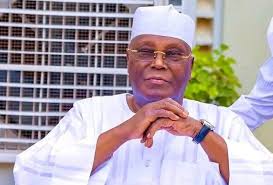
The Presidential candidate of the People’s Democratic Party PDP in the last presidential election, Alhaji Atiku Abubakar, will storm the Presidential Election Petition Court this morning to witness proceedings in his petition challenging Bola Ahmed Tinubu and the All Progressives Congress APC as winners of the election.

The former Vice President would arrive at the Court at around 10 am to specifically witness submissions in his motion on notice seeking live coverage of the Court by the media.

Sources in the media camp of Atiku confided in our correspondent that their boss would physically and personally be at the Court of Appeal, where the tribunal is sitting.

Peter Obi, the Labour Party LP candidate, was at the Court on Monday and Wednesday, where he witnessed proceedings in his own petition.

Nigerian Newssphere was reliably informed that Atiku would be accompanied to the Court by the leaders of the PDP, followers, sympathisers and business associates.

Our correspondent noted, at the time of this report, that security has been beefed up to prevent security breaches, given the status of Atiku as a former Vice President of the Federal Republic of Nigeria.

Although Atiku’s petition was initially slated for 2 pm for the pre-hearing session, it was gathered that it had been brought down to this morning.

Elon Musk to add audio, video calling features on Twitter

0

Twitter owner, Elon Musk, 51 has announced some major feature additions to the microblogging platform.

He said Twitter will get video, audio calls and encrypted chat features soon.

He disclosed this in a tweet on Wednesday morning.

Musk, however, explained that the voice and video chat features would not necessarily mean giving out users phone numbers.

He wrote, “With latest version of app, you can DM reply to any message in the thread (not just most recent) and use any emoji reaction.

“Release of encrypted DMs V1.0 should happen tomorrow. This will grow in sophistication rapidly. The acid test is that I could not see your DMs even if there was a gun to my head.

“Coming soon will be voice and video chat from your handle to anyone on this platform, so you can talk to people anywhere in the world without giving them your phone number.”

Musk had acquired Twitter in a $44 billion deal.

His ownership has brought drastic changes to the platform including recently introduced paid subscription for verification blue tick.


ISD Envoy, Dotse seeks collaboration with Secretariat of Biological Diversity

0

The International Society of Diplomats’ (ISD) African Special Envoy on Climate Change, Dr. Samuel Dotse has expressed his desire for collaboration and partnership with the Secretariat of the UN Convention on Biological Diversity in Montreal, Canada.

Dotse made the call during a courtesy visit to the secretariat of the UN Convention on Biological Diversity in Canada on April 25, 2023.


The courtesy call was to engage the Secretariat on key issues affecting Africa’s natural resources, explore areas of collaboration.

Dotse said the partnership will bring technical and financial means that would enhance the well-being of African people, especially women and youth.

He also commended the leadership of the Secretariat for their work in ensuring the Kunming-Montreal Global Biodiversity Framework was adopted.

According to Dr. Dotse “ the Secretariat, particularly Mr. Neil Pratt, Senior Environmental Affairs Officer, and Ms. Veronique Allan, Team Assistant in Science, Society, and Sustainable Division are all working to ensure the adoption of the Kunming-Montreal Global Biodiversity Framework especially during the fifteenth meeting of the Conference of Parties held from December 7–19, 2022, in Montreal, Canada, under the presidency of the People’s Republic of China.”

He also applauded them on the establishment of the global biodiversity fund.

Dr. Dotse noted that the conventions on biological diversity and climate change had a collective goal to take action to protect the natural resources that human beings depended on for their survival.

“ Africa suffers from the devastating impacts of climate change and biodiversity loss and has clearly recognized the need for urgent and rapid action.

“The time had come to transform economic systems and human behavior,” he added.

He stated that the newly adopted framework will set the global biodiversity action agenda for the next decade and provide a programming framework for Africa to restore degraded lands and ecosystems, halt biodiversity loss, and boost resilience in the coming years.

He proposed that “the Secretariat should consider the International Society of Diplomats, especially the Office of the African Special Envoy on Climate Change, as partners, including supporting African governments to mainstream biodiversity into government and business decision-making.

“ Signing a cooperation agreement with the Secretariat covering areas of collaboration and interventions for cities, the private sector, and third-party organizations will be deeply appreciated,” he said.

He assured the Secretariat of his support to promote nature-based solutions and the climate mitigation and adaptation agenda, while encouraging governments to scale up nature-based solutions for mitigation, resilience, and adaptation in key areas to ensure people’s livelihoods in the face of climate threats, and increase and mainstream nature-based solutions within national governance.

Ms. Veronique Allan expressed her appreciation to De. Dotse for the courtesy call and commended the ISD’s willingness to partner with the Secretariat of the Convention on Biological Diversity in halting biodiversity loss.

Appeal Court President to unveil Presidential Election Petition Tribunal Panel May 8

0
The stage is now set for the President of the Court of Appeal, Justice Monica Bolnaan Dongban-Mensem to formally unveil members of the Presidential Election Petition Tribunal (PEPT) that would adjudicate  on all petitions filed against the declaration of Bola Ahmed Tinubu and the All Progressives Congress (APC) as  winners of the disputed 2023 Presidential election.
The unveiling of the tribunal members slated for Monday, May 8, 2023 would be carried out at the Court of Appeal Headquarters in Abuja.
Justice Dongban-Mensem had since the presidential election result was made public, kept the names of the tribunal members to her chest to avoid undue influence on them.
The unveiling of the tribunal is coming on the heels of the Action Alliance (AA) and its Presidential Candidate in the election, Solomon David Okanigbuan notifying  the tribunal of their intentions to withdraw their petition against the declaration of Tinubu as Nigeria’s President-elect.
The notice of withdrawal of the petition would be tabled before the Presidential Election Petition Tribunal (PEPT) on May 8th during the inaugural sitting at the Court of Appeal Headquarters in Abuja.
A Motion on notice for the withdrawal of the petition marked CA/PEPC/01/2023 obtained by Daily Post showed that it has been slated as the first assignment of the tribunal.
Aside Tinubu, others listed as respondents in the AA’s petition are the Independent National Electoral Commission (INEC), All Progressives Congress APC and Hamza Al Mustapha.
However, other petitions slated for pre-hearing session are those of the Action People’s Party (APP) marked CA/PEPC/02/2023 and has Bola Ahmed Tinubu, All Progressives Congress (APC) and the Independent National Electoral Commission (INEC) as three respondents.
It would be followed by that of Peter Gregory Obi and the Labour Party (LP)  marked CA/PEPC/03/2023 with INEC, Senator Bola Ahmed Tinubu, Senator Kashim Shetima and APC as four respondents.
A Cause List of the tribunal for May 8th sighted by Daily Post showed that the Allied People’s Movement (APM) would proceed with its petition marked CA/PEPC/04/2023 against Tinubu.
Defendants in APM’s petition are INEC, APC, Bola Ahmed Tinubu, Kashim Shetima and one Kabir Masari.
Nigerian Newssphere noted that the petition of Abubakar Atiku and the People’s Democratic Party (PDP) marked CA/ PEPC/05/2023 would be treated last and it has INEC, Tinubu Bola Ahmed and the APC as three respondents.
Our Correspondent observed that the Court of Appeal’s Main Court Hall to be used by the tribunal has been locked up as part of security measures while adequate security operatives have been mobilized to ward off possible security breaches during the proceedings.
It was also gathered that all parties in the five petitions have been served with hearing notices through the Chambers of their respective lawyers

Rema enters Guinness World Record with ‘Calm Down’ 

0
LONDON, ENGLAND - MAY 31: Rema attends the boohooMAN X Rema exclusive launch party on May 31, 2022 in London, England. (Photo by David M. Benett/Dave Benett/Getty Images for boohooMAN )

Nigerian singer and rapper, Divine Ikubor, popularly known as Rema, has entered into the Guinness World Record book.

The Edo-born music star achieved the feat with his global hit song ‘Calm Down’ which made history as the First No.1 Hit on The Official MENA Chart (the world’s first regional streaming chart).
Guinness World Record recognised the singer for achieving the historic feat in a statement on its website recently.
According to the statement, Rema was being recognised for securing the first number 1 hit on the world’s first regional streaming chart and first-ever official chart in the Middle East and North Africa (MENA).
Rema’s ‘Calm Down’ debuted No. 1 when the MENA Chart was launched by the International Federation of the Phonographic Industry (IFPI) on November 29, 2022.
The song topped the chart for over two months.
He now joins Femi Kuti and Wizkid as the Nigerian musicians with World Guinness records.

10th Senate Presidency: How Umahi dumped Kinsman, Kalu for Akpabio

0

As the intrigues to the 10th National Assembly leadership continue to mount, three Senators-elect under the ruling All Progressives Party stepped down their ambitions to become the Senate President for Senator Godswill Akpabio.

The development comes after a close-door meeting with APC senators elect at the Ebonyi state Government Lodge in Abuja.

The trio who dropped their ambitions for Akpabio are Governor Dave Umahi, Ali Ndume and Jubrin Barau.

The senators disclosed their position to Journalists shortly after the meeting on Friday.

Speaking on their behalf, Ndume said the trio put outside their quests to be Senate President for Akpabio.

According to him,  “we know he has the capacity to lead the Red Chamber of the federal legislature.”

Meanwhile, the Senators picked Barau as preferred candidate for Deputy Senate President.

From the foregoing, Umahi has abandoned his kinsman, Orji Uzor Kalu, the former Governor of Abia state who is vying for same position.

Recall that APC leadership met recently on the need to have a consensus for the 10th NASS leadership.

The 10th National Assembly is billed for inauguration in June this year.

NCC disowns fake LinkedIn Account of Prof Danbatta

0

The Nigerian Communications Commission (NCC) has been made aware of a fake LinkedIn account that is being attributed to our Executive Vice Chairman and Chief Executive Officer, Prof Umar Garba Danbatta.

We wish to categorically state that the said LinkedIn account is fake and has no affiliation with the NCC or Prof Danbatta.

We, therefore, urge the public to be wary of any communication or connection request from this fake LinkedIn account, as it is being operated by fraudulent individuals, who may be seeking to defraud unsuspecting members of the public.

We wish to use this opportunity to remind the public that it is important to verify the authenticity of any online account, especially when such accounts claim to belong to public figures or organizations. We advise the public to only connect with verified and official accounts of the NCC and its officials.

We take this opportunity to warn those behind this fake LinkedIn account that they are engaging in criminal activities, and we will not hesitate to take legal action against them if they are caught. We remain committed to protecting the public from online fraud and ensuring a safe and secure online environment.

May Day: Your entitlement syndrome too much, ‘leave if you want’-Ngige hits at doctors

0
As Nigeria’s workers celebrate Day, the Minister of Labour and Employment, Dr Chris Ngige, has reacted to the strike threat by medical doctors.

Ngige disclosed this on Monday during an Arise Television interview monitored by DAILY POST.

According to him, President Muhammadu Buhari’s administration has done a lot for workers in Nigeria.

Recall that the National Association of Resident Doctors, NARD gave the federal government Two weeks strike ultimatum.

The doctors listed the bill seeking compulsory five-year service for graduates in medical and dental fields before being granted a full licence as part of the reasons for the proposed strike.

However, Ngige said the Country had enough for Nigerian-trained doctors deserving of patriotism.

“They said that we have not done enough; as I said before, you can leave Nigeria; it is left for the education, health Ministries to function out what to do. We train people free of charge because they pay N48-50,000 per session while their counterparts abroad pay $100/£80 per session; they borrow the money from the bank, and when they graduate as doctors, repayment is done, which is why they don’t leave their Country.

“But here we train you free; my own was through scholarship. So why won’t I be patriotic to serve my Country? You are saying a bill by a private member is the reason you want to go on strike. How can a government tell a member who did a private members’ bill, not even an executive? Do you now list it as one of the conditions for going on strike? That is absurd.

“The sense of entitlement is too much in this Country. Like I said earlier, you obey the law, look odd, and apply it to a wicked man. I don’t have any apology for what I have done”, he stated.

Danbatta condoles families of former Minister Gwadabe, BUK Registrar

0

The Executive Vice Chairman of the Nigerian Communications Commission (NCC), Prof. Umar Garba Danbatta, on Thursday, led a delegation of top officials of the Commission on condolence visits to the families of two prominent Nigerians who recently passed away.

The visits were to the families of the late Alhaji Musa Gwadabe, former Minister of Labour, and the Registrar of Bayero University, Jamil Ahmed Salim, who both died recently in Kano.

During the visits, Danbatta commiserated with the families of the deceased and prayed for the repose of the souls of the departed. He described the late Alhaji Musa Gwadabe and the Registrar of Bayero University, Kano as patriotic Nigerians who contributed immensely to the development of the country in various capacities.

According to him, the loss of such great minds is not only a loss to their families but also to the entire nation. He, however, urged the families to take solace in the fact that their loved ones lived exemplary lives and left indelible marks in the sands of time.

He said, “We are deeply saddened by the news of the passing of Alhaji Musa Gwadabe and the Registrar of Bayero University, Kano. They were great Nigerians who made remarkable contributions to the development of our dear country. They will be greatly missed.”

He added, “We pray that the Almighty Allah grants them eternal rest and gives their families the fortitude to bear the irreparable loss.”

The families of the deceased expressed their gratitude to the NCC boss.

The EVC also paid a similar visit to the Vice Chancellor of the BUK, Prof Sagir Adamu Abbas who equally expressed gratitude for the visit.

Jojobet GirişGrandpashabetgrandpashabetMariobetcasibom güncel girişjojobet mobil girişgrandpashabetgrandpashabet girişJojobet GirişJojobetgrandpashabetcasibomgrandpashabet girişholiganbet