

The Minister of Communications, Innovation, and Digital Economy, ’Bosun Tijani, has said about 20 million Nigerians currently without access to internet and digital services will begin to experience significant improvements from 2027, as major infrastructure projects come on stream.
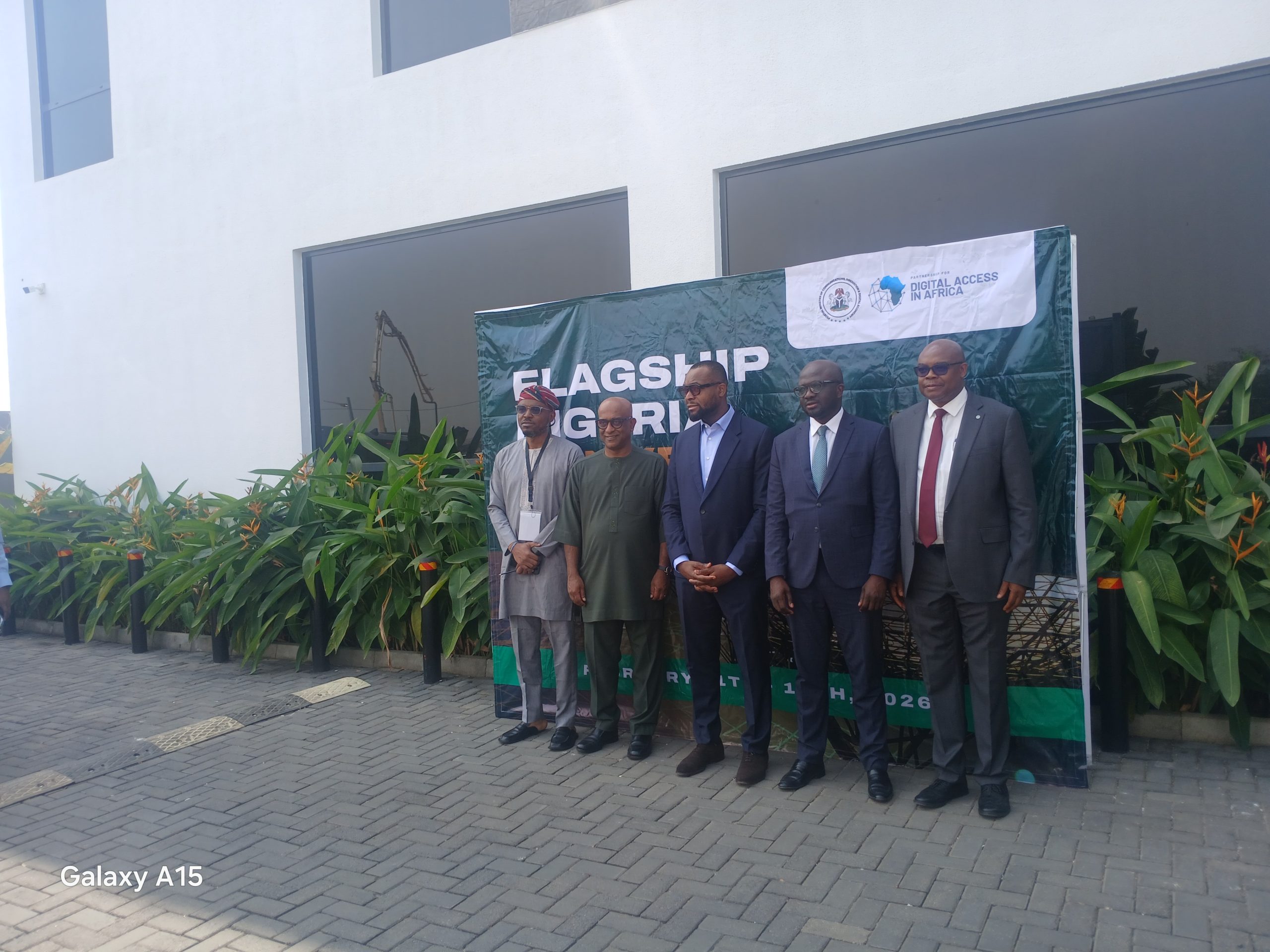
Tijani disclosed this during an interview with journalists at the Flagship Nigeria event held in Abuja on Wednesday, where he reaffirmed the Federal Government’s commitment to expanding digital access and strengthening the foundation of Nigeria’s digital economy.
According to the minister, no African country is presently investing in digital infrastructure at the scale Nigeria is undertaking, describing the effort as central to the nation’s economic transformation agenda.
He revealed that Nigeria is investing in a 90,000-kilometer fiber optic network—the largest of its kind on the continent—with support from the World Bank. In addition, the government is procuring two new communication satellites and deploying 3,700 additional telecommunications towers in rural areas, initiatives expected to connect about 20 million Nigerians who currently lack basic connectivity.
“There is no country in Africa today that is investing in digital infrastructure as deeply as Nigeria,” Tijani said. He added that recent policy measures, including tariff reviews in the telecommunications sector, have helped restore industry profitability and attracted over $1 billion in private investment.
The minister stressed, however, that infrastructure development must go hand in hand with digital skills and literacy. He explained that the government has distinguished between advanced technical skills and basic digital literacy, citing the Three Million Technical Talent (3MTT) program launched in 2023, which has so far trained more than 150,000 young Nigerians.
Tijani also disclosed plans to roll out a nationwide digital literacy program using mobile technology and local languages. As part of this initiative, he said Nigeria has developed Africa’s first government-backed large language model, capable of communicating in Hausa, Igbo, Yoruba, and accented English. He noted that the innovation would form the backbone of digital literacy training for Nigerians of all ages.
Providing an update on satellite projects, the minister said Nigeria’s existing communication satellite has become obsolete, adding that President Bola Ahmed Tinubu has approved the procurement of new ones. He said the satellites would be crucial in connecting hard-to-reach areas and enhancing national security.
Tijani stated that fiber deployment is expected to begin between the second and third quarters of this year, while the new satellites should become operational by next year.
Also speaking at the event, Chief Executive Officer of the Partnership for Digital Access in Africa (PDA), Ibrahima Guimba-Saidou, said the program aligns with Africa’s ambition to connect one billion people to the internet by 2030.
He commended Nigeria for its clear strategy and large-scale investments in connectivity, devices, and digital skills, while noting that electricity remains a major gap in achieving full digital inclusion. Guimba-Saidou explained that PDA’s Mission 300 initiative focuses on expanding electricity access to remote areas so communities, schools, health centers, and markets can fully benefit from digital services.
“This is about making connectivity relevant to the people who need it the most, not just those in major cities,” he said, calling for stronger collaboration between government and the private sector to bridge the digital divide.
In his remarks, World Bank Country Director for Nigeria, Mathew Verghis, said Nigeria faces some of the world’s largest deficits in electricity access and backbone infrastructure but also has enormous growth potential driven by its population.
Verghis stressed that digital inclusion requires reliable power supply, broadband connectivity, and affordable devices working together. He called for coordinated planning, construction, and financing of power and fiber infrastructure to reduce costs and accelerate universal access.
“There is no digital inclusion without power, and no inclusive growth from electrification without connectivity,” he said, adding that the World Bank is ready to support federal and state governments, as well as private sector partners, to turn the vision of integrated power and broadband access into reality for millions of Nigerians.