


The Energy Commission of Nigeria and a cross section of energy sector stakeholders have provided a comprehensive solution to prevent the shutdown of businesses over the rising cost of energy in Nigeria.
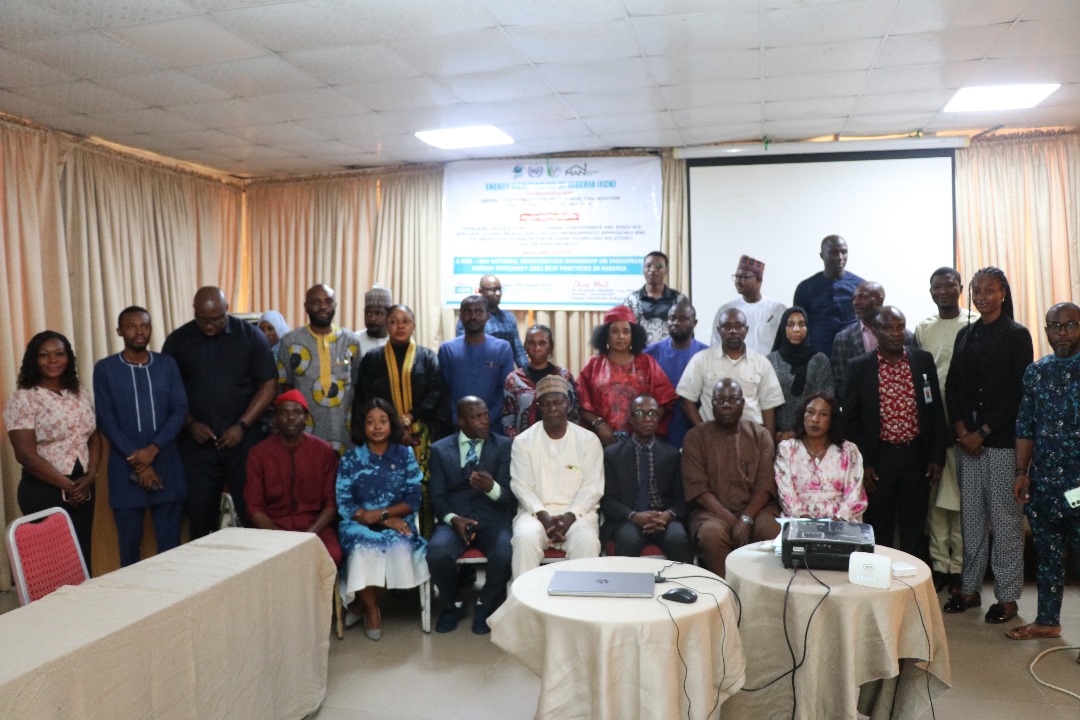
This was the central theme at a one-day sensitisation workshop on industrial energy efficiency best practices in Nigeria organised by the Energy Commission of Nigeria in collaboration with the United Nations Industrial Development Organisation and the Global Environment Facility’s project.
This comes amid a surge in the price of energy in Nigeria.
Recall that between 2024 and 2025, Nigeria experienced a 200 per cent to 300 per cent electricity tariff hike from N66–68/kWh to N225/kWh due to the electricity subsidy removal by the Nigerian government for Band A customers getting 20-24 hours of power supply.
The cost of off-grid energy has equally skyrocketed in the past year.
Consequently, stakeholders gathered in Abuja to provide a research-driven solution to prevent energy wastage, a plausible remedy to rising energy costs in Nigeria.
In his remarks, the Director General of ECN, Mustapha Abdullahi, said amid the high energy cost, energy wastage should be avoided as much as possible.
“High energy pricing and subsidy removal – energy wastage should be avoided as much as possible. Hence, the need for this workshop on energy efficiency and conservation best practices.
He explained that energy efficiency is a way of managing energy consumption through efficient end-use technologies and practices that minimise waste, resulting in using less energy to provide the same products or services.
He added that energy efficiency “will ultimately reduce the energy intensity of the nation’s economic sectors.”
On his part, a consultant to the ECN on the Industrial Energy Efficiency (IEE) database developed under the United Nations Industrial Development Organisation (UNIDO) and Global Environment Facility (GEF)’s project, Engr. Okon Ekpenyong said businesses do not need to shut down due to high energy costs.
He urged business owners, manufacturers, and investors to minimise energy wastage as a means to reduce the impact of high energy costs.
“This sensitisation is to let people know that an increase in energy pricing should not necessarily lead to the closure of business because there are a lot of measures you can take to minimise wastage because you are only paying for what you are consuming or what you are wasting. You pay for not only what you are using efficiently but also what you are using, even what you are wasting; you are paying for it. Understanding that the prices of this electricity, the tariffs, are going on and are going higher, there is a need for you to reduce wastage.
“And then, of course, that means going efficient. So the sensitisation now is to bring out those measures that we could use to minimise waste. That is by going into energy-efficient operations.”
On how to reduce energy wastage, Ekpenyong said, “For those energy-efficient operations, of course, there are some low-cost measures. Like, if you are not using appliances, put them off, any appliances off. And when you want to do new procurements, think about more energy-efficient appliances or devices.
“These are some of the things. And also create awareness. It’s not enough to say we want to save energy because it is human.
“Human behaviour counts a lot when we are talking about low-cost energy savings. How we use the appliances. Creating awareness among all the end users.
“If it is only me that is aware and the other person is not aware, while I’m saving, the other is wasting. So awareness and sensitisation are also very good energy-saving measures. Letting people know.
“It is not something like that because what you will save depends on what you are using. For instance, if you were using a 60-watt bulb, now you use a 5-watt LED.
“You know that you have saved 55 watts. Of course, energy is not measured in power. It’s measured in energy, kilowatt hours,over time”.
He further urged Nigerians to adopt the UNIDO’s Energy Management Systems Standards, 50001.
“UNIDO’s EnMS/ESO/ISO 50001 is a systematic breakdown of how an industry can make these energy-saving measures their day-to-day life, part of their life. So ISO 5001 is a process standard, telling you that if you want to make industrial energy efficiency your way of life as an industry, how you make it is that you save energy.
Also, the National Project Coordinator of GEF-UNIDO IEE and the Resource Efficiency and Cleaner Production project, Oladipo Jacob, urged businesses to imbibe energy efficiency and resource efficiency to boost their production.
“My advice is that they should imbibe energy efficiency and resource efficiency in their production. It’s the only way to make an impact and secure their businesses. The outcome of this project will be made available to industries and all other sectors of the country so that they can benefit from this support,” he stated.
Newssphere reports that Standard Organisation of Nigeria, other stakeholders also harped on the adoption of energy efficiency measures in Nigeria.


