
advertise with us
Home Blog Page 96

Nnamdi Kanu: Real reason Britain doesn’t want anyone to talk about Biafra—Ex US mayor, Arnold

0

A former mayor of Blanco City in Texas, United States, Mike Arnold, has alleged that the British government is against the creation of an independent Biafran state due to fears of a massive reparations demand.

Arnold, who has openly supported the Biafra cause, made the claim in a Facebook post titled “Britain’s bill is due.” He argued that an independent Biafra could seek as much as $6 trillion from Britain, describing it as potentially the largest reparations claim in history.

According to him, the figure represents roughly twice the United Kingdom’s annual Gross Domestic Product and is based on historical grievances tied to colonial-era actions and the Nigerian Civil War.

Arnold traced the roots of the dispute to the 1914 amalgamation of Nigeria by British colonial authorities, which he described as a forced union of diverse regions. He also referenced Britain’s role during the 1967–1970 civil war, alleging that the UK supported Nigeria’s federal government to protect its economic interests, particularly in oil.

He claimed that at the time, Shell-BP—partly owned by the British government—controlled a significant share of Nigeria’s oil production, much of it located in the former Biafran territory.

Arnold further accused Britain of backing Nigeria militarily during the war while downplaying the humanitarian crisis that followed, including widespread famine.

Providing a breakdown of the proposed reparations, he cited estimated oil revenues, alleged wrongful deaths, structural damages linked to colonial policies, and other factors such as arms supply and humanitarian impact.

He maintained that a sovereign Biafran government could pursue the claim through international legal channels, including the International Court of Justice.

Arnold’s comments reflect longstanding positions held by pro-Biafra groups, including the American Veterans of Igbo Descent and other advocacy organizations, which have also accused Britain of influencing Nigeria’s stance on separatist movements.

These groups have previously linked Britain’s position to the case of Nnamdi Kanu, leader of the Indigenous People of Biafra (IPOB), who holds British citizenship and is currently serving a life sentence on terrorism-related charges in Nigeria.

The British government has not officially responded to Arnold’s claims.

Turkish journalist reveals when Nigeria’s Osimhen will play again for Galatasaray

0

Victor Osimhen is expected to make his return for Galatasaray in their crucial derby clash against Fenerbahçe later next month, according to Turkish journalist Ali Naci Küçük.

The Nigerian striker is currently sidelined after suffering a hand injury during Galatasaray’s UEFA Champions League Round of 16 second-leg defeat to Liverpool FC earlier this month.

As a result, Osimhen is set to miss several upcoming fixtures, including matches against Trabzonspor, Göztepe, Kocaelispor, and Gençlerbirliği.

However, Küçük disclosed that the forward is targeting a return for the high-profile Turkish Super Lig encounter against Fenerbahçe scheduled for April 26 at Rams Park.

“Victor Osimhen will be on the field for the Fenerbahçe derby unless something negative happens,” Küçük was quoted as saying.

He added that Osimhen has personally reassured club president Dursun Özbek of his readiness to return in time for the decisive fixture, expressing confidence in both his fitness and the team’s title ambitions.

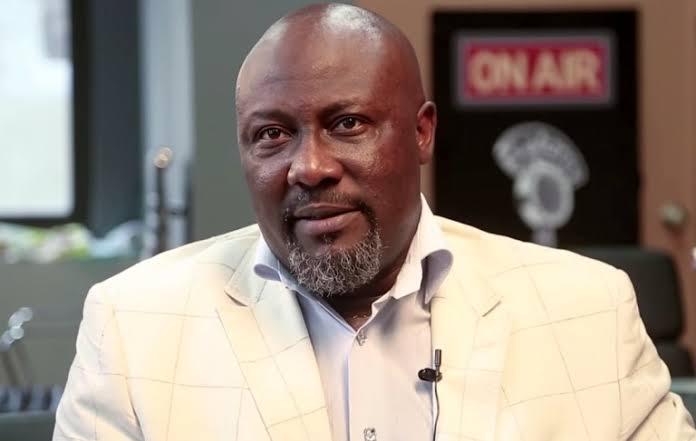
Power sector crisis: Nigeria running on generators 130 years after—Dino Melaye 

0

Former Kogi West Senator Dino Melaye has described Nigeria’s persistent electricity challenges as a failure of governance rather than a technical limitation.

In a statement, Melaye lamented that despite over a century of electricity generation, the country still grapples with low output and recurring grid collapses.


“Nigeria has been generating electricity since 1896—over 130 years ago. Yet, as of March 2026, the national grid dropped to just 3,940 megawatts for over 220 million people,” he said.


He compared Nigeria’s performance with other African nations, noting stark disparities in generation capacity.


“South Africa produces over 48,000MW for about 60 million people, while Egypt has roughly 59,000MW installed capacity for 110 million citizens. Nigeria has about 13,000MW installed but can only transmit 4,000 to 5,000MW on a good day. The rest is wasted,” he stated.

Melaye also highlighted the sector’s infrastructure challenges, including repeated grid collapses and vandalism.

“The national grid collapsed 12 times in 2024 alone, while 128 transmission towers were vandalized. Government spent N8.8 billion on repairs,” he said.

Citing data from the Nigerian Electricity Regulatory Commission, he added that between 2010 and 2022, at least 222 partial and total grid collapses were recorded — averaging one every three weeks.

According to him, the financial burden of restoring power after each collapse is enormous.

“Restarting just three power plants — Azura, Delta, and Shiroro — costs about $25 million, equivalent to N42.5 billion, per collapse,” he said.


Melaye further pointed to rising debt in the sector, revealing that power generation companies are owed N6.8 trillion as of February 2026, with the figure increasing by about N200 billion monthly.


He noted that N3.3 trillion of the debt is owed to gas suppliers, leading to reduced gas supply to thermal plants.


“Plants require about 1,630 million standard cubic feet of gas daily but receive only 692 million—less than 43 percent. That’s why the power supply remains poor,” he explained.


The former lawmaker also drew attention to Nigerians’ heavy reliance on generators, estimating that about $14 billion is spent annually on their purchase and fueling.


“Nigeria has about 22 million generators with a combined capacity of 42,000MW — nearly eight times what the national grid delivers,” he said.


Melaye warned that the power crisis is crippling businesses and costing jobs.


“In 2023, 767 manufacturing firms shut down, while 335 became distressed, leading to 18,000 job losses. In the first half of 2025 alone, manufacturers spent N676.6 billion on alternative power, yet still struggled. Another 18,935 jobs were lost,” he noted.


He also cited estimates from the World Bank, which put Nigeria’s annual economic losses from power outages at $29 billion — about 10 percent of the country’s GDP.


Melaye concluded that Nigeria’s electricity challenges reflect deeper structural issues.


“This is not a power problem — it is a governance problem,” he said, adding that countries like Egypt, Ghana, and South Africa have made significant progress through deliberate reforms.


He stressed that Nigeria cannot achieve meaningful industrialization while depending heavily on generators.


“No serious economy runs on generators. Industrial growth cannot be built on backup power,” he added.

APC National Convention: We were denied Rivers aspirant nomination form—Fubara cries out

0

Director-General of the All Progressives Congress (APC) States Assembly Forum, Dagogo Fubara, has accused the party of denying him and others access to aspirant nomination forms despite fulfilling all stipulated conditions.

Fubara made the allegation on Tuesday during a live appearance on Arise Television’s “Prime Time” program.

According to him, although aspirants paid for the forms and successfully passed the screening process, they were informed that the nomination forms had been exhausted.


“After paying for the forms and fulfilling all the necessary requirements, we were denied the opportunity to obtain the aspirant nomination forms,” he said.


He explained that after completing payment and clearance procedures in line with convention guidelines, they were directed to the organizing department to collect the forms, only to be told none were available.


Fubara noted that an announcement about the shortage had been made just a day before the convention, a development he described as surprising.


Reflecting on his political journey, he said he had been part of the system since 2012 and had hoped the convention would create opportunities for younger members to participate actively in the party.


He added that members, particularly those from the legacy Action Congress of Nigeria (ACN) bloc, had long seen themselves as qualified for elective positions but were disappointed by the turn of events.


Fubara blamed what he described as “a microscopic few” within the system for the situation, expressing concern over what it could mean for internal party democracy.

APC Convention is slanted for 26th and 27th March in Abuja.

Global oil prices drop as Trump sends peace proposal to Iran

0

Global oil prices dropped sharply on Wednesday after reports that US President Donald Trump had forwarded a peace proposal to Iran aimed at easing ongoing tensions.

Brent crude, the international oil benchmark, fell by nearly six percent, with prices dipping 5.92% to trade at $98.30 per barrel.


Similarly, the US benchmark, West Texas Intermediate (WTI), declined by 5.01%, settling at $87.72 per barrel.


The market downturn followed reports by Agence France-Presse that Trump had sent a peace plan to Tehran, raising hopes of a possible de-escalation in the protracted conflict involving the United States, Israel, and Iran.


Earlier, Reuters reported that Washington had presented Iran with a 15-point proposal designed to resolve the crisis, citing a source familiar with the development.


The New York Times also revealed that the proposal was transmitted through Pakistan, quoting two officials. However, it remains unclear how widely the plan has been shared among Iranian authorities or whether Tehran is willing to consider it as a basis for negotiations.


The conflict, now in its fourth week, has continued to strain global economies, with Nigeria feeling the impact as petrol prices hover around N1,400 per liter.

Details of US 15-point plan to end war with Iran revealed

0

Details have emerged of a 15-point proposal by the United States aimed at resolving the ongoing conflict with Iran, according to multiple international reports.

Reuters reported that the plan had already been communicated to Tehran, while The New York Times cited two officials as saying the proposal was delivered through Pakistan. However, The Guardian noted that it remains unclear how widely the proposal has been circulated among Iranian authorities or whether it would be accepted as a basis for negotiations.


According to Channel 12, the proposal outlines sweeping demands and incentives covering Iran’s nuclear program, regional activities, and sanctions relief.


Key elements of the plan include:


Full dismantling of Iran’s nuclear capabilities and a commitment to halt pursuit of nuclear weapons


Immediate cessation of uranium enrichment activities


Transfer of all enriched nuclear material under a timeline agreed by the United States, Israel, and Iran


Decommissioning of major nuclear facilities in Natanz, Isfahan, and Fordow


Granting the International Atomic Energy Agency unrestricted access to Iran’s nuclear program data


The proposal also calls for major shifts in Iran’s regional posture, including abandoning its proxy network and ending support for armed groups across the Middle East. It further stipulates keeping the Strait of Hormuz open as a free and secure international waterway.


On the military front, Iran would be required to limit its missile program in both range and number, with any future use restricted strictly to self-defense.


In return, the proposal offers significant incentives, including the lifting of all sanctions, removal of the “snapback” mechanism, and international support—particularly from the United States and Israel—for the development of a civilian nuclear energy project in Bushehr.


Despite the sweeping scope of the proposal, uncertainty remains over Tehran’s response and whether the plan could pave the way for renewed diplomatic engagement.

‘This can’t continue’—Peter Obi on arrest of Sheikh Tijanni 

0

Former Labour Party presidential candidate Peter Obi has condemned the arrest of respected Islamic cleric Sheikh Ahmad Tijjani Umar shortly after hosting him in Kaduna.

In a post shared on his verified X account on Tuesday, Obi described the development as alarming, warning that such actions pose a threat to Nigeria’s democratic values.

He stressed that the federal government must uphold fundamental rights, including freedom of expression and movement, which he noted are essential pillars of any democratic society.


Obi argued that the suppression and intimidation of dissenting voices have no place in a democracy, urging authorities to act within the confines of the law.


“I was informed early this morning that revered religious leader Sheikh Ahmad Tijjani Umar was arrested by authorities shortly after hosting me in Kaduna on Sunday,” he stated.


“This cannot be allowed to continue,” he added.


He added that the incident reflects a worrying trend where citizens and perceived political opponents are subjected to harassment and undue persecution.


Describing the situation as unacceptable, Obi called on those undermining democratic principles to desist and instead adhere strictly to the rule of law in their dealings with Nigerians.

Middle East war: US ‘Terrorist State’—Kim Jong Un

0

North Korean leader Kim Jong Un has labeled the United States a “terrorist state” and accused it of engaging in state-sponsored terrorism.

According to the Korean Central News Agency (KCNA), Kim made the remarks on Monday while concluding a session of the country’s parliament.


Despite his criticism, Kim indicated that Pyongyang remains open to peaceful coexistence if its adversaries adopt a similar approach. However, he reaffirmed that North Korea will continue to strengthen its nuclear weapons program.


“The United States is a terrorist state,” Kim declared.


KCNA also reported that the two-day session of the Supreme People’s Assembly approved several constitutional amendments, though only one change was disclosed—the removal of the term “socialist” from the “Socialist Constitution.”


The report did not clarify whether the revisions incorporated broader anti-South Korea policies previously advocated by Kim.


Meanwhile, state media coverage on Tuesday largely centered on domestic priorities, including ideological and economic reforms. In a lengthy address, Kim called for restructuring the Ministry of Social Security into what he described as the country’s first fully developed “police” force.

Nigerian Newspapers: Five things you need to know Tuesday morning

0

Good morning! Here is today’s summary from Nigerian newspapers:

1.Governor Seyi Makinde reportedly convened an emergency meeting with key stakeholders of the Peoples Democratic Party (PDP) in Oyo State on Monday. The meeting, initially slated for 7 p.m. at the Agodi Government House, was later relocated to the Local Government Training Centre within the State Secretariat, Agodi, Ibadan.

2.The Independent Corrupt Practices and Other Related Offences Commission (ICPC) is set to arraign former Kaduna State governor Nasir El-Rufai before both federal and state high courts in Kaduna over alleged corruption-related offences. In a statement issued on Monday, the Commission said El-Rufai and one Joel Adoga would be arraigned at the Federal High Court in the Kaduna Judicial Division on Tuesday, March 24, 2026.

3.The Kwankwasiyya Movement has confirmed that the New Nigeria People’s Party (NNPP) National Leader and 2023 presidential flagbearer, Rabiu Musa Kwankwaso, is in talks with the African Democratic Congress and the National Democratic Congress. The movement’s spokesperson II, Mansur Kurugu, disclosed this to Daily Trust on Monday, noting that the discussions could lead to a possible alignment of the platforms.

4.Security operatives have raided the residence of former Attorney-General of the Federation, Abubakar Malami. Malami, who has been in detention over alleged money laundering, was recently granted bail.

5. Suspected terrorists on Monday bombed a bridge along Luma Road in Borgu Local Government Area of Niger State in an attempt to disrupt troop movement in ongoing counter-insurgency operations. The incident reportedly occurred around 2 a.m., with sources indicating that the damaged bridge connects the Luma, Babana, and Agwara communities, areas that have faced repeated attacks in recent

Nigerian filling stations slash Petrol Prices 

0

Some filling stations across Nigeria have reduced their retail petrol prices amid growing competition in the downstream sector.

Checks by Nigerian Newssphere on Monday revealed that Ranoil and Empire Energy stations cut their pump prices to N1,370 and N1,383 per litre, down from N1,440 and N1,430, respectively.

The adjustments represent price reductions of N70 and N37 per litre.

A station manager, who spoke on condition of anonymity, said the move was aimed at staying competitive in the country’s fuel market.

Meanwhile, Nigerian National Petroleum Company Limited (NNPCL) and MRS filling stations are currently dispensing petrol at N1,361 and N1,367 per liter, respectively.

The price cuts come amid a sharp drop in global crude oil prices, which fell by nearly 10 percent to $100.2 per barrel for Brent and $88.85 for West Texas Intermediate. The decline follows confirmation from US and Iranian authorities of ongoing talks to ease tensions and halt escalation in the Middle East.

The sustained drop in crude prices has raised expectations that the Dangote Refinery may soon reduce its gantry price, which recently stood at N1,245 per liter after multiple increases recorded in March.