Thursday, June 25, 2026
Home Blog Page 356

Ending speculation, Twitter confirms sale of company to World Richest Man, Elon Musk for $44bn

0


Ending speculation making the rounds, Elon Musk, the world’s richest man, struck a deal Monday to buy Twitter for $44 billion, capping a saga complete with hostile takeover threats before delivering him personal control of one of the most influential social media platforms on the planet.

Twitter famously served as a megaphone for former US president Donald Trump before the platform banned him, and Musk — a self-proclaimed “free-speech absolutist” — has said he wants to reform what he sees as the platform’s over-zealous content moderation.

“Free speech is the bedrock of a functioning democracy, and Twitter is the digital town square where matters vital to the future of humanity are debated,” Musk said in a statement released by Twitter.
“I also want to make Twitter better than ever by enhancing the product with new features, making the algorithms open source to increase trust, defeating the spam bots and authenticating all humans.”

The publicly traded firm will now become a private company owned by Musk, who negotiated a purchase price of $54.20 per-share, Twitter said.

“Twitter has a purpose and relevance that impacts the entire world. Deeply proud of our teams and inspired by the work that has never been more important,” the company’s CEO Parag Agrawal said in a tweet.

Musk last week lined up around $46.5 billion in financing to make the purchase happen, and Dan Ives, an analyst at Wedbush Securities, predicted earlier in the day that since the board could not find another buyer, it would likely accept his offer.

“This basically put (their) back against the wall, they had to come to the negotiation table,” he said in an interview on CNBC.

On Wall Street, Twitter stock was trading 5.9 percent higher around 1915 GMT.

Reacting to the acquisition, Elon tweeted, “I hope that even my worst critics remain on Twitter, because that is what free speech means.”

NDLEA arrests drug baron Ukatu, the person behind N3bn Tramadol linked to Abba Kyari’s team

0

The National Drug Law Enforcement Agency(NDLEA) has arrested a suspected billionaire drug baron behind the N3billion Tramadol deal allegedly involving the embattled suspended Deputy Commissioner of Police, Abba Kyari-led Intelligence Response Team, Chief Afam Mallinson Emmanuel Ukatu.

The anti-narcotic agency said Ukatu arrest followed months of surveillance and evasion of arrest. Ukatu, who is Chairman of Mallinson Group of Companies, was arrested onboard a flight to Abuja at the MM2 terminal of the Lagos airport, Ikeja on Wednesday 13th April.

The NDLEA spokesperson, Femi Babafemi, disclosed this in a statement on Monday, titled, ‘NDLEA arrests drug baron behind N3billion Tramadol linked to Abba Kyaris team’.
Babafemi said investigations revealed that the suspect is a major importer of large consignments of different brands and high dosages of Tramadol Hydrochloride.

According to him, the Tramadol ranging from 120mg, 200mg, 225mg and 250mg are illicit. He added that Ukatu owns pharmaceutical and plastic manufacturing companies, which he used as a cover to import illicit drugs into Nigeria.

The statement read, “This is in addition to operating 103 bank accounts, most of which are used to launder money.

“Ukatu came under watch last year after five cartons of Tramadol 225mg were seized from his staff on 4th May 2021 when he sent them to sell to undercover police officers (unknown to Ukatu) from the then Kyari-led IRT of the Nigeria Police, Ikeja Lagos. The price of a carton of Tramadol was negotiated at N17million each as against the then black market value that ranged between N18million and N20million a carton in Lagos.

“After the arrest of Ukatu’s staff: Pius Enidom and Sunday Ibekwete, Kyari’s men were then led by the suspects to Mallinson’s warehouse at Ojota in Lagos where 197 additional Cartons of Tramadol 225mg were seized by the IRT Team. The monetary value of the 202 cartons of Tramadol seized from Mallinson in one day was over N3billion.

“Three weeks after the seizure, the Kyari’s IRT team transferred only 12 Cartons of the Tramadol with one truck and a suspect to the Lagos Command of the NDLEA, leaving 190 cartons unaccounted for.

“After over eight months of following the lead, anti-narcotic officers of the Agency eventually arrested Ukatu at the Lagos airport on 13th April 2022. Kyari and four top members of his team are already facing trial for a different but similar offence at a Federal High Court in Abuja.”


NCC, stakeholders brainstorm on Blockchain tech benefits to economy

0

The Nigerian Communications Commission (NCC), stakeholders in the academia, the public sector and enthusiasts of technology for development, have deliberated on the benefits derivable from emerging technologies such as Blockchain, to advance the growth of the Nigerian economy.

At a recently-organised two-day workshop by the Commission, in collaboration with the Bureau of Public Sector Reforms (BPSR), stakeholders were in accord that through effective implementation of policies as expressed in guidelines, regulations and directions driven by the NCC, Blockchain could be a bedrock of economic innovation and growth.

The workshop, which took place in Abuja and focused on “Distributed Ledger Technology (Blockchain) Ecosystem, Decentralisation and Adoption Methods,” drew participants from financial institutions, Ministries, Departments and Agencies (MDAs), the academia, the Nigerian military, and paramilitary forces, the Nigerian Cyberwarfare Command, and the private sector.

The stakeholders, who spoke in turn at the workshop, acknowledged and profoundly appreciated the role of NCC in engendering a dynamic digital regulatory environment, the remarkable contribution to the growth and development of novel and emerging technologies, and NCC’s adoption of adaptive mechanisms that have enhanced emerging technologies in Nigeria.

Addressing a large audience at the event, NCC’s Director, New Media and Information Security, Dr. Haru Al-Hassan, who delivered the opening speech at the event, on behalf of the Executive Vice Chairman of the Commission, Prof. Umar Danbatta, said existing national digital economy frameworks such as the National Digital Economy Policy and Strategy (NDEPS), 2020-2030 instituted by the Federal Government as well as regulatory initiatives by the Commission, have been significant enablers of Blockchain and emerging technologies in the country.

According to Al-Hassan, “Good regulatory policies are the bedrock of innovation and growth and it is the aspiration of the Commission that Distributed Ledger Technologies (DLTs) otherwise known as Blockchain and other innovative technologies and services would continue to thrive and contribute to the growth and development of Nigeria.”

In the same vein, the Director-General, BPSR, Dr. Dasuki Arabi, informed the audience that the Nigerian government was already making efforts, through a number of initiatives, to harmonise emerging technologies with the contemporary public service sector in a way that strengthens the efficiency of the public sector. He also affirmed that Blockchain would be central in the implementation of the National e-Govt Masterplan.

The BPSR Chief Executive equally listed the introduction of the Treasury Single Account (TSA), the Integrated Payroll and Personnel Information System (IPPIS), the Bank Verification Number (BVN), automation of enforcement activities of some agencies of the government, including the Federal Road Safety Corps (FRSC), as well as automated performance measurement systems for public sector employees, as concrete examples of the utilisation of technology in the public sector.

Arabi asserted that Nigeria ranks third in Africa, in the use of telecommunications for public service delivery, coming behind South Africa and Egypt. Arabi called on policymakers to ensure robust policy formulation that ensures improved digital literacy and increased automation in public service delivery.

Other speakers at the event included Dr. Abdul-kareem Oloyede of University of Ilorin, Kwara State; Amaka Ukwueze and Vivian Okonkwo, both of the University of Nigeria, Nsukka (UNN), Enugu State, and Col. Romi Legha of the Indian High Commission.

Oloyede, who clarified the difference between Blockchain and Bitcoin, stated that the former is the underlying technology used for Bitcoin and other cryptocurrencies. He also stated that Blockchain could be utilised to minimise expenditure and expenses, speed up transactions, and improve data security for financial institutions, health care, and businesses.

Ukwueze particularly applauded the Commission for taking the lead in discussions on DLTs considering the fact that Nigeria does not have a clear-cut Blockchain policy yet, even though countries worldwide had begun integrating DLT as a central part of their business practices.

“Republic of Malta, a southern European island country, located in the south central region of the Mediterranean Sea, incorporated Blockchain into its digital and economic ecosystem. Also, China, Abu Dhabi, and Japan are also instituting DLT-friendly regulations in their governance processes,” Ukwueze said.

Accordingly, Ukwueze urged the Federal Government to adopt Blockchain deployment actively, promote legal certainty for Blockchain applications, and provide a flexible and adaptive regulatory environment that fosters innovation. Conclusively, Ukwueze stated that “government’s regulatory enforcement processes must seek to encourage companies to be consumer-centric and ensure compliance.”

In her contribution to the discourse, Okonkwo said adoption of Blockchain technology would be essential in documentation, archiving, cloud storage, identity management, and online education. Additionally, Okonkwo declared that blockchain is a cost-effective method of optimising the quality of the educational administrative processes, and equally a cost-effective application that could improve service delivery across the nation.

The DLT, such as Blockchain, DAG; Hashgraph; Holochain; Tempo (Radix), is a digital system for recording transactions of assets at multiple places simultaneously. The key features of DLT include:  immutability (once written, it is extremely difficult to alter), and peer-to-peer sharing, in the sense that ledger is shared among peers while there is no central ownership.

ASUU divided over FG’s call to suspend strike, resume varsities

0

ACADEMIC Staff Union of Universities (ASUU), branches are divided over whether to accept the Federal Government’s offer and call off their eight-month-old strike.

The union will harmonise the positions of zones and branches at a meeting in Abuja today.

With some branches insisting that the government must meet all the demands before the strike is called off, the union may put the decision to a vote.

ASUU’s position on calling off Strike

The Ahmadu Bello University branch agreed with the government on the N40 billion Earned Academic Allowance (EAA).

The branch, however, called for payment of the allowance before the strike will be called off.

Lecturers at the Federal University of Petroleum Resources (FUPRE), Delta State, said negotiations with the Federal Government must be concluded before the strike is called off.

Ezekiel Agbalagba, chairman of ASUU at the university, said the congress on Wednesday accepted the EAA, but rejected the N25 billion for the revitalisation of the varsities.

According to him, the latest concession by the Federal Government is “an offer”, adding: “Let it land in our purse first.”

He added: “We are willing to suspend the strike, but some of those contending issues should be thrashed and thrashed once.”

ASUU chapters of the University of Maiduguri, Yobe State University and Federal University Gashua resolved to get a serious commitment from the Federal Government before they call off the industrial action.

The Federal University of Agriculture, Makurdi (UAM) ASUU voted to continue with the strike action until the Federal Government implements what was offered during the negotiation.

ASUU- UAM chapter said both their withheld salaries and sundry allowances must be also paid.

A lecturer at UAM, who preferred not to be named, said they voted that the strike should continue until the government fulfils its part of the bargain.

ASUU national leadership will receive reports from zonal coordinators, following state congresses.

After considering the reports, the leadership is expected to take a position and present it to the Federal Government.

A source said some of the congresses voted to call off the strike; others did not.

The source said the congresses agreed on the offers presented by the government to the union and with a timeframe to implement some of them.

The source added: “All the reports will come in today (yesterday) and we can make a decision on it.”

Last Friday, the Federal Government agreed with ASUU’s demand for payment of lecturers’ salaries from February to June through the old platform – the Government Integrated Financial and Management Information System.

The government said the exemption of ASUU from the Integrated Payroll and Personnel Information System (IPPIS) was temporary pending when the university lecturers will complete the development of its payment platform – the University Transparency and Accountability Solution (UTAS).

After weeks of negotiations, the government offered to raise the EAA from N30billion to N35billion and the revitalisation fund from N20billion to N25billion.

Cumulatively, the government, through the Accountant-General of the Federation, offered the lecturers N65 billion to call off the strike.

Nigeriannewssphere gathered the government also shifted ground on some issues, including the insistence that all the academic staff of federal universities must be paid through the IPPIS platform.

The University of Ilorin (UNILORIN ASUU Chairman, Prof Moyosore Ajao, said the chapter was in alignment with the national body.

He said: “Our president will make a pronouncement on our resolution after our meeting tomorrow (today).”

A source at the ASUU UNILORIN meeting said the union resolved that “our salaries be paid and must henceforth not be stopped”.

“We also resolved that ASUU is not and cannot be on IPPIS,” he added.

Chairman of University of Jos chapter of ASUU, Dr Lazarus Maigoro, said: “We are under a strict directive from the national body not to release our resolutions yet.”

Sokoto Zonal Coordinator of ASUU, Dr Jamilu Shehu, said that the zones are expected to make their positions known at the Abuja meeting.

Recall that Nigeriannewssphere reported ASUU may end it eight months long strike action.

Respite for EU as Macron defeat far-right opponent Le Pen to get re-election

0

Respite for European Union as French President Emmanuel Macron has won a second term in office, defeating his far-right rival Marine Le Pen by a comfortable margin in a heated runoff election.

His supporters erupted with joy on Sunday as the results appeared on a giant screen at the Champ de Mars park by the Eiffel tower. Leaders in Berlin, Brussels, London and beyond welcomed his defeat of the nationalist, eurosceptic Le Pen.

With nearly all votes counted, Macron was on course for a solid 58.6 percent of the vote, according to interior ministry figures. Le Pen, the candidate of the far-right National Rally party (Rassemblement National or RN), received 41.4 percent of the votes, the highest in her three unsuccessful presidential bids.

In his victory speech, Macron acknowledged that many had only voted for him just to keep Le Pen out and promised to address the sense of many French that their living standards are slipping.

“Many in this country voted for me not because they support my ideas but to keep out those of the far-right. I want to thank them and know I owe them a debt in the years to come,” the 44-year-old said.

Congratulations messages have continued to troop in from European countries including Italy, Ukraine, Romania, Germany and others.

How Villagers fled community as terrorist Bandits kill 1, steal 36 motorcycles

0

Insecurity hit residents of Adagba community in Yaba ward of Abaji Area Council of the Federal Capital Territory as villagers fled their homes after bandits went on rampage, killing a 23-year-old man, Nura Mai Gyada, and stealing 36 motorcycles.

The bandits were said to have also abducted seven residents of the community among who are Aisha Lawal, Mustapha Lawal, Ali Patchi, Idris Bala and Jamilu Yahaya according to Daily Trust.

The attack came barely a week after bandits invaded the community and abducted a shopkeeper seller, Chinedu Arinze, and carted foodstuff from the shop.

A resident of Adagba, Garba Shehu, while speaking with our reporter, said the bandits numbering over 100 with sophisticated weapons invaded the community around 9pm on Saturday, divided themselves into groups, moved from house to house while shooting into the air and made away with motorcycles, other valuables and cash.

He said, “In fact, it was God that saved two of my children as they almost drowned while crossing the River Gurara to escape. My family and I slept inside the forest till this morning before we came back home.”

The vice chairman of Abaji Area Council, a native of Adagba, Abubakar Abdullahi, said the bandits also tried to whisk away his father but that he was spared after the bandits discovered he could not walk due to age.

“They (bandits) went away with my cousin (brother) and later released him after they asked him to show them the road to Kapako village in Niger State.

Commenting on the attack, the Etsu Yaba, His Royal Highness (HRH), Alhaji Abdullahi Adamu, expressed shock and sadness.

Alhaji Abdullahi said his chiefdom was prone to bandits’ attacks because it shared borders with Niger State.

He said he always raised the issue at security meetings with the FCT minister, Muhammad Musa Bello, on the need to establish a military base in the area in order to checkmate any form of crime.

He expressed concern over the mass exit of people from Adagba community to neighbouring villages, even as he said the attacks might also hamper farming activities in his chiefdom.

The spokesperson of the FCT police command, DSP Adeh Josephine, could not be reached via her mobile phone and did not reply to an SMS on the issue.

Robertson, Origi handed Liverpool important 2-0 Derby win against Everton

0

….As Reds record 14 straight unbeaten EPL matches

Andy Robertson, Divock Origi two goals have handed Liverpool 2-0 derby win against Everton on Sunday.

The Reds secured the win with a double second half goals.

Liverpool now have straight 14 matches unbeaten record in the English Premier League.

It was far from straightforward for the title chasers, with Everton’s resistance lasting over an hour and Sadio Mane fortunate to stay on the pitch following a first-half altercation.

The three points move Jurgen Klopp’s side back within a point of Premier League leaders Manchester City, while Everton are now two points from safety after Burnley’s win earlier in the afternoon.

Cable Equiano: Pantami, Danbatta pledge enabling policy environment for wider connectivity

0

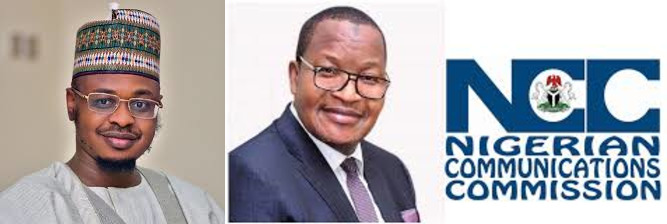
The Minister of Communications and Digital Economy, Prof. Isa Pantami, and the Executive Vice Chairman (EVC) of the Nigerian Communications Commission (NCC), Prof. Umar Danbatta, have promised to drive policy initiatives for the promotion of infrastructural investment in the Nigerian telecom industry in order to deepen connectivity to enhance the nation’s growth and development.

The duo stated this on the sideline of the reception marking the landing of the Equiano undersea Cable System in Nigeria at the Open Access Data Centre at Lekki in Lagos. Pantami and Danbatta commended Google LLC, the West Indian Ocean Cable Company (WIOCC), and other investors for bringing additional bandwidth capacity into the country to drive connectivity and growth.

While Pantami was represented at the event by NCC’s Executive Commissioner, Stakeholder Management, Adeleke Adewolu, Danbatta was represented by the Executive Commissioner, Technical Services at NCC, Ubale Maska. Other senior management staff of the Commission at the event included the NCC’s Director, Technical Standards and Network Integrity, Bako Wakil, and the Controller, NCC’s Ibadan Zonal Office, Yomi Arowosafe.

The Minister said the Federal Government, through the Ministry, will continue to drive the implementation of existing digital economy-oriented policies already put in place by the current administration. Pantami also promised an enabling environment that encourages foreign and local investment in infrastructure project such as the way Google and its co-investors have done.

Also commenting, Danbatta said the Commission’s expectations, initiatives, and vision towards increasing broadband penetration, quality of service, advancement of a digital economy, and commitment to improving national security through technological advancement, are on the priority list of its regulatory interventions.

Danbatta expressed delight that Equiano has joined the list of other submarine cables at the shores of Nigeria, including SAT3 cable, MainOne cable, Glo1 cable as well as the African Coast to Europe (ACE) submarine cable by Dolphin and West African Cable System (WACS) by MTN.

The EVC assured stakeholders of  Commission’s commitment toward ensuring that the huge bandwidth capacity from these cables at shore in Lagos would be transmitted to different part of the country to drive robust and ubiquitous infrastructure. This is in keeping with the provisions of the digital economy policy being implemented by government in collaboration with all stakeholders.

The EVC expressed optimism that Google’s investment in the subsea cable, Equiano, will be significant in driving NCC’s ongoing implementation of the Nigerian National Broadband Plan (NNBP) 2020-2025, which aims at increasing broadband penetration to 70 per cent by 2025.

“We are hopeful that Equiano, together with earlier undersea cables in the country, will have additional landing points in the hinterlands through collaborative efforts with NCC-licensed Infrastructure Companies (InfraCos). This will help to reduce retail data prices significantly and thereby complementing the Commission’s efforts at ensuring that affordable Internet services are available to boost Commission’s ongoing broadband policy initiatives,” Danbatta stated, reiterating the objective linkages of policies and plans in the telecom ecosystem, and the national economic strategies.

Meanwhile, the Lagos State Governor, Babajide Sanwo-Olu, who also witnessed the unveiling of the Google’s submarine cable, underscored the cable’s centrality to Nigeria’s ongoing efforts to boost job creation and contribution to the country’s Gross Domestic Product (GDP), over the next three years.

The Chief Executive Officer (CEO) of WIOCC, Chris Wood, also described the landing of the submarine cables as a major investment in the Nigerian digital economy.

The new cable system is named after a Nigerian hero, Olaudah Equiano, who survived enslavement in the 18th century and went on to become a famous writer and anti-slavery activist. Besides, the triumph over challenges, which Equiano’s life symbolised, the landing of the cable in Nigeria is expected to underscore Nigeria’s leadership as a regional hub for connectivity, and thus, set to attract cloud operators, content providers, content distribution networks and their associated ecosystems.
 

Nigeria spends $11.17bn on debt service in 9 months —CBN

0

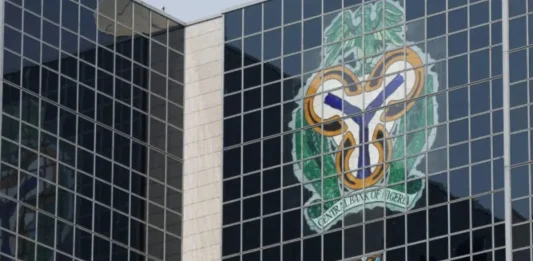
The Central Bank of Nigeria (CBN) has disclosed that Nigeria paid $11.17 billion to service debt between January and September 2020.

The apex bank, however, did not reveal if the said amount was used to pay foreign or domestic debts, but Nigerian NewsDirect can report that the above amount was used to service foreign debts.

The latest payment statistics, the apex bank revealed that a total of $16.54 billion was used to service debt in nine months of 2019.

Nigerian NewsDirect gathered that payment of debt, according to CBN reached lowest and highest in September and February 2020 at $246.9 million and $5.48 billion respectively.

Further breakdown revealed that total amount in servicing debt in January was $2.22 billion, while in March, a total of $707.24 million was used to service debt by the federal government.

The statistics by CBN also revealed that $472.4 million was used to service debt in April; $516.57 million in June; $476.24 million in July and $492.68 million in August.

Specifically, the country’s total debt stock constitutes both external and domestic debts. As at June 2020, the country’s total public debt portfolio stood at N31.01 trillion, according to the Debt Management Office (DMO).

The DMO had disclosed that actual domestic debt service between April – June, 2020 was N312.8 billion.

Nigeria’s debt profile continues to snowball and its attendant cost is worrisome as members of the CBN’s Monetary Policy Committee (MPC) at the September meeting noted the rising burden of debt services and urged the federal authority to strengthen its debt management strategy, explore other sources of revenue, as well as enhance efficiency in public expenditure.

A member of the MPC, a professor at the University of Ibadan, Festus Adenikinju in his personal statement, said “The fiscal system continues to pose significant challenges arising from current underperformance of government revenue, unrestraint growth in government recurrent expenditure, underperformance of capital expenditure and rising debt service ratio.

“Debt service rate rose to 84.1 per cent of government revenue between January and August 2020 compared to 51.5 per cent in January to August of 2019.”

The country pays a lump sum to several external organizations that grant loans to it, and these include the World Bank, African Development Bank (AfDB), Exim Bank of China, Exim Bank of India and so on.

In 2015, which marked the start of President Muhammadu Buhari’s first term administration in office, Nigeria paid $16.34 billion to service debt payment.

Fast forward to 2018, the sum of $13.74 billion was recorded while $21.22billion was paid in 2019.

The budget office of the federation in a report stated that “Total debt service in the half year of 2020 stood at N1.1trllion indicating a decrease of N234.04 billion (17.47 percent) from the N1.34trillion projected for the half year period.

“The sum of N853.61 billion was used for domestic debt servicing while N251.76 billion was spent for external debt servicing during the period under review. The amount used for domestic debt servicing revealed a difference of N83.06 billion (8.87 per cent) from its half year projection.”

Experts stressed that while the country’s debt to GDP ratio is sustainable for now, the cost of servicing the debt eats deep into the country’s already depleting revenue.

Critics of the government have complained about the government’s penchant for debts, believing that it could put the future of younger Nigerians in jeopardy.

The Deputy Governor, Financial System Stability, CBN, Mrs. Aisha Ahmad, started that, “low oil prices, muted fiscal revenues and significant debt service obligations have dramatically restricted the already fragile fiscal space.

“Further fiscal adjustments will be required to curtail rising public debt and budget deficit, in addition to prioritization of government spending to support the Economic Sustainability Plan (ESP).”

AfDB early in the year said debt servicing gulps more than 50 per cent of Nigeria’s revenue.

The bank, which said this in its West Africa Economic Outlook last year, said the servicing of the country’s external debt gulped about 50 per cent of the country’s revenue.

According to AfDB, the average revenue spent by West African countries on external debt servicing is 17 per cent. This is high and even higher in Nigeria which spends about 50 per cent revenue on external debt servicing. It added that with the increasing domestic debt burden, the percentage of revenues spent on debt servicing in Nigeria was even higher.

The bank said that even though the country’s debt burden had increased by as much as 128 per cent in the last eight years, Nigeria’s debt to Gross Domestic Product remained low.

The low debt-to-GDP ratio notwithstanding, it added, the problem with the nation’s increasing debt burden was the high proportion of revenue spent on debt servicing.

It said, “Cape Verde had the highest external debt-to-GDP ratio in 2018, an estimated 103 per cent, followed by Senegal, Niger, and Sierra Leone. Liberia had the highest rate of debt accumulation between 2010 and 2018, at 329 per cent, followed by Nigeria at 128 per cent.

“Despite the increase, Nigeria still has one of the lowest external debt-to-GDP ratios, at 15.2 per cent. Benin, Guinea-Bissau and Togo also have a ratio below 25 per cent.

“The rapid increase in external indebtedness remains a challenge, especially given the shift toward non-concessional external debt. Debt service payments have also increased since 2010 and are projected to remain high in the medium term.”

The bank added, “The increase has heightened the fiscal burden in an already fiscally and growth-constrained environment. This raises important concerns regarding the sustainability of external debt. West African countries spend an average of 17 per cent of revenue on servicing external debt.

“In Nigeria, about half of the revenue is used to service external debt. The increasing domestic debt burden means that the total proportion of the revenue spent on servicing debt is even higher. In a country where only six per cent of GDP is collected in revenue, the high burden of debt service is a major concern.”

Nine Months after, another Airforce aircraft crashes, two military Officers feared dead in Kaduna

0

…Daily killings, insecurity make Nigeria most unsafe place- Adamu

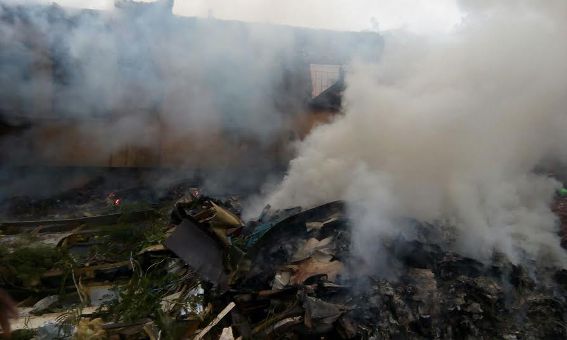
Barely Nine Months another Nigerian Air Force (NAF) aircraft has crashed, two pilots feared dead.

Newssphere gathered that on Tuesday night that the incident occurred “some hours ago”.

It is unclear the cause of the crash at the time of filing the report.

NAF Director of Public Relations, Air Commodore Edward Gabkwet did not take phone calls for a reaction.

The spokesman’s number was off when called again before press time

Recall that on July 18 2021, a NAF fighter plane went down while on a mission in the North-West.

After initial denial, the military confirmed the mishap in a statement the next day.

NAF explained that Alpha aircraft was returning an air interdiction between the boundaries of Zamfara and Kaduna States.

Bandits opened fire which led to its crash in Zamfara. The pilot, Flight Lieutenant Abayomi Dairo survived.

Meanwhile in another development, no fewer than three persons have been confirmed killed following a bomb explosion that rocked a drinking joint at a cattle market in Iware Community, a suburb of Ardo-Kola Local Government Area of Taraba State.

At least 19 other persons have also been confirmed injured and receiving treatment at various health centres within the community and beyond.

The Police Public Relations Officer Abdullahi Usman confirmed the attack.

Daily killings, insecurity make Nigeria most unsafe place- Adamu

Reacting to the development in a chat with

Nigerian Newssphere on Tuesday night, a security expert, the Chief Executive Officer

Beacon Security Consult Dr. Kabiru Adamu, daily insecurity occurrences, make Nigeria one of the most unsafe place to live.

Commenting on the aircraft crash, he dismissed possible claim that it could be as a result of enemy attack.

He disclosed that the crash may be as a result of several other factors ranging from human error, mechanical fault of weather.

However, he noted that it is only through an investigation the actual  reason for the crash can be revealed.

“The two issues are unrelated. The crashed air force aircraft absolutely did not fall as a result of enemy action. It may be as a result of several other factors ranging from human error, mechanical fault of weather.

Only an investigation will reveal the true reason for the crash.

“The Taraba incident was as a result of explosion. At this stage it is not known of the explosion was caused by a malicious detonation or by a safety fault. Again only an investigation will reveal what was the cause.

“Irrespective, the two issues reflect the various security and safety as well hazard issues that affect day to day living in Nigeria. Making Nigeria one of the unsafest places to leave in the world.

“It calls for an enhanced approach to national safety and security issues to avoid the wanton killing of Nigerians and to address the safety issues in the country”, he said.


Jojobet Girişdeneme bonusuDeneme Bonusu Veren SitelerGrandpashabetgrandpashabetMadridbetcasibom güncel girişjojobetjojobet mobil girişcasibomgrandpashabet girişJojobet Girişjojobetgrandpashabet girişgrandpashabetcasibomgrandpashabetgrandpashabet girişgrandpashabet giris