
advertise with us
Home Blog Page 280

Sealed Without Trial? Illegality of FCTA’s Self-Help Property Crackdown: A Constitutional, Statutory, Diplomatic Assessment

0

Introduction: Why this debate matters in legal, diplomatic, and real estate circles across Abuja, a recurring concern continues to surface: the Federal Capital Territory Administration’s (FCTA’s) increasing resort to sealing properties, often without prior judicial authorization, based solely on public notices published in newspapers announcing the planned revocation of titles and subsequent enforcement actions for alleged non-payment of ground rent. What was once a marginal administrative practice has now evolved into a significant constitutional issue, with far-reaching implications for governance, the rule of law, and Nigeria’s international obligations.

At the heart of the controversy is a deceptively simple question: Can the FCTA, citing unpaid ground rent, seal off properties, including those earmarked for diplomatic use, without first going to court? It may seem like a technical point, but the implications go to the very foundation of the Nigeria’s legal system.

Let’s be clear: governments have the authority to enforce land-use laws and recover debts. But how they go about it is everything. When state agencies sidestep the courts and resort to self-help, they blur the line between lawful enforcement and executive overreach. And when that enforcement involves diplomatic missions, protected under international law, the stakes become global.

This article is a response to growing anxiety among property owners, diplomats, and even public officials who are unsure where lawful authority ends and unlawful aggression begins. It also examines, with clarity, what the law permits and prohibits regarding the sealing of properties over alleged ground rent defaults.

What This Article Aims to Do:

1. Clarify what powers the FCTA truly has, especially under the Land Use Act and other relevant statutes.

2. Affirm that due process is not a courtesy, it is a constitutional right, anchored in Section 36 of the 1999 Constitution and the bedrock of our legal tradition.

3. Expose the limits of government power, especially when it comes to diplomatic properties shielded under the Vienna Convention on Diplomatic Relations.

4. Offer practical alternatives that ensure compliance without compromising the rule of law or Nigeria’s international reputation.

5. Equip embassies, businesses, and private landowners with clear, lawful strategies for protecting their interests.

Legal Authority under the Land Use Act: 

What the Law Allows, and What It Doesn’t

The Land Use Act, Cap L5, LFN 2004, vests all land in a state (or in this case, the FCT) in the Governor or Minister, to be held in trust and administered for the use and benefit of all Nigerians. This includes the power to grant and revoke rights of occupancy.

Under Section 28(5)(a) of the Act:

“The Governor may revoke a right of occupancy… for a breach of any of the provisions which a certificate of occupancy is by section 10 deemed to contain.”

Section 10(b) of the Act provides:

“That the holder binds himself to pay to the Governor the rent fixed by the Governor and any rent which may be agreed or fixed on revision in accordance with the provisions of section 16 this Act.”

What does this mean? While the FCTA may revoke the right of occupancy for breach, such as non-payment of ground rent, such revocation must be preceded by proper notice and must not be enforced unilaterally. Again, there is no statutory provision authorizing the FCTA to seal or seize property outside court supervision. On the contrary, such actions may amount to trespass and executive lawlessness.

Due Process Is Not Optional — It Is Constitutional 

Section 36(1) — 1999 Constitution (As Amended) guarantees:

“In the determination of his civil rights and obligations… a person shall be entitled to a fair hearing within a reasonable time by a court or tribunal established by law.”

Thus, any punitive action, including sealing, must be preceded by notice, a right to be heard, and judicial determination. Thus, in the case of Union Bank of Nigeria Plc v. Ajabule & Anor, the Nigeria’s apex court (Supreme Court) unequivocally held that:

“Even where a right exists, it must be exercised within the boundaries of due process and not by resorting to self-help.”

Similarly, in the landmark case of Governor of Lagos State v. Ojukwu, the Supreme Court reiterated:

“The government, no matter how powerful, must not take the law into its own hands.”

The legal principle established by the above judicial authorities is – You cannot use unlawful means to enforce a lawful claim. Consequently, FCTA’s sealing of properties without a court order is inconsistent with this binding judicial precedent.

Role of the Federal Capital Territory Urban and Regional Planning Tribunal

Pursuant to the powers conferred by Section 86 of the Nigerian Urban and Regional Planning Act, Cap N138, Laws of the Federation of Nigeria 2004, the Federal Capital Territory Urban and Regional Planning Tribunal (Procedure) Rules were enacted in 2017 to operationalize the dispute resolution framework under the Act, specifically for the Federal Capital Territory (FCT). The tribunal, established as a quasi-judicial body, serves as the primary forum for resolving land use and development disputes, including proposed revocation of titles and the sealing of properties by the FCTA. By law, parties must first seek redress through this tribunal before the FCTA can lawfully seal any premises within the Federal Capital Territory (FCT). This requirement upholds due process and reinforces the rule of law by ensuring that property rights are not curtailed through unilateral administrative actions.

Diplomatic Property

Nigeria is a signatory the Vienna Convention on Diplomatic Relations (VCDR), 1961 and thus, is bound by its provisions. Article 22(1) of the VCDR provides:

“The premises of the mission shall be inviolable. The agents of the receiving State may not enter them, except with the consent of the head of the mission. “

Article 22(2) further provided thus: 

“The receiving State is under a special duty to take all appropriate steps to protect the premises of the mission against any intrusion or damage and to prevent any disturbance of the peace of the mission or impairment of its dignity.”

Additionally, Article 22(3) of the VCDR also provides:

“The premises of the mission, their furnishings and other property thereon and the means of transport of the mission shall be immune from search, requisition, attachment or execution.”

Therefore, the combine effect of the above provisions is that any sealing, entry, or coercive action against diplomatic missions is a direct breach of the VCDR and exposes Nigeria to:

International litigation at the ICJ or regional bodies, Diplomatic sanctions, or Reciprocal actions against Nigerian missions abroad.

Furthermore, In Ministry of Foreign Affairs v. Onwuka (2006) 7 NWLR (Pt. 980) 1, the Court of Appeal made it clear that foreign embassies and their staff are shielded from lawsuits or legal actions in Nigerian courts, provided the Minister of Foreign Affairs issues a certificate confirming their diplomatic immunity. The judgment not only reaffirms Nigeria’s commitment to international diplomatic norms but also underscores that, without a clear waiver of that immunity, foreign missions remain beyond the reach of local civil or criminal proceedings.

Best Practices: What the FCTA Must Do

Given the legal landscape, ThinkField Law recommends the following steps for lawful enforcement:

Notification via the Ministry of Foreign Affairs

All correspondence to foreign missions must go through the Ministry of Foreign Affairs, per established diplomatic practice and Executive Guidelines under Nigeria’s foreign policy framework.

Diplomatic Engagement

Disputes involving foreign missions or entities must be approached through diplomatic channels—such as bilateral negotiations, mediation, or, where appropriate, arbitration—in full recognition of their protected status under international law. This principle is reinforced by Article 22 of the Vienna Convention on Diplomatic Relations (VCDR), which prohibits not only the initiation of enforcement proceedings against diplomatic premises but also the execution of judgments against them. Thus, even where a domestic court issues a valid judgment, its enforcement must yield to the absolute inviolability accorded to diplomatic property.

Use of FCT Urban and Regional Planning Tribunal or Courts of Competent Jurisdiction

Before any revocation of title or sealing of property within the Federal Capital Territory, Abuja, the FCTA is legally bound to initiate proceedings before the FCT Urban and Regional Planning Tribunal—or, where appropriate, the FCT High Court. This procedural step is not a mere formality; it is a constitutional imperative that guarantees the right to fair hearing under Section 36 of the 1999 Constitution. Adhering to this process not only upholds the rule of law but also insulates administrative actions from being overturned on judicial review for procedural impropriety.

Transparent Reconciliation of Debt

In Bendel Insurance Co. Ltd. v. Edokpolor, the Court of Appeal held that “a disputed debt must be verified and adjudicated before enforcement.” Thus, all allegations of non-payment of ground rent must therefore be resolved through audit, reconciliation, and a right of reply between the FCTA and the affected property owner(s).

Recommendations for Affected Property Owners

For embassies, companies, or individuals whose properties are under threat, ThinkField Law recommends:

Immediate Legal Counsel

Engage land/property law experts with experience in FCTA-related matters. ThinkField Law has successfully advised in multiple enforcement disputes involving the FCT authorities.

Apply for Declaratory and Injunctive Reliefs

File a suit at the FCT High Court for:

Declarations that the sealing or proposed sealing was/is unlawful;

Interim and interlocutory injunctions restraining proposed or further actions;

Orders of mandamus compelling adherence to due process.

Lodge Diplomatic Protests (For Foreign Missions) at the Federal Ministry of Foreign Affairs

When a foreign mission in Nigeria believes its property rights have been violated—

whether through sealing, revocation threats, or other enforcement actions—the Head of Mission should promptly submit a formal Note Verbale to the Federal Ministry of Foreign Affairs. This step goes beyond diplomatic tradition; it activates official channels and ensures the issue receives the seriousness and intergovernmental coordination it requires. If the matter remains unresolved, the mission may notify its home government or escalate the issue to relevant international bodies. This process aligns with Articles 22 and 41 of the Vienna Convention on Diplomatic Relations (VCDR), which Nigeria, like all signatory states, is legally bound to uphold.

Demand for Reconciliation

Challenge ground rent claims by requesting itemized billing and submitting proof of payment, such as receipts or bank confirmations.

Final Word: Power Must Bow to Process

The law is neither silent nor ambiguous on this matter. Power, even when derived from statute, must operate within the boundaries of due process, constitutional order, and international respect.

Written by Emeka Ogenyi (LP), Lead Partner, ThinkField Law, can reached at: Info.thinkfieldlaw@gmail.com Meogenyi@gmail.com

FCT, Ground Rent Emeka Ogenyi


NIMC trains NYSC members for nationwide NIN ward enrolment

0

The National Identity Management Commission (NIMC) has announced a partnership with the Ministry of Youth Development and the National Youth Service Corps (NYSC) to commence training of selected NYSC members to drive National Identification Number (NIN) enrolment to all the wards in the Federation.

This was disclosed in a statement by the commission’s spokesperson, Kayode Adegoke, on Tuesday.

According to the statement, the initiative is part of President Bola Ahmed Tinubu’s Renewed Hope Agenda of enrolling and issuing the NIN to all Nigerians and legal residents within the shortest time possible.

NIMC has enrolled and issued the NIN to over 120M Nigerians and legal residents and, therefore, intends to cover hitherto unreachable areas through the Ward Enrolment initiative. The Corps members selected are currently undergoing intensive training in preparation for the kick-off of the ward enrolment.

Consequently, Nigerians, most especially children below the age of 16 years, are by this initiative encouraged to enrol for the NIN in their respective wards. This initiative aims to take NIN enrolment closer to the people. on

In her comment, Director General of NIMC, Abisoye Coker-Odusote, lauded the immeasurable support of President Tinubu towards the achievements of the NIMC mandate.

She also appreciated the commendable efforts of the Honourable Minister of Youth Development, Mr. Ayodele Olawande, and the DG, NYSC, Brigade-General Olakunle Oluseye Nafiu.


AU research council, environmental society partner for greener Africa

0

The African Union-African Scientific Research and Innovation Council (AU-ASRIC) says it will collaborate with the Nigerian Environmental Society (NES) to create and promote safer environments in Africa.

The collaboration, under the aegis of the African Environmental Society (AES), would seek to address critical environmental challenges facing the continent.

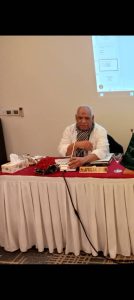
The Executive Director of the African Union Scientific Technical Research Commission (AU-STRC), Engr. Dr. Ahmed Hamdy, said this on Monday in Abuja while addressing newsmen.

The Executive Director, African Union Scientific Technical Research Commission (AU-STRC), Engr. Dr. Ahmed Hamdy.

The News Agency of Nigeria (NAN) reports that AU-ASRIC is a specialised advisory institution under the AU-STRC.

He said Africa was faced with mounting environmental crises that ranged from desertification to pollution and urged a unified action against the challenges.

“The AES is envisioned as a powerful continental scientific body, uniting experts and agencies to tackle environmental issues.

“This initiative signifies a collective commitment to a sustainable future, where diverse actors work together to protect the environment, conserve natural resources, and build a healthier and more prosperous continent for all.

“The challenges are immense, but our crucial role will be to provide independent, reliable information and act as a strong advocate for environmental protection across Africa,” he said.

The AU-STRC chief said that AES would unite experts across the continent to tackle critical environmental challenges, protect the planet, and build Africa’s environmental future.


He emphasised that AES was a direct response to the urgent need for coordinated and effective strategies to mitigate the continent’s environmental vulnerabilities.

Hamdy said that 10 environmental societies from 10 different AU member states had committed to participate in the initiative, adding that it was strong support for the project.

“By uniting experts from diverse fields and across numerous African Union member states, the AES will ensure a comprehensive understanding of environmental challenges and their context-specific solutions,” he said.

He said the milestone underscored the recognition of the need for a unified continental approach to environmental management and conservation.

“This collaborative approach will lead to more effective, evidence-based policies that address the unique environmental vulnerabilities of different regions within Africa.

“This collective commitment signals a shared urgency to address Africa’s environmental challenges.

“The AES will act as a unified voice, advocating for stronger environmental regulations, increased investment in sustainable practices, and greater international cooperation,” Hamdy said.

It’s Global testament to Nigeria’s digital transformation- Minister Tijani on emerging as Vice Chair of ITU

0
Dr Tijani Minister of Communications in Nigeria

Nigeria’s Minister of Communications, Innovation, and Digital Economy, Bosun Tijani, said his emergence as Vice Chair of the International Telecommunications Union (ITU) Council, 2025, is a global testament of the country’s commitment to digital transformation and inclusive innovation as well as a remarkable milestone for Nigeria.

Tijani said this according to a recent statement by the deputy director of Communication at his Ministry, Eunice Akro.

The statement said the election took place in Geneva, Switzerland, against the backdrop of the ongoing ITU Conference.

In his acceptance speech, Dr. Bosun Tijani expressed delight, stating that “Nigeria remains committed in her resolve to support the collective mission of the ITU, particularly by prioritising its key areas such as the provision of resilient and sustainable digital infrastructures and timely access by all communities, especially the underserved, to meaningful connectivity,” amongst others. With this leadership position, Nigeria is poised in an enhanced capacity to shape the future of digital development on the African continent and beyond.

The minister lauded the ITU secretary general, Ms. Doreen Bogdan-Martin, the management team, and all member states for the trust placed in him, while pointing out that the world is presently in a defining moment, made by the accelerating pace of technological change and deep structural shifts in our societies.

Speaking further, the minister said, “Yet we are also uniquely privileged to witness the transformative power of digital technology, a force that allows us to be more introspective, inclusive, and informed as we shape the future.”


Dr. Tijani congratulated the ITU Chair, Ms. Cristiana Flutur of Romania, pledging to work closely with her to attain shared goals. He called on all to “make the ITU a beacon of inclusive innovation and trusted collaboration for today and future generations.”


The ITU Conference is currently in progress in Geneva, Switzerland.


The ITU, founded in 1865, is the oldest specialised United Nations (UN) agency responsible for information and communications technologies (ICTs) and is charged with the global mandate of connecting the world through innovative, inclusive, and sustainable digital solutions, facilitating connectivity in communication networks.


NCC to prosecute vandals of telecoms infrastructure in Nigeria

0
EVC NCC, Aminu Maida

The Nigerian Communications Commission (NCC) has stated its resolve to work with security agencies to arrest and prosecute vandals of Critical National Information Infrastructure (CNII) across Nigeria.

Aminu Maida, Executive Vice Chairman (EVC) and Chief Executive Officer (CEO) of NCC, stated this on Thursday at a media engagement in Abuja.

It would be recalled that President Bola Tinubu had signed the “Designation and Protection of Critical National Information Infrastructure Order, 2024,” which is aimed at protecting these critical systems from cyberattacks and other disruptions.

Maida, represented by Mrs. Nnena Ukoha, Deputy Director and Head, Corporate Communications Management, Public Affairs Department, said the Critical National Information Infrastructure (CNII) Act has provisions for prosecution, and the operationalization of CNII falls under the purview of the Office of the National Security Adviser (ONSA).

He warned that “anyone found liable for damaging or disrupting CNII will be prosecuted going forward.

“We are working with relevant agencies like the Nigeria Security and Civil Defence Corps, (NSCDC) to tackle these problems and prosecute offenders.”

Continuing, he said, “About two years ago, we noticed a situation where some of our key telecom operators were recording massive losses.

“Despite increasing revenues, they were struggling with heavy forex-related obligations that ate into their revenues. This led to poor quality of service.

He pointed out that with the recent tariff adjustment exercise, these operators are now back on the path to profitability.

He said, “As a result, they’re able to reinvest in their networks, which will lead to better quality of service and experience.

“We expect investments in the industry to increase significantly this year, more than what was seen in the last two years.

“The Nigerian telecoms industry has great promise, evident in its revenue growth and service delivery, despite the recent challenges.”

The Executive Vice Chairman of NCC underscored the importance of collaboration and information sharing between the NCC and other stakeholders to address challenges in the telecoms industry.

Commenting further on the indispensable role of telecoms infrastructure in national security, he said, “We all know that telecoms infrastructure plays a vital role in national security due to increasing cyber threats and vulnerabilities that can damage and disrupt communication infrastructure.

“Telecommunication services are crucial for ensuring national security, particularly for addressing security issues that require effective communication.

“Without effective telecommunication, achieving national security would be impossible.

“Telecommunication also plays a vital role in public welfare, contributing to the growth of a digital society.

“It provides an enabling environment for socialisation and access to services. Without a robust telecommunication infrastructure, the public cannot fully enjoy the services provided.

“Furthermore, a stable telecommunication infrastructure is essential for every sector of the economy.”

The CNII refers to essential computer systems, networks, and communication infrastructures whose disruption or destruction would have a significant negative impact on the nation’s economy, security, public health, or general safety.

Earlier, the commission promised to ensure improved quality of service in telecoms industry.

EU to spend €10.4m on sustainable energy in Nigeria’s healthcare

0

The European Union (EU) says it will spend €10.4 million on the Nigeria Solar for Health Project (NISHP), which aims to provide primary healthcare centres with reliable and sustainable solar energy solutions.

Inga Stephanowicz, Head of Section, Green & Digital Economy, EU, said this at the Project Developers Roundtable Workshop for NISHP, which was held in Abuja.

She said the project aimed at enhancing Nigeria’s healthcare sector by providing reliable energy to boost healthcare services and outcomes in Nigeria.

“This €10.4 million initiative, funded by the European Union, marks a milestone in the project’s implementation in Nigeria.

“ NISHP, an initiative funded by the EU, will provide 24-hour access to clean, efficient, and reliable energy to participating public healthcare facilities across the country.

“It aims to improve the country’s healthcare system by providing solar power to public health facilities in participating states,” she said.

According to her, by working together with the Nigerian government, private sector entities, and local communities, the EU is supporting Nigeria’s development goals and promoting a brighter future for its citizens.

She said the beauty of the project was its focus on sustainability, adding that it would provide an adequate solar power supply to 45 healthcare facilities in selected states.

“By collaborating with state government actors in a targeted electricity market and leveraging available counterpart funds, the project aims to electrify not only health centres but also SMEs, telecom towers, and others,” she said.

Nasiru Bello, Team Lead, NISHP, said by leveraging solar power, Nigeria could improve healthcare outcomes, increase access to electricity, and promote economic growth.

He said as the project progressed, it was crucial to monitor its impact and make adjustments as needed.

“ The NISHP is a step in the right direction towards a brighter, more sustainable future for Nigeria’s healthcare sector.

“ With continued support and effective implementation, this initiative can make a lasting difference in the lives of millions of Nigerians,” he said.


Bello said the NISHP highlighted the EU’s commitment to sustainable development and partnership with Nigeria and would serve as a model for other renewable energy projects in Africa.

He also said the project’s impact extended to healthcare as it would promote economic growth and community development.

This, he said, was by electrifying small and medium-sized enterprises and telecom towers near healthcare facilities.

Also speaking at the event, Tinyan Ogiehor, Stakeholders Engagement Expert, NISHP, said the project’s potential impact could also be felt in rural areas where access to electricity was limited.

“By leveraging solar power, Nigeria can reduce its reliance on fossil fuels, mitigate climate change, and promote sustainable energy solutions.

“ By providing reliable and sustainable solar energy solutions to primary healthcare centres, the project will enhance medical care, vaccine storage, and emergency services,” he said.

The News Agency of Nigeria (NAN) reports that the workshop brought together key stakeholders, including state government officials, private sector entities, and technology service providers.

The project has been inaugurated in Abia, Akwa-Ibom, Ogun, Plateau, and Enugu, with other states set to participate. It will run from 2024 to 2027.

NITDA announces first National Cybersecurity Conference in Abuja

0

The National Information Technology Development Agency, in collaboration with the Office of the National Security Advisor and QNA, has announced the inaugural National Cybersecurity Conference.

This announcement was disclosed in an inauguration press conference held at NITDA headquarters in Abuja on Monday, noting that the event is slated for July 9-10, 2025, with the theme ‘Building A Resilient Digital Future.’

Speaking at the event, the Managing Director of NITDA, Kashifu Inuwa, urged all critical stakeholders in the public and private sectors to be part of the epoch conference.

He explained that the conference is not merely to guard against cyber threats but also pivotal in building future cybersecurity in Nigeria and the African continent.

“The conference will serve as a launchpad for the new ideas, strategic initiatives, and sustainable partnerships aimed at transforming Nigeria’s cybersecurity landscape.”

He emphasised that the conference, which would be held annually, would help to mitigate against cyber threats and help to annexe the huge revenue and job opportunities potential in the sector.

On his part, Sa’ad Abubakar, National Cybersecurity Coordinator of ONSA, highlighted the significance of the conference to safeguarding the nation’s cyberspace.

“Cyber threats are evolving rapidly, and it is impacting the nation’s national security,” he stated.

Similarly, the managing director of QNA, Ankit Shukla, said he is excited to collaborate with NITDA and the Nigerian government to achieve the aim of the conference.

The NCSC is not just an event; it is a catalyst for innovation, collaboration, and capacity building across cyberspace.

Earlier, a representative of the Cyber Security Experts Association of Nigeria lauded the initiative and called for active participation by Nigerians.

The events come on the heels of a surge in cyberattacks in Nigeria.

Recall that the chairman of the Economics and Financial Crimes Commission, Ola Olukoyede, said the agency learned about six commercial banks that were recently hacked.


DG NIMC wins award on outstanding performance in public sector

0

The National Identity Management Commission’s Director-General and Chief Executive Officer, Engr. (Dr.) Abisoye Coker-Odusote, has been awarded the Outstanding Performance in Public Service Award at the African Iconic Women Recognition Awards 2025. This prestigious award recognises her exceptional leadership and dedication to transforming Nigeria’s digital identity landscape.

In a statement on Monday by NIMC’s head of media, Dr. Kayode Adegoke, award organisers lauded Engr. (Dr.) Coker-Odusote’s innovative and transformational leadership style, noting that her commitment to developing a robust and secure identity database has been instrumental in changing the scope of digital identity in Nigeria. Her visionary leadership has positioned NIMC as a frontline player in the identity sector in Africa.

Under Engr. (Dr.) Coker-Odusote’s astute leadership, NIMC has achieved remarkable milestones, including a significant increase in National Identification Number (NIN) enrolment, the provision of a reliable and secure world-class identity database, and the implementation of a 25/35% salary adjustment for staff. Other notable achievements include improved staff welfare, enhanced human capacity building, data harmonisation, and effective collaboration with relevant government agencies in utilising the NIN.

One of the key drivers of NIMC’s success has been Engr. (Dr.) Coker-Odusote’s 5-point agenda, which is aligned with President Bola Ahmed Tinubu’s Renewed Hope Mandate. This agenda has led to unprecedented growth in Nigeria’s digital identity sector, marking a new era in the country’s history.

The Commission urges the general public to leverage the benefits of NIN Authentication (NINAuth) for seamless verification services. NINAuth is a cutting-edge solution designed to enhance the timely and secure verification of NINs. By using NINAuth, individuals can protect their data from unauthorised use, decide when and how their data is shared, and enjoy seamless interactions with government agencies. The commission is committed to empowering individuals with control over their NIN data, ensuring a more secure and efficient identity management system.

By downloading and using NINAuth, Nigerians can experience the full benefits of a secure and efficient identity management system. We congratulate Engr. (Dr.) Abisoye Coker-Odusote on this well-deserved recognition and look forward to continued progress in Nigeria’s identity management sector.


NCC orders MTN, GLO other MNOs to alert customers on outage

0
NCC

The Nigerian Communications Commission (NCC) has issued a mandatory order to MTN Nigeria, Glo, and mobile network operators in Nigeria to inform customers of major service outages on their networks through media channels.

The Commission disclosed this in a statement by its acting spokesperson, Nnenna Ukoha, on Sunday.

According to the mandatory order, all Nigerian MNOs are to inform their customers of the cause(s) of the service interruption and the area(s) affected by the service interruption/outage, as well as the time that would be taken to restore service.

“Consumers must also be informed one week in advance where operators have planned service outages.

“Directive on Reportage of Major Network Outages by Mobile Network Operators (MNOs)” is part of the Commission’s drive to ensure timely resolution of outages, enhance quality of experience for telecom consumers, and keep consumers informed.

According to the directive, mobile network operators, internet service providers, and other operators that provide last-mile services will also provide proportional compensation, including extension of validity, as may be applicable and in line with the provisions of the Consumer Code of Practice Regulations, where any major network outage continues for more than 24 hours.

“It identifies three types of major outages to include: any network operational condition such as fibre cut due to construction/access issues/theft & vandalism and force majeure that impacts five percent or more of the affected operator’s subscriber base or five or more local government areas (LGAs); having an occasion of unplanned outage of, or complete isolation of network resources in 100 or more sites or five percent of the total number of sites (whichever is less) or one cluster that lasts for 30 minutes or more; and lastly, any form of outage that can degrade network quality in the top 10 states based on traffic volume as specified by the Commission from time to time.

“In furtherance of this, the Commission has further directed that all major outages are to be reported by operators through the Commission’s Major Outage Reporting Portal, which is accessible to the public through the Commission’s website, www.ncc.gov.ng. The portal additionally discloses the identity of the culprit responsible for the disruptio”n.

Reacting to the development of the directive and the Major Outage Reporting Portal, the Director of Technical Standards and Network Integrity, Engr. Edoyemi Ogor, stated that “the Commission has trialled the reporting process and portal with operators for some months now before issuing the directive.

“By providing consumers and stakeholders in the telecommunications industry with timely and transparent information on network outages, we are entrenching a culture of accountability and transparency. This approach also ensures that culprits are held responsible for sabotage to telecommunications infrastructure.

“This also aligns with our broader commitment to the effective implementation of the Executive Order signed by President Bola Ahmed Tinubu, which designates telecommunications infrastructure as Critical National Information Infrastructure (CNII). It reinforces the need to safeguard these assets, given their centrality to national security, economic stability, and the everyday lives of Nigerians,” Ogor said.


First Bank backs Nigeria’s raw materials development

0
The DG, IFC, Mr Abiodun Famuyiwa, Head, SME Banking and the DG, Raw Materials Research Council

First Bank Nigeria Plc says it is committed to supporting the development of sustainable financial models to drive the development of raw materials in Africa.

The Managing Director/CEO of the bank, Mr. Olusegun Alebiosu, said this at the ongoing Africa Raw Material Summit in Abuja organised by the Raw Material Research and Development Council (RMRDC).

The News Agency of Nigeria (NAN) reports that the theme of the summit is “Shaping the future of Africa’s resources landscape.”

Represented at the event by Mr. Abiodun Famuyiwa, the Head of Small and Medium Enterprises (SME) Banking, Alebiosu said that the summit was a rallying point for forward-looking partnerships.

He said the bank was ready to direct funds into processing infrastructure, industrial parks, and green energy corridors linked to our raw materials.

“We are committed to building not just a resource-rich Africa but a resource-empowered Africa.

“We are committed to an Africa that is environmentally responsible, economically competitive, and strategically united,” he said.

He said the bank, being one of the continent’s premier financial institutions, was committed to building Africa’s industrial future.

Alebiosu also said the bank would also support policies, businesses, and innovations that would move the continent forward in the value chain of its natural resources.

He congratulated the organiser of the summit, particularly RMRDC, for granting the bank the opportunity to contribute to the dialogue of adding value to the continent’s natural resources before exporting them.

“It captures the urgency of redefining our approach to raw materials, not as mere commodities for export but as strategic assets for driving Africa’s industrial revolution, economic diversification, and sustainable development.

An array of Distinguished Dignitaries flanking the Min of State for Industry - Senator John Owan Enoh

“At First Bank, we believe that the future of Africa’s resource landscape must be built on value addition, inclusive financing, and green industrialisation,” he said. (NAN)