Wednesday, July 1, 2026
Home Blog Page 250

Nigerian govt appoints new DG of NBTI

0

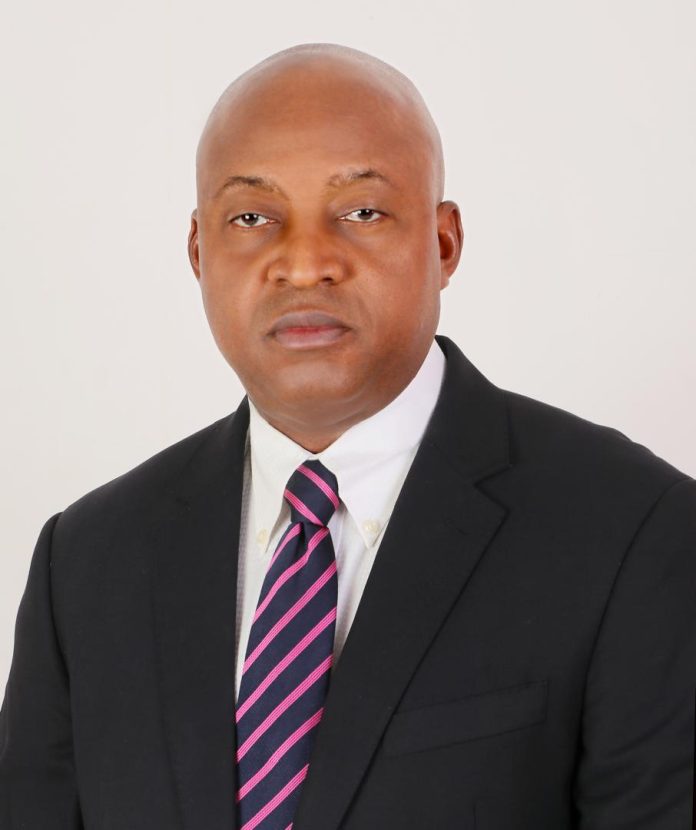
The federal government has approved the appointment of Engr. Kazeem Raji as the Director-General/Chief Executive Officer of the National Board for Technology Incubation (NBTI).

This was contained in a statement signed by NBTI’s PRO, Reuben Shagu, and made available to newsmen in Abuja.

According to the statement, “In his inaugural address at the commission’s headquarters in Abuja, Raji reaffirmed his commitment to advancing President Bola Tinubu’s technological advancement agenda.

During his first meeting with NBTI directors, Raji underscored the importance of teamwork and collaboration in achieving the organisation’s objectives.

“I urge them to work cohesively to drive technological advancement and foster economic growth across the country.

“Under my leadership, NBTI will focus on incubating technologies that address critical areas of national development, such as agriculture, healthcare, and renewable energy,” he said.

Raji pledged to prioritise staff welfare, boost morale, and create a more productive work environment.

NAN reports that NBTI is committed to its mission of promoting technological innovation and entrepreneurship in Nigeria.

With Raji’s wealth of expertise and decades of career in the engineering sector, he is poised to strengthen the needed infrastructural and technology support required of startups in NBTI.

He also outlined plans to collaborate with key stakeholders, including sub-national entities, to ensure the success of NBTI’s initiatives.

Ekpa, Nnamdi Kanu: Sit-at-home compliance in South-East shows Biafrans are tired of Nigeria – Dr. Orabueze

0

The Deputy Prime Minister of the United States of Biafra, Dr. Ngozi Orabueze said that 98 per cent compliance of Biafrans with the Monday’s sit-at-home for over three years in the South-East region showed that Biafrans have delegitimized the Nigerian government.

Dr. Orabueze, who is also the Chief of Staff to the USB, disclosed this in a statement through her official X account on Monday.

This comes as markets, businesses, and roads in parts of the South-east shut down on Monday in a voluntary civil disobedience, known as a sit-at-home, to press home the demand for the release of the leader of the Indigenous People of Biafra, Nnamdi Kanu, and the recently arrested leader of the USB, Simon Ekpa.

According to Dr. Orabueze, the voluntary observance of sit-at-home every Monday in the last three years legitimises Ekpa-led USB as deputised by herself.

“The voluntary Monday sit-at-home, generally agreed on by almost 98 percent of citizens of the United States of Biafra today, February 3rd, 2025, recorded a huge success across the new state.

“The sit-at-home has persisted for almost 3 years and is seen as a referendum to delegitimize Nigeria in Biafra territory while legitimising Biafra and its citizens.

“The sit-at-home will continue until the release of their leader Mazi Nnamdi Kanu, the release of PM Simon Ekpa, and the complete security of Biafraland.

“She also used the opportunity to inform the world of the mass killings going on in Biafraland by the Nigerian terrorist state army and agents headed by their defence chief Christopher Musa and President Bola Tinubu.”.

Further, Dr. Orabueze noted that the USB cabinet and government are working round the clock to put laws in place that would secure Biafrans.

She assured Biafrans that the sovereign state of Biafra will exercise its rights to defend its citizens.

Recall that the Finnish government arrested Simon Ekpa in November last year while Nnamdi Kanu was rearrested by the Nigerian government in June 2021.

Biafra: Vacate South-East, others territories  now—USB warns Nigerian police, military

0

Biafra: Vacate South-East, others territories  now—USB warns Nigerian police, military

The United States of Biafra has warned the Nigerian police, military, and non-state actors to vacate the South-East region, portions of South-South, and other of its territories.

The decision follows the passage of eleven bills proposed by the USB cabinet in a virtual meeting held on Thursday, 30 January 2025.

In a statement by the Deputy Prime Minister and Chief of Staff to USB, Dr. Ngozi Orabueze, on X on Friday, the bills include the Constitution bill, a tax for oil companies and foreign companies in the USB bill, a voluntary tax bill on business owners, a bill to prohibit all non-state actors within USB territories, and a bill for the defence of USB territories.

Also, the cabinet passed the conscription bill, the printing and circulation of currency bill, the international passport and driving licence bill, the decentralisation of the military bill, the dissolving of the BRGIE cabinet bill, and the bill to adopt USB official addresses.

According to Dr. Orabueze, the implementation of the bills is a prerequisite for the progress of Biafra.

Dr. Orabueze reiterated that there is only one government of the United States of Biafra, led by Prime Minister Simon Ekpa, deputised by herself.

“The decision becomes a turning point in the history of the United States of Biafra,” Orabueze noted.

“In perspective, bills mandate the administrator of the 40 Biafra states to be called governors while heads of departments become commissioners. For instance, we now have the state of Ohaukwu Governor.

“The prohibition mandates the immediate cessation and withdrawal of Nigeria’s military and police from the 40 states of Biafra,” Orabueze stressed.

Over 120 cabinet members, including 40 state administrators, departmental secretaries, heads of country liaisons, and other cabinet members, were present during the virtual meeting.

Development comes amid the continued detention of Prime Minister of USB, Simon Ekpa, by the Finnish government since November 2024.

Recall that the Organisation of Emerging African States last week called for the immediate release of Ekpa in line with European conventions.

Toby Prince: Telco’s Tariff Increase and NCC’s Patriotism

0
NCC

In the heart of Nigeria’s digital economy, a story of patriotism and resilience unfolds. The telecommunications sector, a driving force behind the country’s growth, has been facing unprecedented challenges. Despite its significant contributions to Nigeria’s social and economic development, the sector has been struggling to keep up with the rising costs of operations.

For nearly a decade, telecom tariffs in Nigeria remained unchanged, while the demand for data and voice services skyrocketed. The cost of operations, however, surged due to rising energy costs, inflation, currency devaluation, and increased costs of importing telecom equipment. These mounting expenses threatened the very foundation of the sector, making it difficult for operators to maintain infrastructure and deliver high-quality services.

In the face of these challenges, telecom operators requested tariff adjustments to reflect the current cost of delivering services. The Nigerian Communications Commission (NCC) carefully considered these proposals, balancing the needs of operators with the interests of consumers. Instead of approving the suggested 100% rate increase, the NCC authorised a maximum adjustment of up to 50% within the current tariff bands.

The NCC plays a vital role in regulating the telecommunications industry in Nigeria, and its actions are guided by the Nigerian Communications Act of 2003. This act empowers the body to regulate and approve tariff rates and charges by telecom operators, ensuring a balance between consumer protection and industry sustainability.

The NCC’s decision to approve tariff adjustments was not taken lightly. It was based on extensive consultations with stakeholders from both the public and private sectors. The goal was to strike a balance between the financial realities of telecom operators and the economic pressures faced by Nigerian households and businesses. The approved tariff adjustments were capped at 50%, significantly lower than the 100% increase requested by operators. This decision showcases the NCC’s commitment to creating a telecommunications environment that works for everyone.

To further protect consumers, the NCC mandated telecom operators to implement the approved adjustments transparently and fairly. Meanwhile, operators were also required to educate and inform the public about the new rates, ensuring customers are fully aware of any changes to their billing structures. Additionally, the NCC’s updated Quality of Service Regulations empower it to sanction operators who fail to meet their service obligations.

Nigerians need to understand that the recent tariff adjustments in the telecommunications sector are a necessary step towards ensuring the long-term sustainability of the industry. These adjustments will enable operators to invest in infrastructure upgrades and innovation, ultimately providing opportunities for local businesses to thrive.

A robust telecommunications sector is crucial for achieving Nigeria’s digital economy goals, including e-commerce growth, broadband penetration, and digital inclusion. The tariff adjustments will strengthen operators’ contributions to these objectives by providing connectivity to underserved and rural areas, driving innovation, creating jobs, and boosting economic productivity.

Since 2013, telecom operators have grappled with escalating costs without corresponding adjustments to the tariff rates they offered. Without tariff adjustments, operators risk being unable to sustain their operations, leading to service degradation and potential job losses within the industry. This would increase the rate of unemployment in the country, contributing to the hardship the government has been fighting hard to eradicate.

The telecommunications sector is capital-intensive, requiring continuous investment in infrastructure to meet growing demand and improve service quality. The approved tariff adjustments will provide operators with the financial resources needed to invest in network expansion, upgrade existing infrastructure, and enhance customer service. This will ultimately benefit consumers by delivering better connectivity, reduced downtime, and wider network coverage.

It’s worth noting that the Nigerian Communications Commission’s (NCC) approval of tariff adjustments aligns with international best practices, ensuring Nigeria stays competitive in the global telecommunications landscape. By maintaining tariffs within the bands outlined in the 2013 NCC Cost Study, the Commission has ensured that the adjustments are both fair and evidence-based.

Furthermore, the NCC’s modest tariff adjustment was influenced by the financial strains that many businesses and households are experiencing. In the context of the broader economy, the long-term benefits of the slight increase in consumer bills far outweigh the immediate costs. Benefits such as expanded coverage, improved network quality, and enhanced customer service will provide greater value to consumers, further ensuring they receive a greater telecommunications experience.

In order to mitigate the impact on vulnerable consumers, the NCC has mandated that operators simplify their tariff structures and offer affordable plans that will be suitable to different income levels. Additionally, the Commission will continue to monitor the implementation of the adjustments to ensure compliance with its guidelines and protect consumers from exploitation. This action validates the Commission’s goal of ensuring that Nigeria remains at the forefront of digital innovation and connectivity in Africa.

As a regulator, it is obvious that the NCC is not only protecting consumers but also supporting operators, indigenous vendors, and suppliers who form the pillar of the telecom industry. It is worthy of note to state that the adjustments have no relation to the ongoing tax reform conversation. This holistic approach ensures that the benefits of a thriving telecommunications sector are felt across all segments of society.

The tariff adjustments approved by the NCC are a necessary step towards addressing the financial and operational challenges faced by telecom operators. Far from being complicit in any alleged exploitation, the NCC has demonstrated commendable patriotism and a deep commitment to balancing consumer protection with industry sustainability. The NCC’s actions in approving the tariff adjustments reflect patriotism and national progress at its finest.

By enabling operators to invest in infrastructure, improve service quality, and support indigenous businesses, the NCC is laying the foundation for a more robust and inclusive telecommunications sector that can measure up with its international counterparts all across the globe. The adjustments are not merely a response to current market conditions but a forward-looking strategy that will ensure Nigeria’s telecommunications industry remains a vital driver of economic growth and digital transformation.

As Nigerians, it is very important to view these adjustments as a patriotic move by the NCC to secure the future of connectivity and development in the country. The Commission’s action embodies transparency and accountability, and it serves as a reminder that effective regulation is not about appeasing one stakeholder group over another, but about creating an environment that works for everyone. Through its efforts, the NCC is proving that a stronger, more sustainable telecommunications sector is not just a possibility but a reality within reach in no.

Prince writes from Abuja.


Nigerians benefit from NOTAP- industry academic fellowship

0

Three Nigerians have been presented with academic fellowship awards under the National Office for Technology Acquisition and Promotion (NOTAP) -Industry Technology Transfer Fellowship (NITTF) Scheme.


The News Agency of Nigeria (NAN) reports that the beneficiaries, Ojo Joshua, Ruth Adeseye and Bature Hafsatu, were also presented with N1.5 million each, as part of the academic award.


In her remarks, the Director-General, NOTAP, Dr Obiageli Amadiobi, said the scheme was borne out of the urgent need to bridge the wide gap between research and industry.


She said that NOTAP, as a regulator of technology transfer from foreign countries into Nigeria, observed the disconnection between industries and the academy which resulted in the absence of value creation.

According to her, NOTAP initiated key programmes such as the NOTAP Industry Technology Transfer Fellowship (NITTF) to alleviate and address these challenges and gaps”.

“The programme serves as a platform through which industries will voluntarily invest resources to support the development of specialised personnel, strategic skills and provision of key technology acquisition in tertiary institutions,” Amadiobi said.

She said the initiative aims at awarding fellowships to qualified research-oriented individuals to pursue a 4-year doctoral degree in any field relevant to the industry needs and considered strategic to national development.

“NOTAP, in the implementation of this programme, is partnering with industries having technology transfer agreements registered.

“NITTF is administered by NOTAP and its partners with the objectives of creating a pool of knowledgeable and skilled manpower that will facilitate technology acquisition, assimilation and diffusion,’’ Amadiobi said.

She also expressed appreciation to the sponsoring companies, Nesle Nigeria Plc and PZ Cussons Nigeria Plc for sponsoring the 3 awardees in the pursuit of their PhD research.

The Permanent Secretary, Ministry of Science, Technology and Innovation (FMSTI), Mrs Esusbana Nko-Asanye, said the presentation was a demonstration of FG’s commitment to promoting and safeguarding intellectual contributions of Nigeria’s education sector.

Nko-Asanye, represented by Mr Dahiru Azuftama, the acting Director, Technology, Acquisition and Adaptation FMSTI, said the scheme was aimed at providing an efficient process for the acquisition and domestication of foreign technology.

“NOTAP-Industry partnership initiative addresses the weaknesses and huge gaps in the process of acquiring and adapting imported technologies into Nigeria in 2009,” Nko-Asanye said.

He said the NITTF scheme would help Nigeria leapfrog into the technologically advanced nations of the world.

According to him, the NITTF is one of the schemes and it is aimed at providing an efficient process for the acquisition and domestication of foreign technology.

“The scheme will serve as a platform through which industries will voluntarily support the process of building the needed critical mass of highly skilled knowledge workers.

“It also supports the development of specialised personnel, strategic managerial skills and provision of key technology acquisition process which are industrial Research and Development (R&D) capacities and capabilities,’’ he said.

One of the beneficiaries, Ruth Adeseye, a Phd student from Federal University of Technology, Akure, whose research area is food processing, expressed gratitude to her sponsors, Nestle Nigeria Plc.

She said her research would help food availability and convenience, allow consumers eat a greater variety of foods while ensuring food safety and personalised nutrition and health.

“I am grateful for the financial aid which will allow me to focus more on my research studies towards preserving nutritional quality of Nigerian foods,’’ she said.

Finland, Nigeria in secret deal to frustrate Ekpa, Biafra agitation—Orabueze

0

The Deputy Prime Minister of Biafra United States, Dr Ngozi Orabueze, said that Finland and Nigeria are in a secret bargain to silence and frustrate the Biafra agitator, Simon Ekpa, and the Biafra actualisation.

Orabueze disclosed this in a statement on Thursday, accusing the Finnish government of deliberately prolonging the detention of Ekpa.

According to her, the arrest of Ekpa is an unlawful ploy to physically, mentally, and psychologically frustrate him to drop Biafra agitation.

This comes Orabueze called for the immediate release of Ekpa while the investigation of his alleged offences is ongoing in line with the European Union’s treaties.

“There was a purported bargain between Finland and the Nigerian government to silence the voice of Biafran citizens led by PM Simon Ekpa.

“The Finland government’s long continued detention of its citizen Simon Ekpa while investigation is ongoing for a purported terrorist act complaint from Nigeria smarks a calculated attempt for Finland to “sell its EU citizen to Nigeria.

“The unlawful action by the Finland government to psychologically, physically, and emotionally break Biafra Prime Minister Simon Ekpa.

“Echoing the same context as the Organisation of Emerging African States, OEAS, Finland’s action to hurt African freedom fighters is not only destructive to innocent individuals seeking self-determination but also increases the death of innocent citizens that are being protected by the freedom fighters.

“Finland and Norway should respect human rights, self-determination, and self-defence and not participate in the criminalization of freedom fighters such as PM Simon Ekpa.

“He should be released while their investigation continues. The independence of Biafra is not an individual thing,” she stated.

This comes as OEAS on Thursday in a press conference raised an alarm over the continued detention of Simon Ekpa and Ayaba Cho in Norway and Finland over alleged terrorism acts.

Recall that on November 18, 2024, Ekpa was arrested by the Finnish police for an alleged violence incitement and terrorism in his home country, Nigeria.

Nigeria’s Chief of Defence Staff, Christopher Musa, recently said the country had concluded the requirement to extradite Ekpa from Finland.

Simon Ekpa, Ayaba Cho: OEAS raises alarm over prolonged detention of separatists in EU

0

The Organisation of Emerging African States has raised an alarm over the continued detention of Simon Ekpa, a Biafra separatist, and Ayaba Lucas Cho, an Ambazonia agitator, in Finland and Norway, European countries, respectively.

This was disclosed in a statement on Thursday jointly signed by OEAS legal counsel, Jonathan Levy, and Secretary General, Ebenezer Akwanga.

OEAS said the charges brought against the activists, Ekpa and Cho, are ill-motivated and aimed at suppressing the fundamental human rights of the accusers by their home countries, Nigeria and Cameroon.

According to the organisation, Ekpa, the Prime Minister of the United States of Biafra and Cho, leader of the Ambazonia Defence Forces, are being unjustly detained for seeking the right to self-determination and freedom for Biafra and Ambazonia.

This comes as OEAS alleged that the Nigerian and Cameroonian governments are negotiating with Finland and Norway to illegally persecute Ekpa and Cho.

The group demanded the release of Ekpa and Cho in line with the European Convention on Human Rights and internationally recognised treaties.

Also, OEAS urged that the cases against the accusers should be transferred to the International Criminal Justice Court.

“Norway and Finland should be mindful that the accusers themselves are

responsible for the situation in their respective countries, which resulted only after decades of their ongoing oppression of the Biafran and Ambazonian peoples.

“In 2024, Ekpa and Cho expanded upon the 2021 diplomatic agreement between Biafra and Ambazonia to include cooperation for

mutual self-defence against human rights abuses. This alliance set off shock waves across West Africa. Nigerian and Cameroonian officials began calling for the arrest and extradition of Ekpa and Cho.

“In August 2024, at a meeting of the Nordic countries’ ministers with the Nigerian government and ECOWAS in Abuja, an agreement for increased investment and political cooperation was reached, the price of which was apparently the arrest of Cho and Ekpa. Elina Valtonen, the Minister for Foreign Affairs of Finland, was quoted in the Nigerian press on August 14, 2024, as promising Ekpa would be soon arrested.

“General Christopher Musa, Nigerian Armed Forces Chief of Staff, has announced the neutralisation of Ekpa is one of his top priorities,” OEAS stated.

“OEAS further reminds the governments of Norway and Finland that the applicable provisions of The European Convention on Human Rights, The Treaty on European Union, The International Covenant on Civil and Political Rights (ICCPR) and the International Covenant on
Economic, social, and cultural rights (ICESCR) apply to all EU citizens, including Ekpa and Cho.

“To the extent any evidence is discovered in the course of investigation that indicates war crimes, genocide, and crimes against humanity committed by the agents and armed forces of Cameroon and Nigeria,

“The matter should be referred to the International Criminal Court, which has the appropriate level of expertise to evaluate such evidence,” the organisation added.


Recall that on November 18 and September 24, 2024, Ekpa and Cho were arrested by Finland and Norway on alleged incitement and terrorism-related offences.

Recall that upon Ekpa’s arrest in Finland, Nigeria’s Chief of Army Staff, General Christopher Musa, said it has concluded plans to extradite him. Cameroonian had stated a similar move against Cho in Norway.

BREAKING: NCC approves 50% calls, data tariff hike

0
NCC

Nigerian Communications Commission has a 50 percent tariff hike on telecommunications services such as calls and data by mobile network operators.

This was contained in a statement on Monday by NCC Director, Public Affairs, Reuben Muoka.

“The Nigerian Communications Commission (NCC), pursuant to its power under Section 108 of the Nigerian Communications Act, 2003 (NCA), to regulate and approve tariff rates and charges by telecommunications operators, will be granting approval for tariff adjustment requests by network operators in response to prevailing market conditions.


“The adjustment, capped at a maximum of 50 percent of current tariffs, though lower than the over 100 percent requested by some network operators, was arrived at taking into account ongoing industry reforms that will positively influence sustainability.

“These adjustments will remain within the tariff bands stipulated in the 2013 NCC Cost Study, and requests will be reviewed on a case-by-case basis, as is the Commission’s standard practice for tariff reviews. It will be implemented in strict adherence to the recently issued NCC Guidance on Tariff Simplification, 2024.

NCC explained that “Tariff rates have remained static since 2013, despite the increasing costs of operation faced by telecom operators. The approved adjustment is aimed at addressing the significant gap between operational costs and current tariffs while ensuring that the delivery of services to consumers is not compromised.

According to the Commission, “These adjustments will support the ability of operators to continue investing in infrastructure and innovation, ultimately benefiting consumers through improved services and connectivity, including better network quality, enhanced customer service, and greater coverage,” the statement reads.

This comes days after the Minister of Communications and Digital Economy, Bosun Tijani, gave approval to a telecom tariff hike.


Simon Ekpa: Finland doesn’t have extradition agreement with Nigerian govt—CoS, Orabueze 

0

The Chief of Staff to the Prime Minister of the United Biafra Republic, Ngozi Orabueze, has dismissed Simon Ekpa’s extradition claim by the Nigerian Government.

Orabueze, who doubles as the deputy to Ekpa, disclosed this in a statement on her X account on Thursday.

This comes amid widespread reports that the Nigerian government said it has concluded plans to extradite Ekpa, who was arrested by the Finnish government in November, 2024, on an alleged terrorism incitement in South-east Nigeria.

Reacting, Orabueze described the claims by the Nigerian government as lies.

According to her, Nigeria has no extradition agreement with Finland.

She stressed that Finland, like other European Union countries, does not extradite nationals outside the region.

Orabueze noted that USB is advancing discussion to lift the restriction on its Prime Minister, Ekpa.

“Simon interrogation is advancing, and we hope the restriction will be lifted soon; he has more access to his family now.” – Finland

“Nigeria has no extradition agreement with Finland, and Finland, like other European Union countries, does not extradite its citizens outside the region.

“The Nigerian government is frustrated that PM Simon Ekpa has no case to answer and will soon be out of investigation.

“Please ignore the lies from the Nigerian terrorist enabler—Christopher Musa,” she stated.

Checks by Nigerian Newssphere on Finnish extradition requirements for nationals showed that the country will not do so except for European Union members or Nordic states, data from the Ministry of Justice showed.

“Finland will not extradite its own nationals other than under certain conditions to the member states of the EU and other Nordic states,” the Finnish Ministry of Justice stated on its website.


Nigeria’s Supreme Court scores zero in integrity scorecard—ICPC

0

The Independent Corrupt Practices and Other Related Offences Commission’s 2024 Ethics and Integrity Compliance Scorecard ranked the Supreme Court lowest with zero.

The anti-graft commission disclosed on Thursday while unveiling the report.

Demola Bakare, ICPC’s spokesperson, noted that this poor performance indicates the urgent need for reform and improvement across institutions.

Also, the report showed that the Nigeria Press Council (NPC) received a dismal score of zero points.

On the flip side, the Joint Admissions and Matriculation Board (JAMB), the Nigerian Railway Corporation (NRC), and the Nigerian Bulk Electricity Trading Plc (NBET) emerged as the standout performers, each scoring above 80 percent in the integrity assessment conducted by the anti-graft agency.

This comes as the noted that other institutions, such as the Federal University of Agriculture Umudike, Federal College of Forestry Mechanisation, Obafemi Awolowo University (OAU) Ile-Ife, Federal Polytechnic Ede, and the University of Ibadan, also received zero points.

He said, “The EICS serves as a preventive tool used to assess and enhance the compliance of ministries, departments, and agencies (MDAs) with ethical standards, policies, and anti-corruption measures.” He further explained that the evaluation examined key areas such as leadership and management, financial management, and policies related to ethics, education, and whistleblower protection.

The report indicated that none of the 330 government agencies evaluated achieved perfect compliance. Instead, the agencies fell into various compliance categories: 29.55 percent showed significant compliance, 51.62 percent had moderate compliance, 15.91 percent demonstrated weak compliance, and 2.92 percent failed to comply.

Common weaknesses identified included a lack of policies to protect whistleblowers and ineffective inventory management, which the ICPC stated undermined the agencies’ ability to operate efficiently and transparently

Others are failure to conduct regular internal audits and delayed or missing financial and audit rereports

Recall that on Wednesday, ICPC Chairman Musa Adamu Aliyu disclosed that the commission secured 16 convictions and tracked 1,500 projects valued at N610 billion over the past year. “In the past year, the commission processed 851 petitions, fully investigated 95 cases, and filed 72 cases in court, securing 16 convictions,” Aliyu stated.

The findings of the ICPC’s integrity ranking serve as a wake-up call for institutions across Nigeria, emphasising the critical need for enhanced accountability and ethical governance to combat corruption effectively.


Jojobet GirişGrandpashabetgrandpashabetMadridbetcasibom güncel girişjojobetJojobet Girişjojobetcasibomholiganbetjojobetjojobet girişbetcio girişbetcio girişjojobetcasibomJojobetjojobet