

By Moses Olili
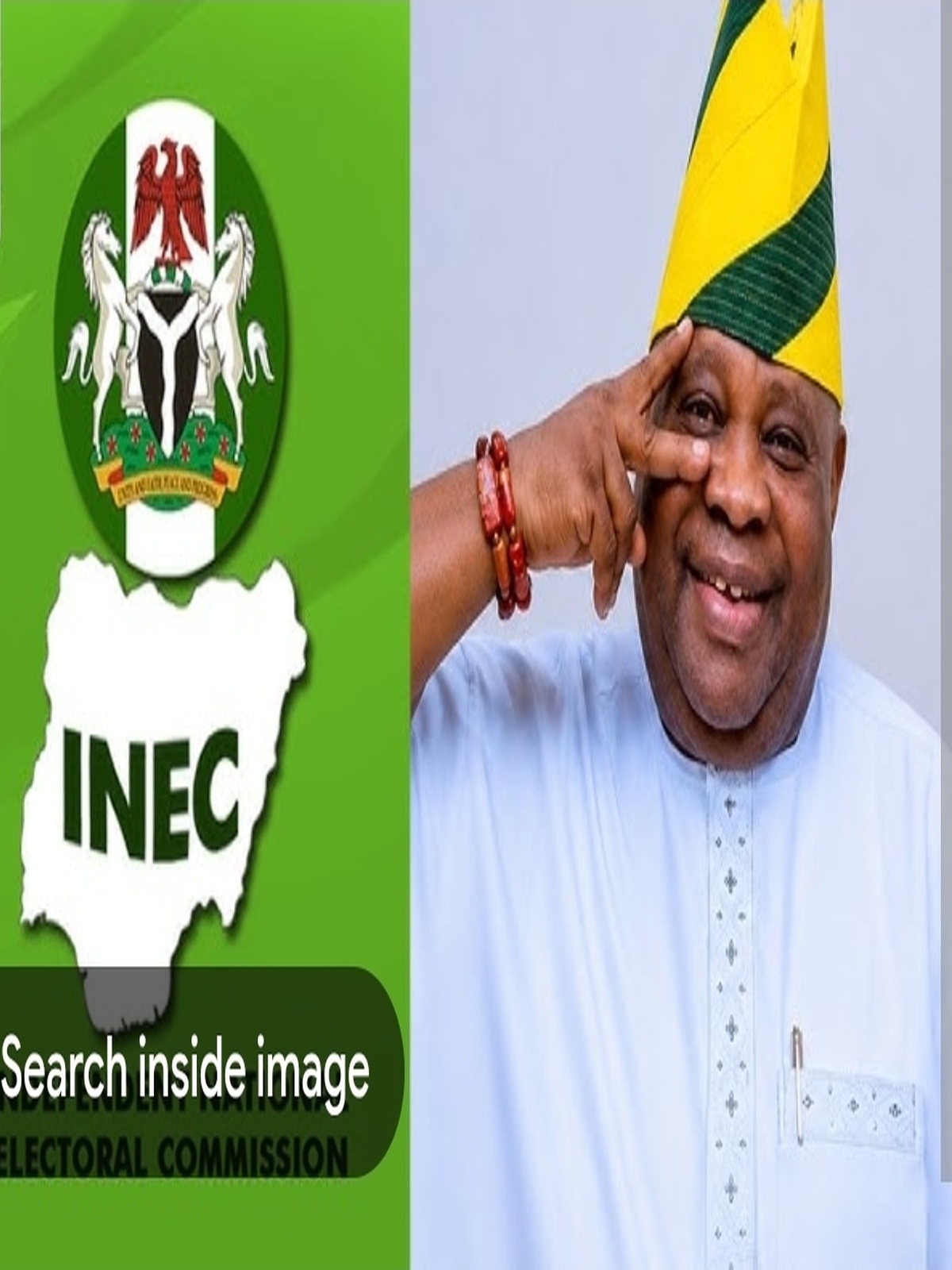
There are some elections that produce a winner, and there are elections that produce a conversation. The Osun governorship election of August 15 has done both.
While the re-election of Governor Ademola Adeleke will understandably dominate the immediate headlines, perhaps the more consequential story lies elsewhere: in the way the election results became increasingly visible to the public and what that could mean for Nigeria’s electoral democracy ahead of the January 16 2027 general elections.
For years, one of the most difficult periods of a Nigerian election has been the interval between the close of voting and the formal declaration of results. It is a period often characterised by uncertainty, competing claims, unofficial figures and a flood of information that can be difficult for voters to verify.
Osun offered a glimpse of a different possibility.
Through the Independent National Electoral Commission’s Result Viewing Portal, IReV, polling-unit results were progressively made available, allowing citizens, political parties, journalists and election observers to follow the emergence of the results rather than depend entirely on competing political narratives.
The significance of this became particularly apparent when a news medium was able to call the direction of the election before INEC formally announced the winner.
That was not a replacement for INEC’s constitutional responsibility. Only the commission can officially declare the winner of an election. Rather, it was a demonstration of what becomes possible when primary election results are sufficiently accessible for independent scrutiny.
And that may be the most important lesson Osun offers Nigeria as the country approaches 2027.
From Waiting for Results to Watching Them Emerge
INEC has, over the years, invested considerably in improving the management and transparency of election results. IReV is perhaps the most visible expression of that effort.
The principle behind the platform is straightforward: once voting has ended and results are recorded at polling units, members of the public should be able to view the result sheets uploaded to the portal.
INEC itself states that the public can monitor polling-unit results in real time on Election Day as results are uploaded.
That seemingly simple change has significant implications.
Previously, Nigerians often had to wait for the formal collation process before having a comprehensive picture of an election. Now, the possibility exists for citizens and independent observers to follow the figures much closer to their source.
In Osun, that difference was particularly evident.
The commission’s IReV platform provided access to thousands of polling-unit results as the election progressed. The official portal continues to provide polling-unit-level information from the election, allowing the public to examine the results beyond the headline figures.
This creates a new layer of accountability.
A political party can compare the results with the records of its agents. Civil society organisations can examine patterns. Journalists can analyse emerging figures. And voters can look beyond claims made by political actors and engage with the underlying results themselves.
The significance of IReV, therefore, is not merely technological.
It is democratic.
The Media’s Early Call Is the Real Story
Perhaps the most striking development from Osun was the ability of a news medium to call the direction of the election before INEC’s formal declaration.
That development deserves to be understood properly.
It does not mean that the media has acquired the authority to declare election winners. It has not. Nor should media projections ever be confused with official results.
What it does demonstrate is that the information environment around Nigerian elections is changing.
When enough polling-unit results are publicly accessible, a media organisation with the necessary expertise can analyse the emerging figures, compare the results across local government areas and determine whether the remaining outstanding results are capable of changing the trajectory of the election.
That was considerably more difficult when election results were largely inaccessible to the wider public until the completion of formal collation.
The implication is profound.
INEC’s transparency has made independent scrutiny possible at a stage of the election when Nigerians were previously largely dependent on political actors for information.
The media is not replacing the electoral commission.
It is interrogating information produced by the electoral process.
That is precisely what a healthy democratic information ecosystem should encourage.
But Transparency Must Not Be Confused with Perfection
There is, however, a danger in celebrating technological progress without acknowledging the shortcomings that remain.
Osun was not a perfect election.
There were reports of technical and logistical challenges, while concerns were also raised over vote-buying, intimidation and other electoral irregularities. Those issues matter and should be investigated where appropriate.
INEC should therefore see Osun not as the conclusion of its electoral reforms, but as another stage in their development.
The commission must continue improving the reliability of BVAS, strengthen its logistics and ensure that polling-unit results are uploaded promptly and accurately.
Most importantly, the credibility of IReV must be protected.
A system designed to increase confidence can only fulfil that purpose if citizens believe that the information appearing on it accurately reflects what happened at the polling unit.
That means transparency must be accompanied by accuracy, consistency and accountability.
What Osun Means for 2027
This is where the significance of Osun extends beyond the state.
The 2027 general elections will place an extraordinary burden on Nigeria’s electoral infrastructure. There will be more polling units, more candidates, more results and considerably higher political stakes.
If IReV worked as an important transparency mechanism in Osun, the question now is whether the same level of accessibility and reliability can be maintained on a much larger scale.
The answer will matter enormously.
The credibility of the 2027 elections will not depend only on who wins. It will also depend on whether voters and political parties believe they were able to see enough of the process to understand and scrutinise the outcome.
Osun has therefore given INEC a valuable rehearsal.
The commission now knows what worked.
It also knows what needs improvement.
The objective should be to ensure that by 2027, the public does not merely receive election results—it can follow the journey of those results from the polling unit to the final declaration.
And Then There Is the Opposition
The other significant development emerging from Osun is the mood among opposition figures.
The response to the result has contained a noticeable element of optimism, with opposition politicians congratulating the eventual winner and urging Nigerians and political forces to draw lessons from the election ahead of 2027.
For opposition movements, that psychological dimension matters.
Political parties cannot sustain serious electoral competition if their supporters become convinced that elections are unwinnable.
They need to believe that votes can translate into political power.
Osun appears to have strengthened that belief.
The election has demonstrated that an incumbent can win under a different political platform, that a major political party can lose a closely contested governorship race, and that an election can produce an outcome that defies the expectations of political observers.
That does not automatically make Osun a predictor of 2027.
Nigeria’s political landscape is far more complicated, and the dynamics of a governorship election cannot simply be transferred to a presidential contest.
But the psychological effect should not be underestimated.
For opposition parties, Osun offers a reason to compete harder.
The challenge now is to convert that optimism into organisation.
They will need credible candidates, stronger grassroots structures, effective voter mobilisation and properly trained agents capable of following the vote from the polling unit through collation.
Optimism may create momentum.
Organisation will determine whether that momentum becomes political power.
A New Standard for Election Reporting
There is also an important lesson for the Nigerian media.
The early call in Osun demonstrates the possibilities created by access to real-time election data. But with that possibility comes responsibility.
Election projections must be based on verifiable results and a clear methodology. They must be distinguished from official declarations, and media organisations must be prepared to explain how they reached their conclusions.
The credibility of election reporting depends on getting that distinction right.
When properly handled, however, independent media analysis can actually strengthen INEC.
The more journalists, civil society groups and citizens scrutinise publicly available results, the greater the pressure on all electoral actors to ensure that those results are accurate.
That is not an attack on the electoral commission.
It is accountability.
The Real Test Begins Now
Osun has not solved Nigeria’s electoral problems.
Vote-buying remains a concern. Technical failures remain possible. Political intimidation remains a threat. Logistics can still undermine the voting experience.
But democracy does not improve only through perfect elections.
It improves when institutions learn, technology creates greater transparency and citizens become better equipped to scrutinise those who exercise public power.
That is why the most important outcome of Osun may not be the identity of the winner.
It may be the growing possibility that Nigerians can see more of how an election is won.
IReV has moved the country closer to that possibility.
The early media call demonstrated what can happen when election data becomes sufficiently accessible.
The reaction from opposition forces demonstrated that the outcome has generated a renewed sense of political possibility.
Now comes the difficult part
INEC must build on the progress, fix the weaknesses and demonstrate that the transparency witnessed in Osun can survive the far greater pressures of 2027.
Political parties must turn optimism into organisation.
The media must turn access into responsible scrutiny.
And voters must continue demanding an electoral process in which their votes are not merely counted, but can be followed, examined and trusted.
There are some elections that produce a winner, and there are elections that produce a conversation.
Osun has produced a conversation about what Nigeria’s elections could look like in 2027.
The question now is whether the country will build on it.