


By Moses Olili
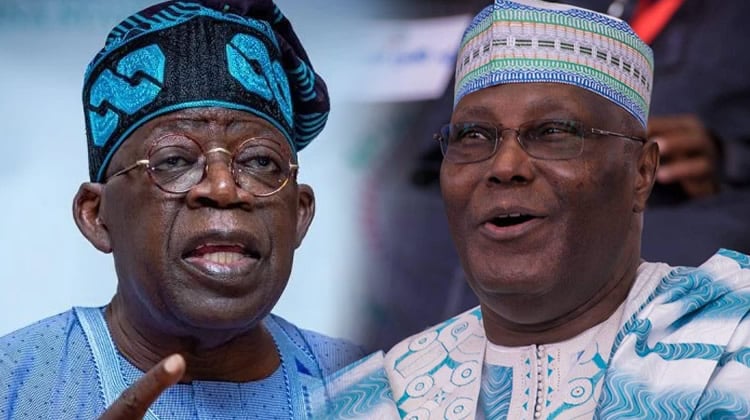
Echoing the frustrations that have become almost commonplace among Nigerians, former Vice President Atiku Abubakar has reopened an old but deeply consequential question: Was the removal of the fuel subsidy worth the price Nigerians have been made to pay?
His recent call for a new approach to fuel subsidy comes at a time when the groaning over the cost of living has hardly subsided. For millions of Nigerians, the consequences of subsidy removal are not expressed in the language of fiscal consolidation, foreign reserves or macroeconomic stability. They are felt in the rising cost of transportation, food, electricity, rent and virtually every other necessity.
The debate, therefore, is bigger than Atiku Abubakar, President Bola Ahmed Tinubu or the politics of 2027.
It is about the fundamental question of whether an economic reform can be considered successful when the economy is becoming more stable while a significant proportion of its citizens continue to struggle to afford the basics of life.
When President Tinubu announced the removal of the petrol subsidy in May 2023, the decision was presented as an unavoidable break from a system that had become too expensive and increasingly unsustainable. More than three years later, there is evidence that the reform has delivered important macroeconomic gains. But there is also compelling evidence that the adjustment has imposed a severe burden on households.
Both realities can exist at the same time.
And that is where Nigeria’s subsidy debate should begin.
Why the Presidency Says the Subsidy Had to Go
For decades, petrol subsidy was regarded as one of the ways Nigerians could benefit from the country’s oil wealth. The government kept the pump price below the market cost and absorbed the difference.
But over time, the arrangement became increasingly expensive and difficult to sustain.
The strongest argument for its removal is that it was a poorly targeted form of social intervention. A wealthy Nigerian who owns several vehicles and consumes large quantities of petrol could receive a greater absolute benefit from subsidised fuel than a poor Nigerian who does not own a vehicle.
The government was, in effect, subsidising a commodity rather than directly supporting the people who needed assistance most.
The International Monetary Fund has consistently argued that fuel subsidies are an inefficient means of protecting vulnerable households and that resources could be better directed towards targeted social protection and productive investment.
There was also the question of Nigeria’s finances.
At a time when government revenues were under pressure, continuing to spend enormous sums keeping petrol artificially cheap meant less fiscal space for infrastructure, healthcare, education and other public priorities.
From the Presidency’s perspective, therefore, subsidy removal was not simply a decision to increase the price of petrol. It was an attempt to halt a system that had become fiscally unsustainable and redirect public resources towards more productive uses.
In that sense, the economic argument for removing the subsidy was compelling.
But an economically compelling argument does not automatically make a policy socially painless.
The Nigerian Reality
For the average Nigerian, petrol is not simply another commodity whose price can be left to market forces.
It is an input into almost everything.
When the price of petrol rises, transport fares rise. When transport becomes more expensive, the cost of moving food and other goods rises. Businesses that rely on generators and vehicles face higher operating costs. Those costs are eventually passed on to consumers.
A Nigerian who does not own a car therefore still pays the price of higher petrol costs.
The commuter pays through increased fares.
The farmer pays through higher transportation and production costs.
The trader pays through logistics.
The manufacturer pays through energy and distribution.
And the household pays at the market.
This is why the endless groaning of Nigerians cannot simply be dismissed as resistance to reform.
For many households, the reform has translated into a substantial decline in purchasing power.
The IMF’s 2026 assessment estimates that poverty had reached 63 per cent at the national poverty line and that about 27 million Nigerians experienced food insecurity in late 2025. It also warned that higher food and transport costs continue to weigh on households.
The central contradiction is therefore difficult to ignore: Nigeria’s macroeconomic indicators may be improving, but millions of Nigerians are yet to experience that improvement in their daily lives.
The Gains Should Not Be Ignored
Yet, it would be intellectually dishonest to portray subsidy removal as an unmitigated failure.
The reforms have produced measurable economic gains.
The IMF says Nigeria’s reforms have improved macroeconomic stability, reduced fiscal vulnerabilities and strengthened the country’s external position. International reserves increased substantially between 2024 and 2025, while the Fund projects continued economic growth.
Nigeria has also moved closer to becoming a country capable of refining more of its own crude oil. The emergence of large-scale domestic refining offers the possibility of reducing dependence on imported petrol and conserving foreign exchange.
These developments matter.
The argument, therefore, should not be that subsidy removal achieved nothing.
It is that the economic gains must ultimately translate into improvements in people’s lives.
That is the real test.
Where Is the Dividend?
This may be the most uncomfortable question the government must answer.
If subsidy removal was necessary because the country could no longer afford the old system, Nigerians are entitled to ask what has happened to the resources that became available afterwards.
How much has been saved?
How much has gone into infrastructure?
How much has been spent on social protection?
How much has been absorbed by debt servicing?
How much has gone to states and local governments?
And, most importantly, what has the average Nigerian received in return?
The IMF’s latest assessment makes this question even more important. It says estimated savings from fuel subsidy removal—potentially up to 2 per cent of GDP—did not appear to accrue to the budget in 2025.
That does not necessarily mean the reform failed.
It does mean that transparency over the subsidy savings is essential.
Nigerians should not be expected to endure the pain of reform without being able to see its dividend.
Should Subsidy Return?
This brings the debate back to Atiku Abubakar.
His proposal should not simply be dismissed as an attempt to return Nigeria to the old subsidy regime. The model he has recently proposed is presented as a more targeted intervention tied to domestic refining and subject to controls and auditing.
That deserves scrutiny on its merits.
Would it reduce petrol prices?
How much would it cost?
Who would benefit?
Who would pay for it?
How would the government prevent it from becoming another avenue for rent-seeking?
And would it actually be more beneficial to Nigerians than using the same resources for targeted social protection?
These are legitimate questions.
But those defending subsidy removal must answer equally difficult questions.
What is the alternative for Nigerians who cannot cope with market prices?
How quickly can targeted social protection reach them?
When will cheaper public transportation become widely available?
When will electricity become reliable enough for businesses and households to reduce their dependence on petrol and diesel?
And when will real wages begin to catch up with the cost of living?
The debate becomes meaningful only when both sides answer these questions honestly.
## The Better Question
Perhaps Nigeria should stop asking whether petrol itself should be subsidised and start asking whether vulnerable Nigerians should be protected.
There is an important difference.
Instead of subsidising petrol for everyone, the government could direct more resources towards targeted cash transfers, affordable mass transportation, agricultural support, cheaper alternative energy and infrastructure that reduces the cost of moving people and goods.
The IMF has similarly called for stronger social protection and increased cash transfers to vulnerable Nigerians.
Such an approach would address the actual problem: the inability of millions of Nigerians to cope with the rising cost of living.
The objective should not be to make petrol permanently cheap.
It should be to make Nigerians economically strong enough to afford energy without sacrificing food, education or healthcare.
## The Verdict Is Not Yet In
Three years after subsidy removal, it is too simplistic to declare the policy either a success or a failure.
The economic argument for removing the old subsidy regime remains strong. The system was expensive, poorly targeted and fiscally unsustainable.
But the suffering that followed its removal is equally real.
The reform has therefore created a difficult bargain.
Nigeria may be gaining macroeconomic stability while households are struggling with the cost of adjustment.
The responsibility of government is to ensure that the first eventually produces relief for the second.
Because Nigerians were not promised improved economic indicators when the subsidy was removed.
They were promised a better economy.
And a better economy is not one in which the government merely has more money.
It is one in which the citizen has more purchasing power, better services, more opportunities and a greater sense that tomorrow will be better than today.
That is the dividend Nigerians are waiting to see.
Until then, the groaning will continue—and so will the debate over whether the price of economic reform has simply been too high.