


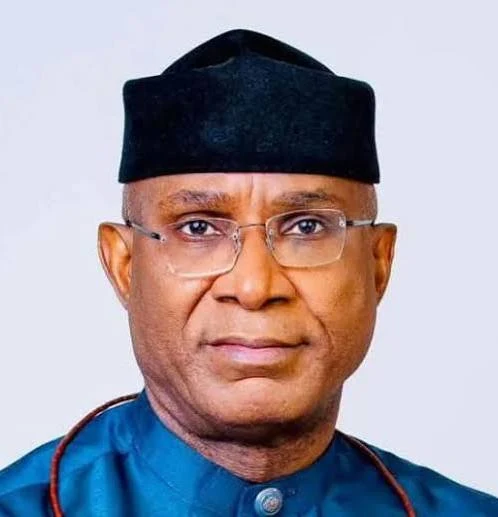
The political atmosphere in Delta State has come under renewed scrutiny following the deadly attack on a campaign gathering of the Nigeria Democratic Congress (NDC) in Uduere community, Ughelli North Local Government Area, on Monday, November 23, 2026.
The incident, which reportedly claimed several lives and left others injured, has raised serious concerns about political tolerance, public safety and the conduct of political activities as the country gradually approaches the 2027 general elections.
The attack occurred during a campaign tour involving former Deputy President of the Senate, Senator Ovie Omo-Agege, who is seeking election to represent Delta Central Senatorial District on the platform of the NDC.
According to reports, armed men disrupted the gathering and opened fire on members of the campaign team and supporters. Omo-Agege reportedly escaped unharmed, while several people sustained injuries.
The casualty figures have varied across initial reports. While the campaign organisation initially reported four deaths, the Nigeria Police Force disclosed on Tuesday, November 24, that preliminary findings indicated that six people had lost their lives.
The police, however, stated that an ongoing investigation would establish the verified casualty figure and determine the circumstances surrounding the incident.
The development is particularly disturbing because political campaigns and public gatherings are fundamental aspects of democratic participation. Citizens must be able to attend political meetings, express their preferences and associate with candidates of their choice without fearing for their lives. Regardless of party affiliation or political differences, the right to participate in the democratic process must be protected.
Political accusations
In the aftermath of the attack, the Omo-Agege Campaign Organisation described the incident as an assassination attempt, alleging that the attackers specifically targeted the former Deputy President of the Senate.
It also accused the Ughelli North Local Government Chairman, Jaro Egbo, of involvement in the attack. The chairman has denied the allegation.
The accusations have introduced another dimension to an already sensitive political situation. However, allegations of this nature must be subjected to proper investigation rather than accepted as established facts. It is important that those making accusations provide relevant evidence and that anyone implicated is given an opportunity to respond through due process.
The Delta State Police Command has announced that investigations have commenced. The Inspector-General of Police, Olatunji Disu, has also directed a thorough and impartial investigation into the incident, including an examination of the conduct of police officers deployed to the venue.
The police have indicated that officers found to have acted negligently or unlawfully will face appropriate disciplinary action, while anyone found criminally responsible will be prosecuted.
The Delta State Government has also imposed a curfew in Ughelli North Local Government Area, restricting movement between 6 p.m. and 6 a.m. daily until further notice.
Governor Sheriff Oborevwori subsequently visited the affected community, condemned the violence and directed security agencies to intensify their investigations and ensure that those responsible are brought to justice.
While the imposition of a curfew may be necessary to prevent a further breakdown of law and order, its enforcement must be proportionate and must not unnecessarily disrupt residents’ livelihoods and lawful activities. Security measures should protect the people rather than place additional burdens on communities already affected by violence.
Ughelli South and the changing political landscape
Although the attack occurred in Ughelli North, its implications extend beyond the immediate community. Ughelli North and Ughelli South share geographical, cultural and political connections, and developments in one area can influence political conversations across the wider Ughelli axis.
Ughelli South, in particular, has witnessed notable political developments in 2026, especially concerning legislative representation and preparations for the next electoral cycle.
One significant development is the restoration of the Ughelli South II State Constituency by the Independent National Electoral Commission (INEC), following court judgments directing the restoration of previously suppressed constituencies in Delta State.
The development is expected to provide a separate legislative platform for communities that have long sought distinct representation in the Delta State House of Assembly.
The restoration has attracted commendation from political and community stakeholders, who regard it as an important step towards addressing longstanding concerns about representation. It also introduces a new dimension to political competition in the local government as parties and prospective candidates prepare for the electoral process.
Beyond legislative representation, political alignments have also become increasingly visible.
In July, stakeholders in Ughievwen Kingdom publicly declared their support for President Bola Ahmed Tinubu, Governor Sheriff Oborevwori and other APC candidates ahead of the 2027 general elections.
Those endorsed included Senator Ede Dafinone, House of Representatives member Francis Waive and Ughelli South State Constituency representative Festus Utuama.
Such endorsements demonstrate the importance of traditional institutions, community leadership and grassroots political structures in shaping electoral conversations.
However, endorsements by political stakeholders should not be mistaken for the unanimous position of every resident. The electorate ultimately retains the right to make independent choices at the ballot box.
The political landscape is therefore characterised by a combination of established party structures, emerging alliances, questions of representation and the growing mobilisation of grassroots supporters.
Political tolerance and the responsibility of party leaders
The violence in Uduere also provides an opportunity to reflect on the responsibilities of political parties and their leaders. Political competition is an essential feature of democracy, but it must be conducted within the boundaries of the law and mutual respect.
Political differences should not become grounds for intimidation, threats or physical attacks. Equally, party leaders have a responsibility to discourage inflammatory rhetoric, prevent their supporters from engaging in acts of violence and demonstrate restraint, particularly during periods of heightened political activity.
The involvement of security agencies must also be beyond reproach. Their responsibility is to protect citizens and maintain public order without favouring any political party or candidate.
Where security personnel are present at a gathering that subsequently becomes violent, their actions and response deserve careful examination. Accountability should apply to both civilian perpetrators and public officers where evidence establishes wrongdoing.
The incident also reinforces the importance of strengthening political institutions and ensuring that disputes are addressed through lawful channels.
Political disagreements, grievances over representation and competition for public office should be resolved through dialogue, internal party mechanisms and the courts where necessary, rather than through violence.
The road to 2027: What is at stake?
With the 2027 general elections approaching, the events in Ughelli North should serve as a serious reminder of the importance of peaceful political participation across Delta State.
The coming electoral cycle will involve contests for several political offices, renewed party mobilisation and competition among individuals seeking to represent different constituencies.
In Ughelli South, the restoration of the second state constituency is likely to make the issue of political representation even more prominent.
However, political participation cannot thrive in an atmosphere of fear. Candidates must be able to campaign freely, supporters must be able to associate with political organisations of their choice, and residents must be confident that their safety will not be compromised by political disagreements.
There is also a need for political discussions to move beyond personalities, endorsements and party loyalty.
The people of Ughelli South and Delta State generally have legitimate expectations concerning infrastructure, employment opportunities, education, healthcare, security and economic development. These issues should remain central to political engagement.
Political parties and candidates should therefore be judged by their manifestoes, records, policy proposals and willingness to address the needs of the people.
Elections should provide an opportunity for citizens to assess leadership and demand accountability, rather than become contests in which intimidation determines political participation.
Conclusion
The killings in Uduere have introduced a troubling dimension to the political atmosphere in Delta State. While investigations are still ongoing, the loss of lives demands more than expressions of condemnation. It requires a credible investigation, accountability for those found responsible and practical measures to prevent a recurrence.
The incident should not be used to fuel further political hostility or assign collective blame to any party or community. Rather, it should remind political actors, security agencies and community leaders of their shared responsibility to protect democratic participation.
As Ughelli South and the wider Delta political landscape prepare for 2027, the central question should not simply be who wins political office, but whether the democratic process allows every citizen to participate freely, safely and without intimidation.
No political ambition is worth the life of a citizen. Ultimately, the strength of democracy is not measured merely by the number of candidates, political endorsements or campaign rallies, but by the ability of people to disagree peacefully, make independent choices and hold their leaders accountable without fear.