


Presidential election campaigns across Nigeria have coincided with increased pressure on the naira against the United States dollar over the last two weeks.
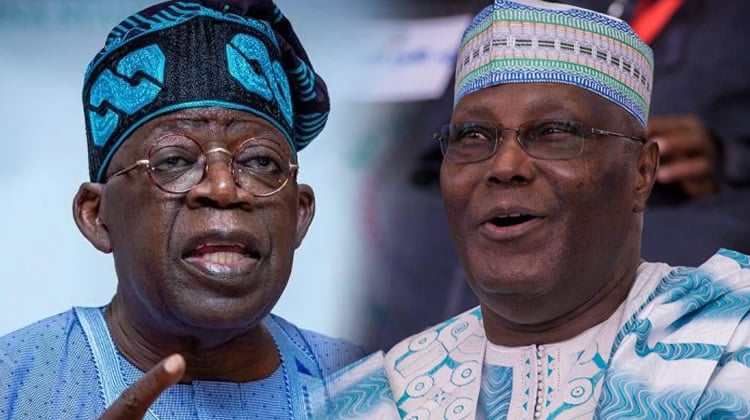
This comes as President Bola Ahmed Tinubu, who is seeking re-election on January 16, 2027, alongside presidential candidates of the African Democratic Congress (ADC), Nigeria Democratic Congress (NDC) and 15 other political parties, intensified campaign activities across the country.
Tinubu has concluded campaign rallies in Kaduna, Delta, Plateau, Kebbi and other states ahead of the 2027 presidential election.
Former Vice President Atiku Abubakar has also commenced his campaign activities in Yobe, Kebbi and other states despite a Federal High Court in Abuja ruling against the leadership of former Senate President David Mark in the ADC.
Similarly, Peter Obi has started his campaign activities across several states.
Recall that the NDC recently held a town hall meeting in Lagos, which was marred by controversy following an attack by suspected thugs on party members who reportedly resisted the disruption.
The Social Democratic Party’s presidential candidate, Prince Adewole Adebayo, has also taken his campaign to Adamawa State, promising Nigerians a reduction in petrol prices to N200 per litre from the prevailing market prices of between N1,300 and N1,385 per litre, according to DAILY POST’s findings.
Other opposition parties have equally intensified their political activities and campaign engagements nationwide.
Nigerian Newssphere eports that the heightened political activities have coincided with increased pressure on the naira against the United States dollar.
On Thursday, November 19, 2026, the naira depreciated to N1,376.58 per dollar from N1,346.79 recorded on November 6.
This means that the local currency lost N29.79 against the dollar, representing a depreciation of 2.21 per cent within 12 days.
Meanwhile, Nigeria’s external reserves declined by $530 million within the same period to $54.71 billion on November 18, 2026, from $55.24 billion recorded on November 6.
A Bureau De Change operator in Abuja’s Zone 4, Abubakar Bengazzir, told Nigerian Newssphere that increased foreign exchange demand had mounted pressure on the country’s foreign exchange market and external reserves.
Speaking on the development, financial expert and renowned accountant, Professor Godwin Oyedokun, explained that the naira’s depreciation and the decline in external reserves reflected growing pressure on Nigeria’s foreign exchange market.
“The recent depreciation of the naira and decline in external reserves reflect growing pressure on Nigeria’s foreign exchange market. While increased dollar demand is a contributing factor, the challenge goes beyond demand to include inadequate and inconsistent foreign exchange inflows, import dependence, speculative activities and investor uncertainty.
“The widening gap between the official and parallel exchange rates also suggests persistent challenges with foreign exchange accessibility and market confidence. Although election-related uncertainties may influence market expectations, there is insufficient evidence to attribute the current depreciation directly to the 2027 campaign activities.
“Nigeria must therefore move from managing dollar scarcity to building a sustainable dollar-earning economy. The CBN should strengthen market transparency, preserve adequate reserve buffers and improve foreign exchange liquidity, while government prioritises non-oil exports, crude oil production, domestic manufacturing and productive foreign investment.
“Ultimately, the strength of the naira will depend less on how many dollars the CBN injects into the market and more on how many dollars Nigeria can sustainably earn”, he told Nigerian Newssphere.